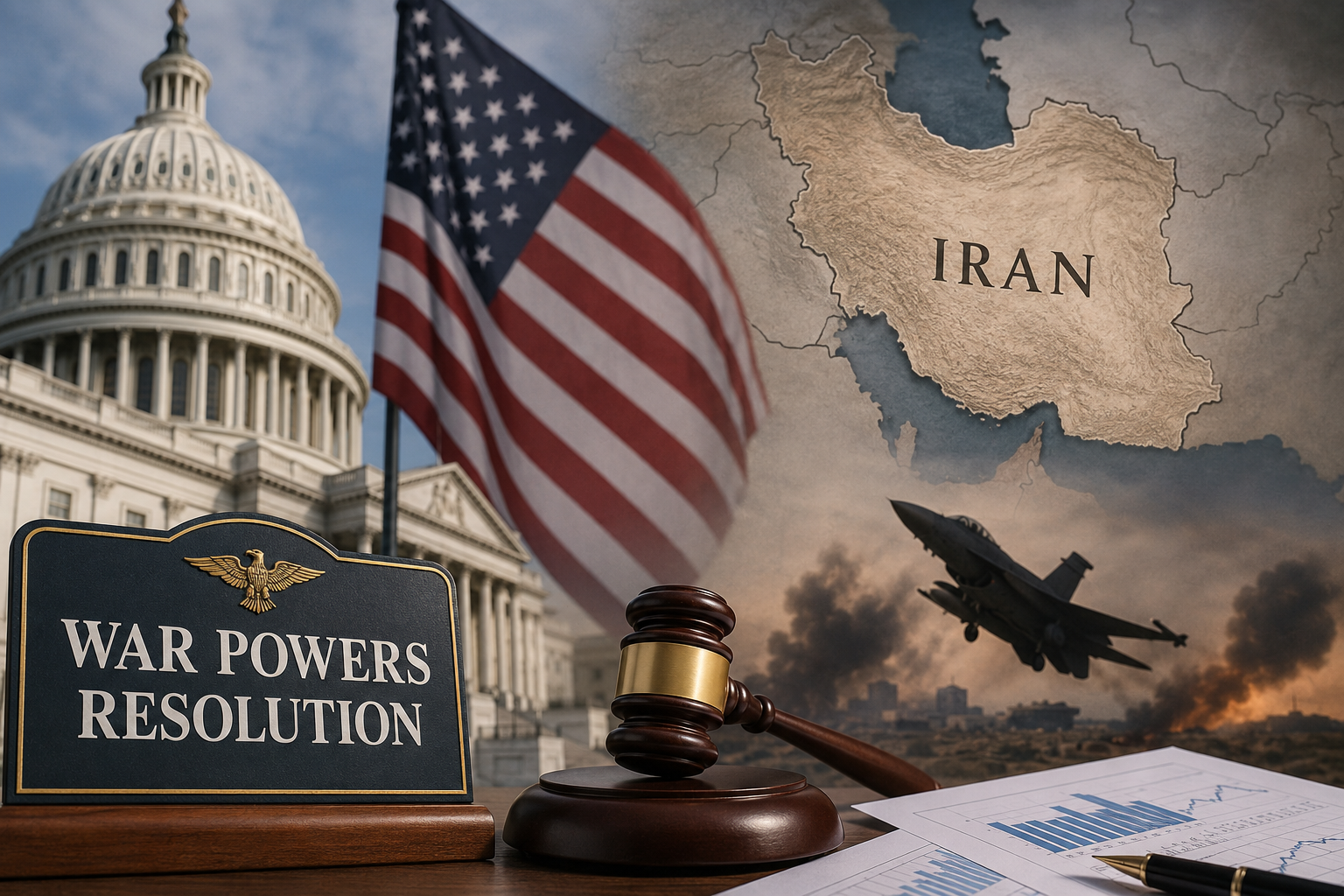
Historic Senate Vote Challenges White House's Approach to Iran Conflict
In a significant political development that could reshape the debate over America's military involvement in the Middle East, the United States Senate has approved a war powers resolution aimed at restricting further military action against Iran. The resolution passed by a narrow 50-48 margin, marking the first successful Senate effort to formally challenge the administration's handling of the Iran conflict.
Although the measure is largely symbolic and does not carry the full force of law, its passage represents a notable rebuke to President Donald Trump's foreign policy approach and highlights growing concerns among lawmakers regarding military actions undertaken without explicit congressional authorization.
The vote underscores a rare moment of bipartisan cooperation as members from both parties expressed concerns about the long-term costs, strategic objectives, and financial implications of the conflict.
Republican Support Signals Cracks Within Trump's Political Base
One of the most striking aspects of the vote was the support it received from several Republican senators. Traditionally, Republican lawmakers have largely backed the administration's national security agenda. However, this time, Senators Lisa Murkowski, Susan Collins, Rand Paul, and Bill Cassidy joined Democrats in supporting the resolution.
Political observers note that concerns about escalating military commitments, rising defense expenditures, and uncertainty surrounding the administration's Iran policy have contributed to growing divisions within the Republican Party.
The absence of key Republican senators during the vote also influenced the outcome, allowing the resolution to secure enough support for passage.
Congress Reasserts Its Constitutional Authority
The passage of the resolution reflects a broader effort by Congress to reclaim its constitutional role in authorizing military action. Over the past several months, lawmakers have repeatedly debated whether the executive branch has exceeded its authority by expanding military operations without obtaining congressional approval.
Supporters of the resolution argue that decisions involving war and military intervention should involve greater legislative oversight, particularly when taxpayer resources and American military personnel are involved.
Senator Tim Kaine, one of the leading advocates for the measure, stated that Congress must carefully evaluate the next phase of US-Iran relations and determine the appropriate level of future engagement.
Pentagon Requests Massive Funding for Military Operations
The Senate vote comes as the Pentagon seeks approximately $80 billion in additional funding from Congress to replenish military stockpiles and replace munitions used during operations related to the Iran conflict.
Defense officials have indicated that the funding would primarily be used to restore critical inventories of missiles, precision-guided weapons, and other military equipment depleted during the conflict.
Early Pentagon estimates suggested that military operations cost more than $11 billion during the initial stages of the war. Independent analysts now estimate the total economic burden could approach $100 billion once reconstruction, logistics, and long-term operational expenses are included.
The funding request has intensified debate in Washington, particularly as many Americans continue to grapple with inflation, elevated fuel prices, and broader economic uncertainty.
Iran Reconstruction Package Sparks Political Backlash
Another major source of controversy is the administration's newly announced agreement with Iran. Under the Memorandum of Understanding signed last week, both countries have entered a 60-day negotiation period aimed at reaching a broader settlement regarding Iran's nuclear programme and regional security concerns.
However, lawmakers from both parties have questioned the proposal to establish a $300 billion reconstruction fund intended to assist Iran's economic recovery following the conflict.
Critics argue that the size of the proposed package far exceeds previous agreements negotiated between Washington and Tehran and could place a substantial burden on US taxpayers.
Several Republican senators have publicly voiced concerns about the deal, suggesting that the administration may have conceded too much in exchange for a temporary ceasefire and diplomatic progress.
Market Implications: What Investors Should Watch
The Senate's action adds another layer of uncertainty to an already complex geopolitical environment. Financial markets are expected to closely monitor developments surrounding both the Iran agreement and the administration's defense spending proposals.
Key sectors that could be affected include:
Energy Markets
Any renewed tensions in the Middle East could influence global crude oil supplies and contribute to volatility in energy prices. Investors will closely watch developments affecting shipping routes, production facilities, and regional stability.
Defense and Aerospace Stocks
Companies involved in defense manufacturing may benefit from increased military spending if Congress ultimately approves the Pentagon's funding request.
Precious Metals
Gold and other safe-haven assets could experience increased demand if geopolitical uncertainty escalates or negotiations between Washington and Tehran encounter setbacks.
Currency and Bond Markets
Large-scale defense spending and rising fiscal deficits may influence bond yields, inflation expectations, and the strength of the US dollar in global markets.
What Comes Next?
While the war powers resolution does not immediately alter US military policy, it sends a clear message that Congress is increasingly willing to challenge the administration's approach to foreign policy and military engagement.
President Trump is expected to meet Republican senators in the coming days to strengthen support for both the Iran agreement and the broader defense funding package. Meanwhile, negotiations with Tehran will continue under the framework established by the recent memorandum.
For investors, policymakers, and global markets, the coming weeks could prove critical in determining whether diplomatic efforts succeed in stabilizing the region or whether political disagreements in Washington create additional uncertainty.
As geopolitical tensions remain a key driver of global economic sentiment, developments surrounding Iran will likely remain a major focus for investors throughout the remainder of the year.