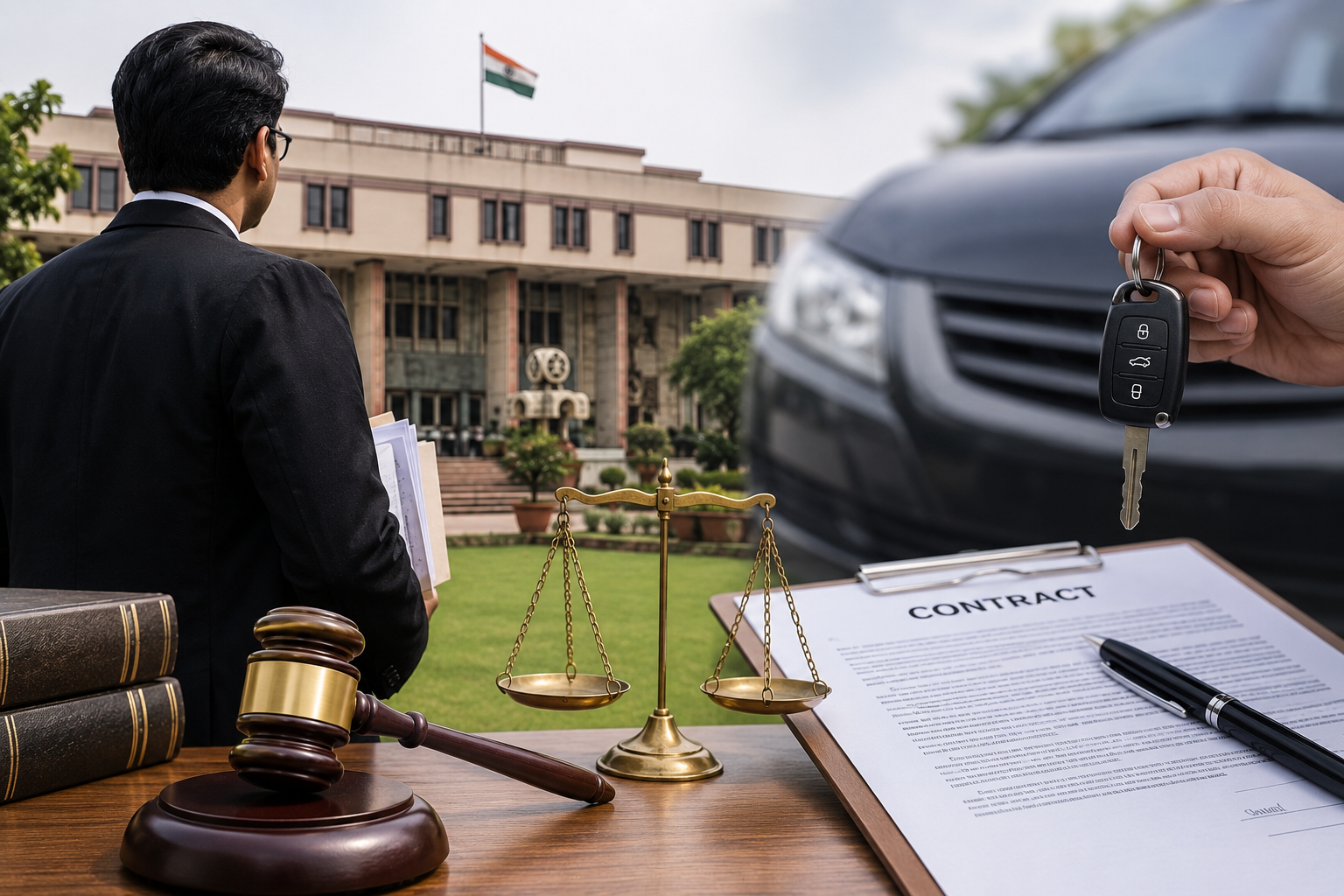
Court Grants Interim Relief After Vehicle Sold Through Online Platform Was Allegedly Used in Criminal Activity
In a ruling that could have wider implications for India's fast-growing used-car marketplace, the Delhi High Court has granted interim protection to a lawyer who found himself entangled in a criminal investigation involving a vehicle he had sold nearly two years ago.
The case has drawn attention to a critical issue faced by many vehicle owners across the country — the failure to complete ownership transfers even after a vehicle has been legally sold. Legal experts say the outcome of the matter could influence future guidelines for online automobile marketplaces, buyers, sellers and transport authorities.
Former Owner Receives Police Notice in Criminal Case
The petitioner, advocate Shankar Kumar Jha, approached the Delhi High Court after receiving a police notice connected to an FIR involving alleged violations under excise laws. The notice came as a shock because, according to Jha, he had sold the vehicle through a prominent pre-owned vehicle platform in 2023.
Despite the sale, official ownership records reportedly continued to show the vehicle in his name. Jha argued that he repeatedly reminded the concerned parties to complete the transfer process but the registration remained unchanged.
As a result, when the vehicle allegedly became involved in unlawful activities, investigative agencies traced it back to the registered owner, leading to legal complications for the lawyer.
High Court Steps In
Recognizing the seriousness of the issue, the Delhi High Court provided interim protection to the petitioner and directed that no coercive action be taken against him until further proceedings.
Justice Madhu Jain issued notices to the Union Government, Delhi Police and the used-car platform involved in the transaction, seeking their responses within four weeks.
The court's order offers temporary relief while legal responsibility for the vehicle and the circumstances surrounding the delayed transfer are examined.
Growing Legal Risks in Used-Car Transactions
The case highlights a growing concern in India's automobile ecosystem. Every year, millions of used vehicles change hands, but ownership transfer delays continue to create legal and financial risks for former owners.
Experts point out that under existing regulations, a seller may continue to face legal notices, traffic challans, accident claims and even criminal inquiries if the vehicle remains registered in their name.
In many cases, buyers fail to complete the transfer process, while intermediary platforms may not always ensure timely compliance with transport authority requirements.
Online Vehicle Market Under Spotlight
India's pre-owned vehicle market has witnessed rapid expansion with the rise of digital platforms offering transparent pricing, vehicle inspections and streamlined purchasing experiences.
However, this case could place greater scrutiny on the responsibilities of these platforms regarding ownership transfer compliance. Industry observers believe regulators may revisit guidelines to ensure stronger accountability and faster transfer mechanisms.
Failure to update registration records not only exposes former owners to legal complications but can also create challenges for law enforcement agencies attempting to identify actual vehicle users.
Important Lessons for Vehicle Owners
Legal professionals recommend that vehicle sellers maintain comprehensive records of every transaction, including sale agreements, payment receipts, delivery acknowledgments and correspondence regarding transfer requests.
Experts also advise sellers to regularly verify the transfer status with the Regional Transport Office (RTO) after the sale and immediately report delays if ownership remains unchanged.
These precautions can help protect individuals from potential liabilities arising from the actions of subsequent users of the vehicle.
Potential Impact on Future Regulations
The Delhi High Court's eventual ruling may establish important legal principles regarding the liability of former vehicle owners and the obligations of buyers and marketplace operators.
The case could also encourage policymakers to strengthen digital integration between automobile marketplaces and transport authorities, reducing the risk of ownership disputes and ensuring faster record updates.
A Case with Nationwide Relevance
While the dispute involves a single vehicle transaction, its implications extend far beyond one individual. With India's used-car market expected to grow significantly over the coming years, the matter highlights the urgent need for stronger safeguards and more efficient ownership transfer systems.
As the court proceedings continue, vehicle owners, automobile dealers, legal experts and industry stakeholders will closely monitor the outcome, which could shape future standards for vehicle transactions across the country.