Odisha Gramya Bank Manager Suspended as Finance Ministry Pushes for Human-Centric Banking Across India
The Central Government has initiated corrective measures across India's rural banking network following the widely publicized Jitu Munda incident in Odisha, a case that sparked nationwide debate over the treatment of tribal and vulnerable customers by financial institutions.
The Department of Financial Services (DFS), under the Ministry of Finance, has directed Regional Rural Banks (RRBs) to strengthen customer service practices, improve communication with customers, and ensure greater sensitivity while handling cases involving rural, tribal, and economically weaker communities.
The action comes after an inquiry into the incident involving Odisha Gramya Bank's Malliposi branch in Keonjhar district, which attracted widespread public attention and criticism after videos and images circulated across social media platforms.
Incident Exposes Challenges in Last-Mile Banking Services
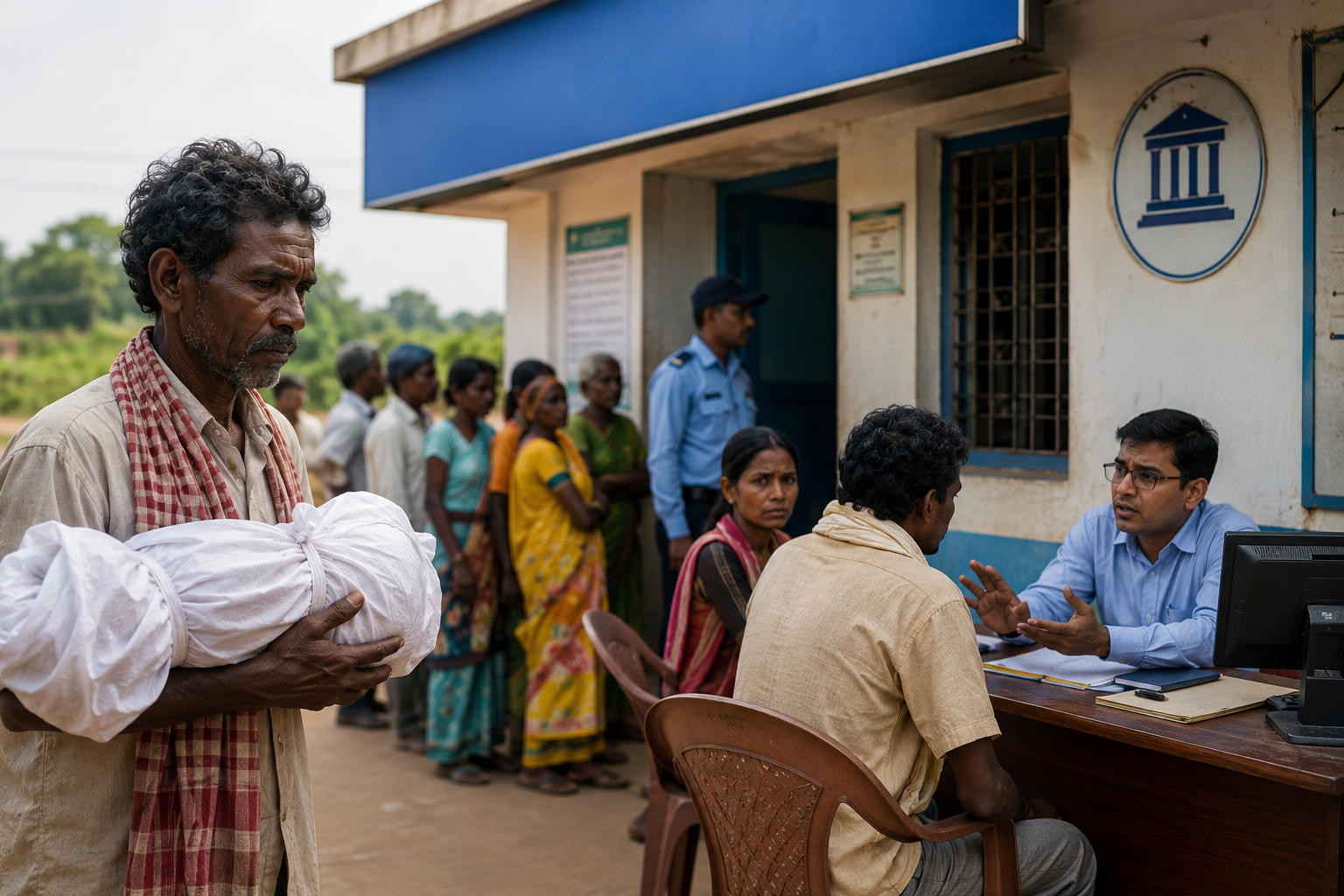
The controversy began on April 27 when Jitu Munda, a tribal resident of Dianali village in Odisha's Keonjhar district, allegedly carried the skeletal remains of his deceased sister to a bank branch after facing repeated difficulties in accessing money deposited in her account.
The disturbing visuals quickly went viral, drawing sharp criticism from citizens, social activists, and political leaders across the country.
The incident raised serious questions about whether financial institutions are adequately equipped to serve vulnerable populations and highlighted the challenges many rural families continue to face while navigating formal banking procedures.
For many observers, the episode became a symbol of the gap that still exists between financial inclusion policies and their implementation at the grassroots level.
Centre Takes Swift Action
Responding to the controversy, the Ministry of Finance reviewed the matter through the Department of Financial Services and directed corrective action.
Union Minister of State for Finance Pankaj Chaudhary informed former Odisha Chief Minister Naveen Patnaik that the government had taken the matter seriously and initiated disciplinary and administrative measures.
Among the key actions announced:
-
Suspension of the branch manager of Odisha Gramya Bank's Malliposi branch.
-
Nationwide advisory issued to all Regional Rural Banks.
-
Instructions to field-level officers to improve customer engagement.
-
Greater emphasis on empathy and transparent communication.
-
Review of customer service standards in rural banking operations.
The government stated that such incidents must not be repeated and that banking institutions have a responsibility to serve customers with dignity and respect.
Naveen Patnaik Calls Incident “Deeply Shocking”
The Centre's intervention followed a letter written by Naveen Patnaik to Union Finance Minister Nirmala Sitharaman on May 2.
In the letter, Patnaik described the incident as a reflection of institutional insensitivity toward tribal and marginalized communities.
He called for:
-
Immediate disciplinary action against responsible officials.
-
Accountability at all administrative levels.
-
Structural reforms in customer service practices.
-
Greater focus on humane governance.
Patnaik argued that public institutions should empower citizens rather than create barriers for those seeking assistance.
His remarks resonated widely, with many observers emphasizing the need for more citizen-friendly service delivery mechanisms.
Inquiry Finds Lapses in Customer Handling
While Odisha Gramya Bank initially maintained that employees had merely informed Munda about standard claim settlement requirements, a subsequent inquiry reportedly identified shortcomings in the branch's handling of the matter.
The investigation, conducted by Revenue Divisional Commissioner Sangram Keshari Mohapatra, found that bank officials failed to adequately guide and assist the customer despite multiple visits.
The inquiry suggested that better communication and proactive support could have prevented the situation from escalating into a humanitarian and administrative controversy.
The findings strengthened calls for reforms in customer service delivery, particularly in remote and tribal areas.
Finance Ministry Emphasizes Empathy Alongside Compliance
While acknowledging that banking regulations require proper documentation for claim settlements, the Ministry of Finance stressed that procedural compliance should not come at the expense of human dignity.
Officials observed that many customers in rural and tribal regions face challenges such as:
-
Limited financial literacy.
-
Lack of awareness about banking procedures.
-
Difficulty obtaining official documents.
-
Language barriers.
-
Limited access to government services.
The ministry noted that banking officials must actively help customers navigate these challenges rather than simply citing procedural requirements.
The Department of Financial Services has therefore emphasized the importance of empathy, communication, and customer support in everyday banking operations.
Nationwide Advisory Issued to Regional Rural Banks
Recognizing the broader implications of the incident, the DFS has issued an advisory to all Regional Rural Banks across the country.
The advisory calls for:
Improved Customer Communication
Bank officials must clearly explain documentation requirements and settlement procedures in a manner customers can understand.
Customer-Centric Service Delivery
Banks should prioritize problem-solving and guidance rather than relying solely on procedural formalities.
Enhanced Staff Training
Training programs will focus on customer sensitivity, grievance handling, and serving vulnerable populations.
Greater Accountability
Bank branches will be expected to maintain higher service standards and demonstrate accountability in customer interactions.
The move is expected to strengthen trust in rural banking institutions and improve service quality at the grassroots level.
Claim Finally Settled After Administrative Support
According to the Finance Ministry, local administrative authorities intervened to help Munda's family obtain the necessary documents required for claim settlement.
Once the paperwork was completed, the bank released the account balance of ₹19,402 to Jitu Munda and two other legal heirs.
Although the financial matter was eventually resolved, policymakers and banking experts agree that the circumstances leading up to the settlement exposed systemic weaknesses that require attention.
Financial Inclusion Must Go Beyond Opening Bank Accounts
India has achieved remarkable success in expanding banking access through initiatives such as the Pradhan Mantri Jan Dhan Yojana and digital banking programs.
However, experts argue that genuine financial inclusion involves more than merely opening bank accounts.
It also requires:
-
Accessible customer support.
-
Simplified procedures.
-
Financial education.
-
Trustworthy service delivery.
-
Effective grievance resolution.
The Jitu Munda case has reinforced the importance of ensuring that financial inclusion translates into meaningful access to banking services for all citizens.
Broader Implications for India's Banking Sector
The incident is likely to influence discussions around customer service reforms, rural banking standards, and the role of public institutions in supporting vulnerable communities.
Industry experts believe banks may increasingly focus on:
-
Simplifying claim settlement processes.
-
Improving customer outreach programs.
-
Leveraging technology for rural banking.
-
Enhancing accountability mechanisms.
-
Strengthening last-mile financial services.
The reforms could ultimately contribute to a more inclusive and responsive banking ecosystem.
Smart Investment Take
The Centre's response to the Jitu Munda incident highlights a growing recognition that financial inclusion must be accompanied by compassionate service delivery. While regulatory compliance remains essential, the episode demonstrates that banking institutions must also prioritize empathy, communication, and customer support. The corrective measures announced by the government could help strengthen trust in India's banking system and improve access to financial services for millions of rural and tribal citizens.