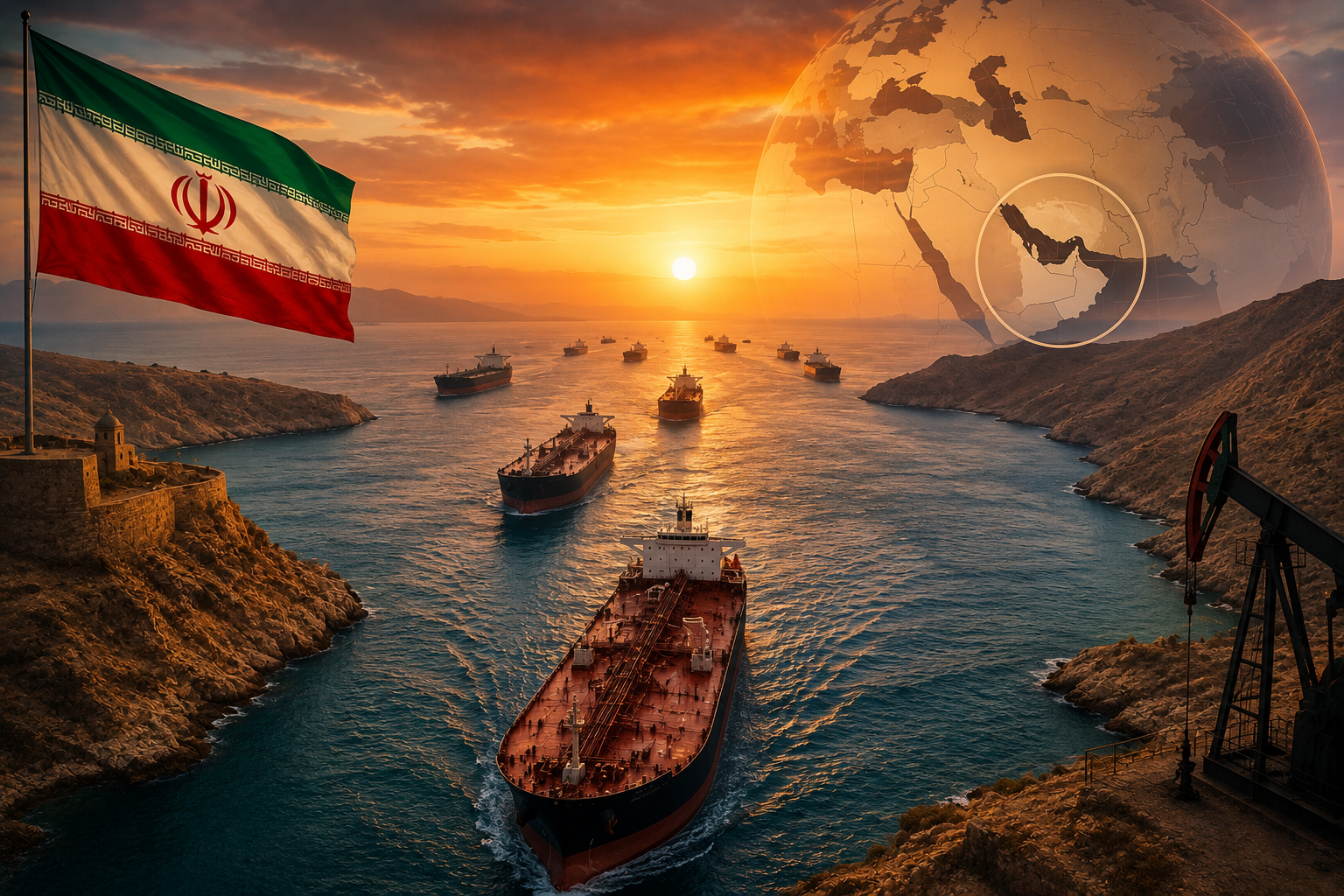
Tehran Says Strategic Waterway Will Never Return to Pre-War Status; Global Oil Markets Closely Watch Developments
Iran has sent a strong signal to the international community regarding the future of the Strait of Hormuz, with Parliament Speaker Mohammad Bagher Ghalibaf stating that the strategic maritime corridor will "never" return to its pre-war operational framework.
The remarks come at a sensitive time for global energy markets as Tehran and Washington begin a new diplomatic process aimed at reducing regional tensions and establishing a broader agreement following months of conflict and geopolitical uncertainty in West Asia.
Given the Strait of Hormuz's critical role in global oil transportation, the statement has attracted significant attention from governments, energy traders, shipping companies, and financial markets worldwide.
Why the Strait of Hormuz Matters to the World
The Strait of Hormuz is one of the most strategically important waterways on the planet.
The narrow maritime corridor connects the Persian Gulf with the Arabian Sea and serves as the primary export route for oil and natural gas from several major energy-producing nations.
According to energy industry estimates, nearly 20% of global oil consumption and a substantial share of global liquefied natural gas (LNG) exports pass through the Strait.
Countries heavily dependent on the route include:
-
Saudi Arabia
-
United Arab Emirates
-
Qatar
-
Kuwait
-
Iraq
-
Iran
Any disruption, policy change, or security concern involving the Strait can quickly influence global crude oil prices and shipping costs.
Iran Signals Greater Control Over Maritime Operations
Speaking after returning from Switzerland, where Iranian and US officials recently held technical discussions, Ghalibaf emphasized that Iran intends to administer the Strait under a revised framework.
While he stated that international maritime laws and regulations would continue to be respected, his comments suggested a stronger Iranian role in managing the passage moving forward.
The statement reflects Tehran's belief that recent regional developments have altered the strategic balance and created a new reality in the Gulf region.
Although Iranian officials have not yet announced specific operational changes, the comments indicate that the country could seek a more prominent role in future security and navigation arrangements.
US-Iran Talks Offer Hope for Regional Stability
The remarks come shortly after the first round of technical talks between Iran and the United States held in Switzerland.
The discussions are part of a newly established 14-point Memorandum of Understanding (MoU) designed to reduce tensions and create a roadmap toward a broader agreement within 60 days.
As part of the process, both sides have reportedly agreed to establish a High-Level Committee tasked with overseeing negotiations and monitoring implementation of future agreements.
Diplomatic observers believe the talks represent one of the most significant breakthroughs in US-Iran relations in recent years.
Iran Claims Strong Position at Negotiating Table
Ghalibaf used the occasion to highlight what he described as Iran's growing diplomatic influence.
According to the Iranian Speaker, Tehran successfully leveraged its position during the negotiations and played an active role in shaping discussions.
He further claimed that Iranian negotiators were able to influence developments during the talks and demonstrated their ability to defend national interests despite ongoing geopolitical pressures.
While such claims remain difficult to independently verify, they reflect Tehran's efforts to portray the negotiations as a diplomatic success.
Sanctions Relief and Frozen Assets Back in Focus
Economic issues reportedly featured prominently during the Switzerland discussions.
Iranian officials indicated that talks covered:
Release of Frozen Financial Assets
Iran continues to seek access to overseas funds that have remained inaccessible under various international sanctions.
Oil Export Flexibility
The easing of restrictions on Iranian crude exports remains a key priority for Tehran, which hopes to increase oil revenues and strengthen economic recovery.
Financial and Banking Access
Future negotiations may also address barriers affecting international banking transactions and cross-border trade.
Any meaningful progress in these areas could significantly impact global energy supply dynamics and improve Iran's economic outlook.
Implications for Global Oil Markets
Energy traders and investors are carefully assessing the implications of Iran's latest statements.
A successful diplomatic outcome between Washington and Tehran could result in:
-
Increased Iranian oil exports
-
Improved supply availability
-
Lower geopolitical risk premiums
-
Greater stability in energy markets
However, uncertainty surrounding the future administration of the Strait of Hormuz could also contribute to volatility if investors perceive heightened risks to shipping routes or regional security.
As a result, crude oil prices are likely to remain highly sensitive to developments in the negotiations.
Impact on India and Other Energy Importers
For major oil-importing economies such as India, stability in the Strait of Hormuz remains critically important.
A large portion of India's crude oil imports originates from Gulf nations that rely on the Strait for exports.
Any disruption could lead to:
-
Higher energy costs
-
Increased inflationary pressures
-
Rising transportation expenses
-
Pressure on fiscal balances
Conversely, a successful agreement between the United States and Iran could help ease supply concerns and support more stable energy prices.
Iran Reiterates Distrust of the United States
Despite participating in negotiations, Iranian leaders continue to express skepticism toward Washington.
Ghalibaf reiterated Tehran's long-standing position that Iran does not trust the United States and remains cautious about American commitments.
The comments underscore the complexity of the relationship, which continues to be shaped by decades of sanctions, diplomatic disputes, and geopolitical rivalry.
Nevertheless, both sides appear willing to continue discussions in pursuit of a broader framework agreement.
Regional Security and Lebanon Discussed
The Iranian Speaker also indicated that discussions extended beyond bilateral issues and included broader regional concerns.
Topics reportedly addressed included:
-
Security conditions in Lebanon
-
Ceasefire arrangements
-
Prevention of regional escalation
-
Humanitarian considerations
-
Political stability in West Asia
Iran maintains that continued dialogue can help reduce the risk of broader conflict and create conditions for long-term stability.
What Investors Should Watch Next
Markets will closely monitor several developments over the coming weeks:
Progress in US-Iran Negotiations
Any signs of a breakthrough could influence oil prices and investor sentiment.
Changes in Hormuz Operations
Investors will be looking for clarity on how Iran plans to administer the waterway going forward.
Sanctions Developments
Potential easing of restrictions could increase global oil supply and impact energy markets.
Regional Security Conditions
Further escalation or stabilization in West Asia will continue to influence commodity prices and global risk appetite.
Smart Investment Take
Iran's declaration that the Strait of Hormuz will never return to its pre-war status highlights the strategic shifts underway in one of the world's most important energy corridors. While ongoing negotiations between Tehran and Washington have reduced immediate fears of conflict, uncertainty surrounding future maritime arrangements and regional security remains a key risk factor for global markets. For investors, developments in the Strait of Hormuz will remain closely linked to crude oil prices, inflation trends, shipping costs, and overall market sentiment in the months ahead.