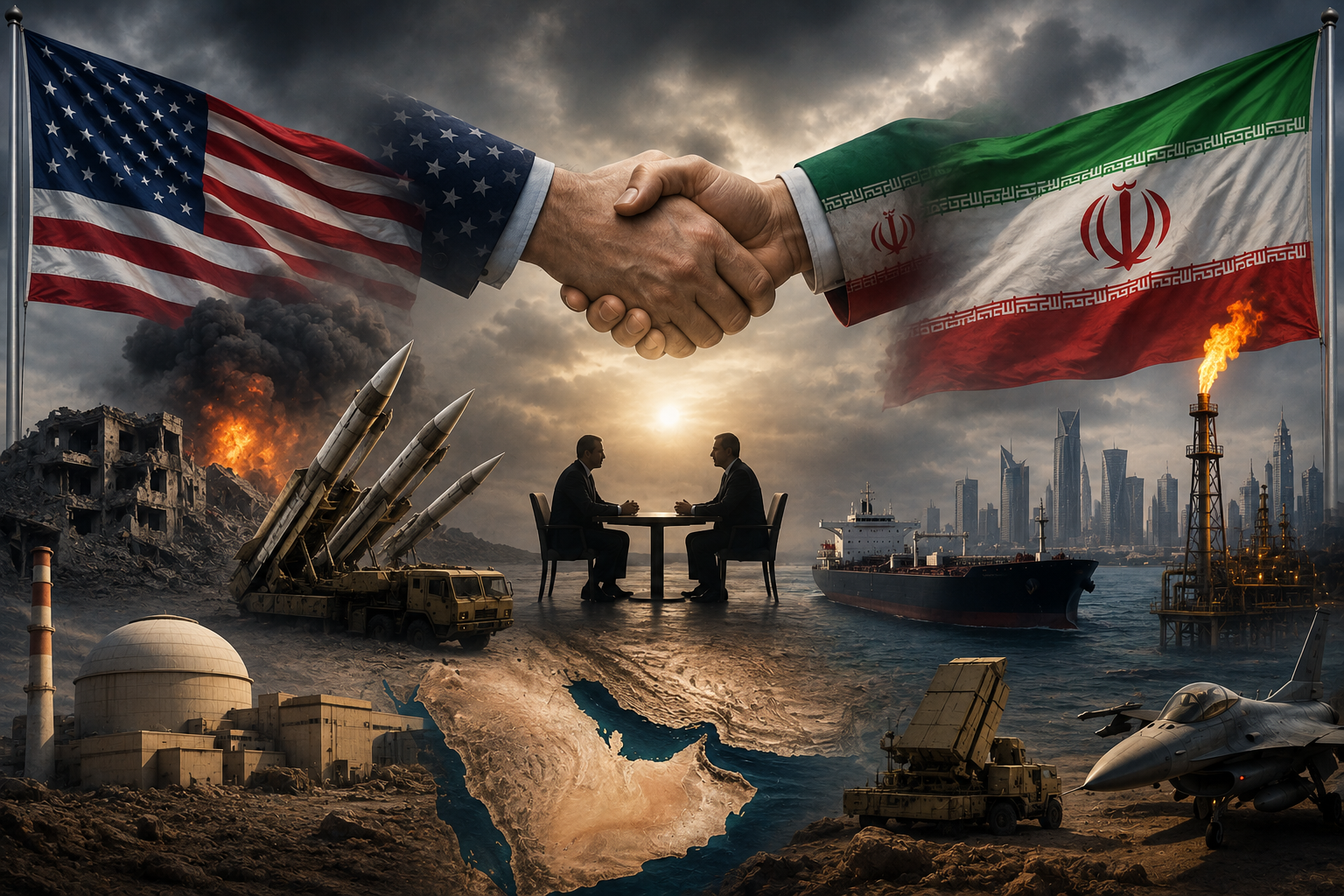
Analysts Question Whether Four Months of Conflict Delivered Strategic Gains as Nuclear, Security, and Energy Risks Persist
After nearly four months of devastating conflict between the United States and Iran, a newly signed memorandum of understanding has brought a temporary halt to hostilities. Yet despite the enormous military, economic, and humanitarian costs, many geopolitical experts argue that the war has failed to produce a clear strategic transformation in the Middle East.
The conflict, which began with Washington's objective of curbing Iran's regional influence and weakening its military capabilities, has concluded with a fragile agreement that leaves several of the region's most pressing challenges unresolved. As global markets assess the aftermath, questions remain over whether the war fundamentally altered the balance of power or merely postponed future confrontations.
Nuclear Program Damaged, Not Eliminated
One of the central goals of the military campaign was to dismantle Iran's nuclear ambitions. While repeated strikes reportedly damaged nuclear facilities and disrupted operations, experts note that the program itself was not completely eliminated.
Instead, the issue has been pushed back to future diplomatic negotiations. The agreement provides no permanent framework for resolving concerns surrounding uranium enrichment, nuclear inspections, or long-term non-proliferation commitments.
For investors and policymakers alike, the unresolved nuclear issue continues to represent a significant source of geopolitical uncertainty.
Economic Relief Emerges as Key Incentive
A major component of the peace understanding revolves around economic incentives. The agreement opens the door for potential sanctions relief, access to frozen assets, reconstruction funding, and expanded economic cooperation with regional partners.
Iran's economy has suffered extensive damage during the conflict, with infrastructure losses, inflationary pressures, and rising unemployment creating substantial domestic challenges. Financial assistance and economic normalization could become critical to the country's recovery efforts.
However, analysts remain divided on whether economic benefits alone will be sufficient to reshape Iran's long-standing foreign policy approach.
Strait of Hormuz Remains a Strategic Flashpoint
The war once again highlighted the strategic importance of the Strait of Hormuz, one of the world's most critical energy transit routes. During the conflict, disruptions to maritime traffic triggered volatility across global oil and gas markets.
Although the agreement temporarily reopened the waterway, uncertainty remains. Iranian officials have continued to signal their willingness to use the strait as leverage in future disputes, keeping energy traders and policymakers on alert.
Any renewed disruption could have significant implications for crude oil prices, LNG shipments, inflation, and global supply chains.
Israel Faces New Strategic Questions
Israel entered the conflict seeking to significantly weaken Iran's military influence and reduce long-term security threats. While military operations caused considerable damage to Iranian infrastructure, the final agreement stopped short of addressing several key Israeli concerns.
Issues such as Iran's missile program, regional proxy networks, and future military capabilities remain unresolved. As a result, security analysts believe the conflict may have delivered only limited strategic gains while creating new uncertainties for regional stability.
The outcome has also sparked debate over the future direction of US-Israel relations as Washington pursues a broader diplomatic approach toward Tehran.
Gulf States Reassess Regional Security
The conflict forced Gulf nations to confront vulnerabilities in energy infrastructure, trade routes, and security arrangements. While regional economies largely avoided catastrophic damage, the war underscored the risks associated with prolonged geopolitical tensions.
Several Gulf countries are now exploring deeper economic engagement with Iran, viewing investment and commercial ties as potential tools for reducing future conflict risks. Increased regional cooperation could emerge as one of the more significant long-term consequences of the agreement.
Market Impact and Investor Perspective
For financial markets, the end of active hostilities removes a major source of near-term uncertainty. Energy prices, shipping rates, and commodity markets have responded positively to the reopening of key trade routes and the prospect of improved regional stability.
However, investors remain cautious. The durability of the agreement, the future of Iran's nuclear program, and ongoing tensions involving regional proxy groups will continue to influence market sentiment.
Sectors including energy, defense, infrastructure, shipping, and commodities are likely to remain particularly sensitive to developments in the region.
Outlook
While the memorandum has succeeded in halting active warfare, it has not resolved the deeper political and security disputes that fueled the conflict. The agreement provides a framework for diplomacy and economic engagement, but many of the underlying challenges remain intact.
For now, the Middle East enters a period of uneasy calm. Whether this evolves into lasting stability or merely a pause before future tensions emerge will depend on the success of diplomatic efforts in the months ahead.