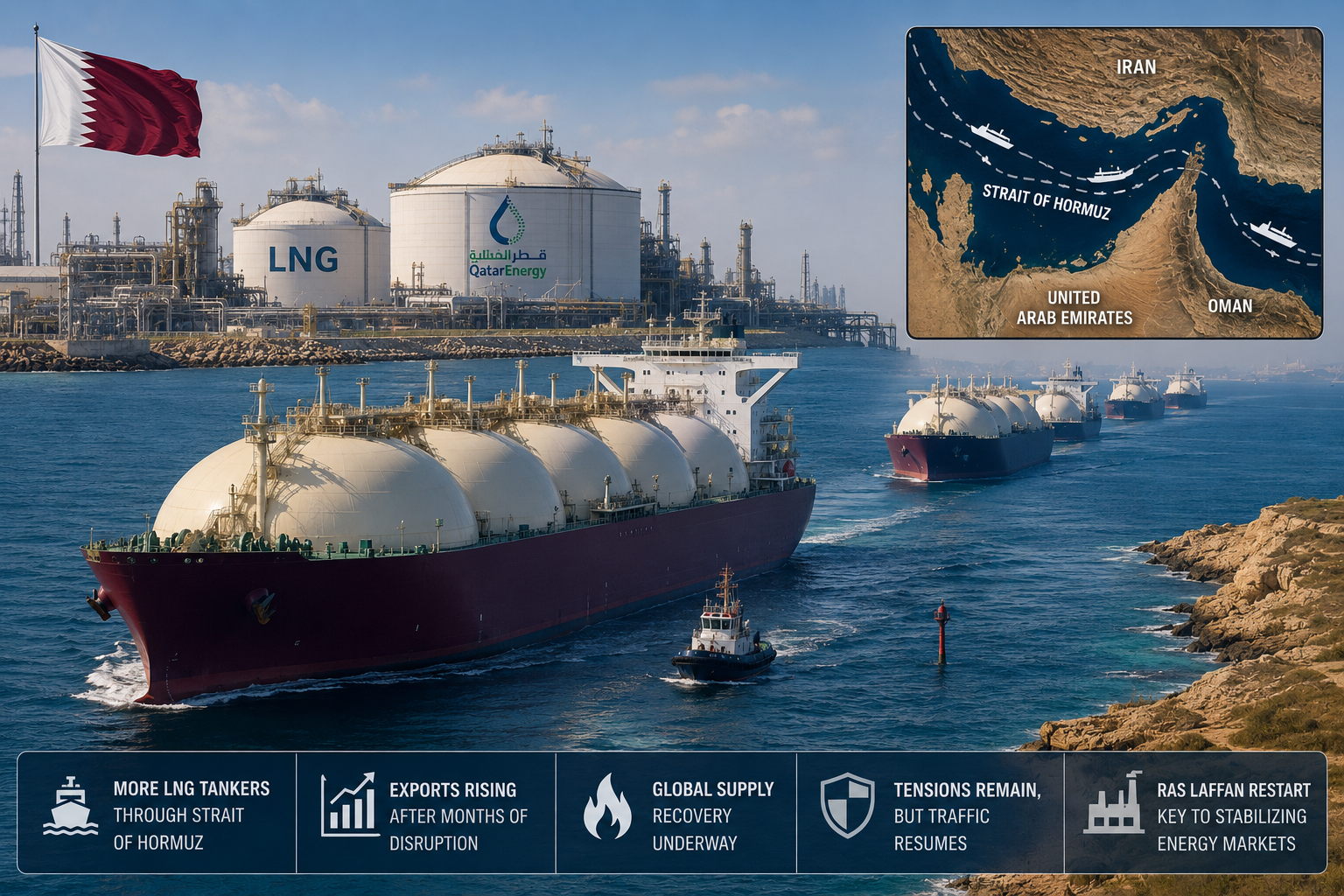
Increased Tanker Traffic Signals Gradual Recovery of One-Fifth of the World’s LNG Supply Amid Easing Middle East Tensions
Qatar is accelerating efforts to restore its liquefied natural gas (LNG) exports, with a growing number of LNG carriers moving through the strategically critical Strait of Hormuz. The development marks a significant step toward normalizing global energy flows after months of disruption caused by geopolitical tensions and military conflict in the Middle East.
The Gulf nation, one of the world’s largest LNG exporters, had sharply curtailed production and exports following attacks on key energy infrastructure and the temporary closure of the Strait of Hormuz. The waterway serves as a vital gateway for energy shipments from the Gulf region to international markets and is responsible for transporting a substantial share of the world's oil and gas exports.
Largest LNG Tanker Movement Since Conflict Began
Recent shipping data indicates that several Qatar-linked LNG carriers are currently traversing the Strait of Hormuz, representing the largest movement of empty LNG vessels through the passage since the outbreak of hostilities between the United States and Iran more than three months ago.
Additional tankers are positioned near Oman and are expected to enter the Gulf in the coming days, highlighting growing confidence among shipping operators and energy companies that maritime traffic can resume safely.
The return of these vessels is a key indicator that Qatar is preparing for a significant increase in LNG exports, potentially restoring a major portion of global gas supply that was disrupted during the conflict.
Qatar’s Crucial Role in Global Energy Markets
Before the outbreak of hostilities, Qatar accounted for nearly 20% of global LNG trade, supplying natural gas to major importers across Asia and Europe. Any disruption to Qatari exports has immediate implications for global energy prices, supply security, and industrial activity.
While exports have resumed on a limited scale, current shipment volumes remain significantly below pre-conflict levels. Industry observers expect production and exports to increase steadily if shipping routes remain secure and infrastructure operations continue without interruption.
Ras Laffan Restart Holds Key to Market Stability
Global energy markets are closely monitoring the recovery of Ras Laffan Industrial City, home to the world's largest LNG export complex. The facility is central to Qatar’s energy sector and a critical source of LNG for international buyers.
A rapid restart of Ras Laffan operations could help ease supply concerns and reduce volatility in global natural gas prices. However, recent reports of an explosion and fire at the Barzan gas supply facility during startup operations have introduced fresh uncertainty regarding the pace of recovery.
Although the affected facility primarily serves domestic industries and power generation, market participants are assessing whether the incident could have any indirect impact on LNG production.
Strait of Hormuz Remains a Global Energy Flashpoint
The reopening of the Strait of Hormuz follows an interim peace understanding between the United States and Iran, which has encouraged the return of shipping traffic. Nevertheless, geopolitical risks remain elevated as regional tensions continue to simmer.
Energy traders and investors remain cautious, recognizing that any renewed escalation could once again disrupt one of the world’s most important maritime energy corridors. The Strait handles millions of barrels of crude oil and substantial LNG volumes each day, making it a critical component of global energy infrastructure.
Impact on Energy Prices and Investors
The gradual return of Qatari LNG exports is expected to provide relief to global gas markets that have experienced supply uncertainty in recent months. Increased shipments could improve market liquidity, stabilize prices, and strengthen energy security for importing nations.
For investors, developments in Qatar's LNG industry remain closely linked to energy stocks, shipping companies, commodity markets, and global inflation trends. A successful production restart could support broader stability in the energy sector and reduce concerns about supply shortages heading into the second half of the year.
Outlook
As more LNG carriers return to the Gulf and export infrastructure resumes operations, Qatar appears poised to reclaim its position as one of the world's most important suppliers of liquefied natural gas. While challenges remain, the increasing flow of tankers through the Strait of Hormuz signals a positive step toward restoring global energy market balance.
Subheading: Qatar increases LNG tanker movements through the Strait of Hormuz as the nation works to restore exports, strengthen global gas supplies, and stabilize energy markets following months of geopolitical disruption.