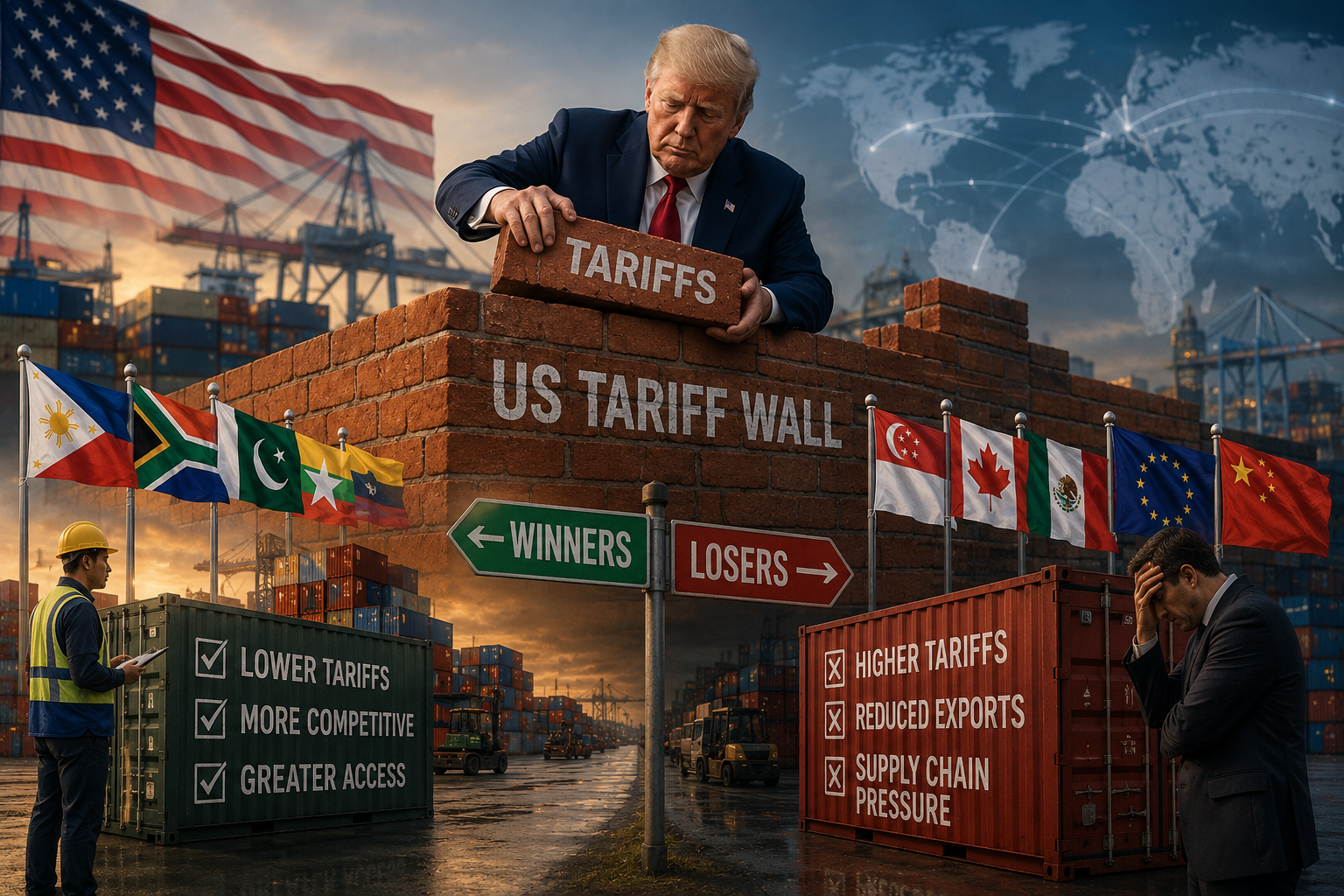
New US Trade Strategy Creates Fresh Winners and Losers as Nations Race to Secure Competitive Market Access
The global trade landscape is entering a new phase as US President Donald Trump’s administration moves to rebuild its tariff framework following a Supreme Court ruling that invalidated broad-based emergency tariffs imposed earlier in his second term. While the legal foundation of the original tariff regime has changed, Washington's commitment to protecting domestic industries through higher import duties remains firmly intact.
The revamped strategy relies heavily on investigations conducted under Section 301 of the Trade Act of 1974, targeting countries accused of unfair trade practices, forced labor violations, and industrial overcapacity. The outcome is expected to reshape supply chains, influence investment flows, and alter competitive dynamics across key manufacturing sectors.
For global businesses and investors, the emerging tariff structure presents a mixed picture. Some countries are positioned to benefit from reduced duties compared to the tariff levels announced on "Liberation Day" in April 2025, while others may face higher barriers to accessing the world's largest consumer market.
Among the likely beneficiaries are the Philippines and South Africa. The Philippines could see its tariff burden decline significantly, improving its attractiveness as a manufacturing and export hub. South Africa is also expected to gain from lower duties, potentially strengthening exports to the United States. Smaller economies such as Pakistan, Laos, Myanmar, and Lesotho may emerge as alternative sourcing destinations as multinational corporations continue diversifying supply chains away from traditional manufacturing centers.
On the other hand, Singapore faces growing uncertainty. Despite maintaining strong trade relations with the United States, the city-state could be subjected to additional tariffs linked to investigations into labor and industrial practices. Given Singapore's critical role as a global logistics and transshipment hub, any increase in trade barriers could affect regional supply chains and trade flows.
Several major economies remain in a state of uncertainty. India, the European Union, Japan, South Korea, and the United Kingdom have negotiated agreements with Washington that cap tariff rates at lower levels. However, businesses are closely watching whether these commitments will remain fully protected under the revised framework.
India is particularly in focus as US Trade Representative Jamieson Greer visits the country to discuss trade relations. Indian policymakers are seeking assurances that Indian exports retain a competitive advantage relative to rival manufacturing nations. A favorable outcome could support India's ambitions of becoming a leading global manufacturing destination under its "Make in India" initiative.
The European Union also faces a critical period as member states work toward ratifying a trade agreement before deadlines set by the Trump administration. Failure to secure formal approval could result in higher tariffs on key exports, particularly automobiles and industrial goods.
Meanwhile, China remains one of the most closely watched players. Despite ongoing strategic tensions between Washington and Beijing, the effective tariff rate on Chinese goods is substantially lower than the levels Trump proposed during his election campaign. However, upcoming negotiations later this year could determine the future direction of US-China trade relations, with issues such as technology access, rare earth minerals, and supply chain security expected to dominate discussions.
For investors, the evolving tariff environment could create both risks and opportunities. Companies with diversified supply chains, strong domestic manufacturing capabilities, and exposure to emerging export hubs may be better positioned to navigate the shifting trade landscape. At the same time, sectors heavily dependent on cross-border trade could face increased volatility as new tariff policies take shape.
As the United States recalibrates its trade strategy, the global economy is entering a period of renewed uncertainty. The coming months will reveal which countries successfully adapt to the new rules and which industries emerge as the biggest beneficiaries of the next chapter in global trade.