Breakthrough Swiss Talks Open New Diplomatic Channel as Markets Watch Impact on Oil and Regional Stability
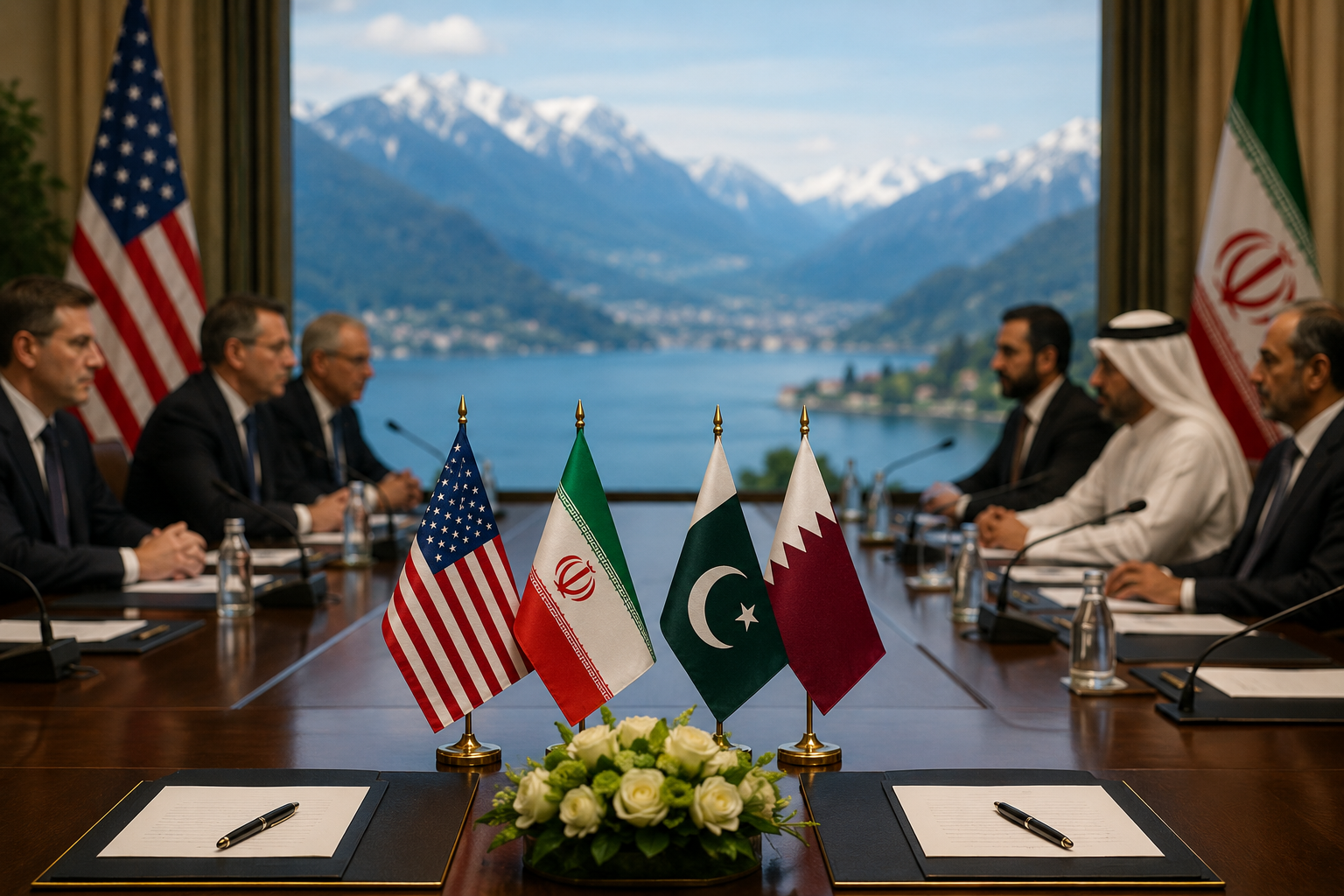
In a significant diplomatic development, the United States and Iran have agreed on a roadmap aimed at reaching a comprehensive agreement within the next 60 days following high-level negotiations held at the Swiss resort town of Burgenstock. The breakthrough is being viewed as an important step toward reducing tensions in the Middle East and restoring stability to global energy markets.
The talks were conducted under the framework of the Islamabad Memorandum of Understanding (MoU), signed earlier between Washington and Tehran with the support of Pakistan and Qatar. The agreement seeks to advance discussions on regional security, economic cooperation, maritime safety, and other long-standing issues that have strained relations between the two nations.
High-Level Diplomacy Signals Fresh Momentum
The two-day summit brought together senior officials from the United States, Iran, Pakistan, and Qatar. The US delegation was led by Vice President JD Vance, while Iran was represented by Parliament Speaker Mohammad Bagher Ghalibaf.
Pakistan Prime Minister Shehbaz Sharif and Qatar Prime Minister Sheikh Mohammed bin Abdulrahman Al Thani played a key role in facilitating the discussions, reflecting the growing diplomatic influence of both countries in regional peace efforts.
Following the conclusion of the Lake Lucerne Summit, mediators announced that all parties had reviewed progress under the recently signed Islamabad MoU and agreed to accelerate negotiations through structured technical discussions.
Roadmap Targets Final Agreement Within 60 Days
According to the joint statement released after the talks, a High-Level Committee will oversee implementation of the memorandum and monitor progress on all key issues.
The committee has approved a roadmap designed to achieve a final agreement within 60 days. Technical teams from both countries are expected to begin detailed negotiations immediately, focusing on security arrangements, economic cooperation, sanctions-related issues, and regional stability mechanisms.
Diplomatic observers believe the timeline reflects a strong commitment from both sides to maintain momentum and avoid prolonged uncertainty.
Strait of Hormuz Becomes Key Focus Area
One of the most important outcomes of the meeting was the establishment of a dedicated communication mechanism aimed at preventing misunderstandings and ensuring safe maritime navigation through the Strait of Hormuz.
The Strait of Hormuz remains one of the world's most strategically important shipping routes, handling a significant share of global crude oil exports. Any disruption in this narrow waterway can have immediate consequences for global energy prices and supply chains.
Recent military tensions and restrictions on shipping activity in the region had fueled concerns about potential supply disruptions, contributing to volatility in international crude oil markets. The new communication framework is expected to reduce risks and improve confidence among energy traders and global investors.
Positive Signal for Global Energy Markets
Financial markets are closely monitoring the negotiations due to their potential impact on oil prices and global inflation.
A successful agreement could ease geopolitical risk premiums embedded in crude oil prices, helping stabilize energy costs for both developed and emerging economies. Lower volatility in energy markets may also support central banks in their efforts to control inflation without resorting to aggressive monetary tightening.
Analysts believe any durable improvement in US-Iran relations would be welcomed by energy-importing nations, including India, which remains heavily dependent on crude oil imports.
Lebanon Ceasefire Efforts Continue
The joint statement also highlighted ongoing efforts to maintain stability in Lebanon. Mediators confirmed that technical discussions related to the cessation of military operations in Lebanon would continue throughout the week.
Although Israel and Hezbollah are not direct participants in the US-Iran framework, regional observers view broader diplomatic engagement as a positive factor that could contribute to de-escalation across the Middle East.
The ceasefire established over the weekend has largely held, though long-term security concerns remain unresolved.
What This Means for Investors
The latest diplomatic breakthrough could have far-reaching implications for global financial markets. Reduced geopolitical tensions generally support risk assets, improve investor confidence, and help stabilize commodity prices.
For India, easing tensions in the Gulf region may provide relief on the crude oil front, support the rupee, and reduce imported inflation pressures. Sectors such as aviation, paints, chemicals, and oil marketing companies could benefit if crude prices remain stable or decline.
Investors will now closely track the progress of technical negotiations over the coming weeks, as any advancement toward a final agreement could further improve market sentiment globally.
Outlook
The Burgenstock summit represents the most significant diplomatic engagement between the United States and Iran in recent months. While several challenges remain before a final agreement is reached, the commitment to a structured 60-day roadmap has generated optimism among policymakers, investors, and global markets.
If negotiations continue in a constructive manner, the agreement could mark a turning point for regional stability, energy security, and international trade, with positive implications extending far beyond the Middle East.