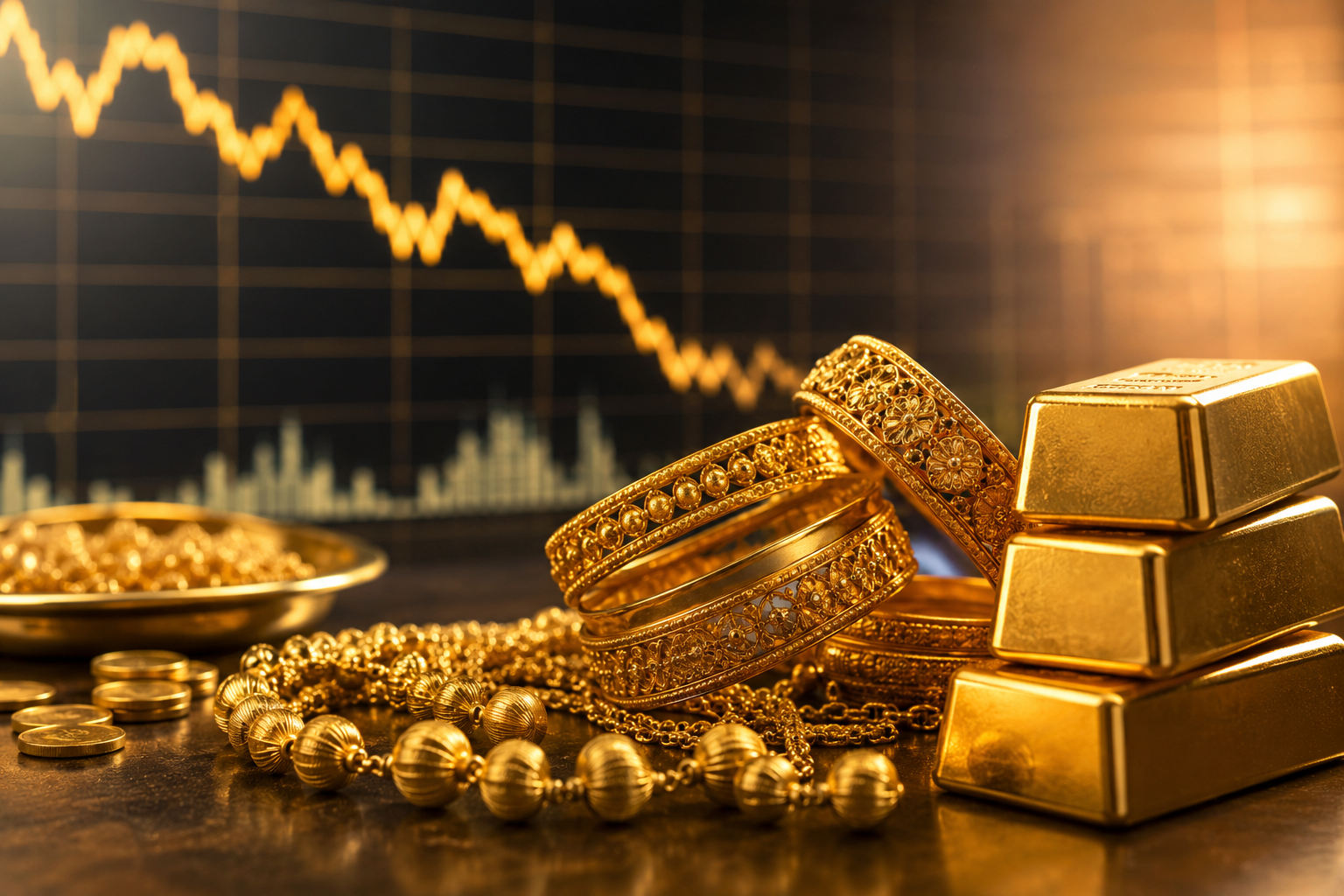
Buyers Await Stability as Gold Prices Hit Two-Month Low
India's gold market is witnessing an unusual trend. Despite a significant decline in prices that has brought gold to its lowest level in more than two months, consumer demand remains subdued. Traditionally, lower prices encourage jewellery purchases and investment buying, but ongoing market volatility and uncertainty over future price movements have kept many buyers on the sidelines.
Industry participants say consumers are adopting a cautious approach, preferring to wait for clearer signals before making large purchases. The trend highlights changing investor behavior, where market stability has become as important as price levels in driving demand.
Gold Prices Retreat After Strong Rally
Gold prices have corrected sharply from their recent highs following months of strong gains driven by geopolitical tensions, global economic concerns, and safe-haven demand. The easing of some geopolitical risks and expectations that major central banks may keep interest rates elevated for longer have triggered profit booking across international bullion markets.
As a result, domestic gold prices have become more affordable compared to the record levels witnessed earlier this year. However, the anticipated surge in physical buying has yet to emerge, suggesting that consumers remain uncertain about whether prices have fully stabilized.
Retail Buyers Continue Wait-and-Watch Strategy
Jewellers across key markets report a modest improvement in enquiries but no significant increase in actual purchases. Many customers are delaying buying decisions, hoping for further corrections or clearer market direction.
The uncertainty surrounding global economic growth, US monetary policy, and currency movements continues to influence sentiment. Investors are closely monitoring developments before committing fresh capital to the precious metal.
Market experts note that this cautious approach is limiting demand recovery despite attractive pricing opportunities.
Discounts Rise as Dealers Push Sales
Weak consumer demand has prompted bullion dealers to offer wider discounts on physical gold. Such discounts typically emerge when inventories remain high relative to demand and sellers seek to stimulate purchases.
The increased incentives indicate that supply conditions are comfortable while buying activity remains below normal levels. Although some long-term investors have started accumulating gold at lower prices, overall market participation remains weaker than expected.
Gold ETF Outflows Reflect Profit Booking
Investment demand has also slowed following the sharp rally seen earlier this year. Many investors have opted to lock in profits rather than increase exposure to the metal.
India's physically backed gold exchange-traded funds (ETFs) recently recorded their first monthly net outflow in nearly a year. The development signals a shift in investor sentiment, with participants reassessing their positions amid changing global market conditions.
Analysts view ETF flows as an important indicator of investment demand, and continued outflows could suggest a prolonged consolidation phase for gold prices.
Global Demand Trends Remain Mixed
India is not alone in witnessing subdued demand. Several major Asian markets, including China, have reported cautious buying patterns as consumers weigh lower prices against ongoing uncertainty in global financial markets.
Investors worldwide continue to monitor geopolitical developments, economic data releases, and central bank decisions that could influence the future direction of precious metals.
This mixed global demand environment has contributed to pressure on international gold prices in recent weeks.
Strong Dollar and Higher Rates Remain Key Challenges
One of the biggest challenges for gold continues to be the strength of the US dollar and expectations of elevated interest rates. Higher interest rates increase the attractiveness of fixed-income investments while reducing the appeal of non-yielding assets such as gold.
The US Federal Reserve's policy outlook remains a critical factor influencing bullion prices. Any indication of prolonged monetary tightening could continue to weigh on investor appetite for precious metals.
Jewellery Sector Shows Early Signs of Recovery
Despite the weakness in retail investment demand, the jewellery industry is beginning to prepare for the upcoming festive and wedding seasons. Several jewellers have started replenishing inventories in anticipation of stronger seasonal demand in the second half of the year.
Industry participants believe that if prices stabilize and consumer confidence improves, physical demand could witness a gradual recovery in the coming months.
Outlook: Stability May Be the Key Trigger
While lower gold prices have improved affordability, market participants believe that stability rather than price alone will determine the next phase of demand. Consumers and investors appear willing to wait until uncertainty surrounding interest rates, global growth, and geopolitical developments subsides.
For now, the gold market remains in a consolidation phase, with demand likely to recover only when buyers gain greater confidence in the sustainability of current price levels.