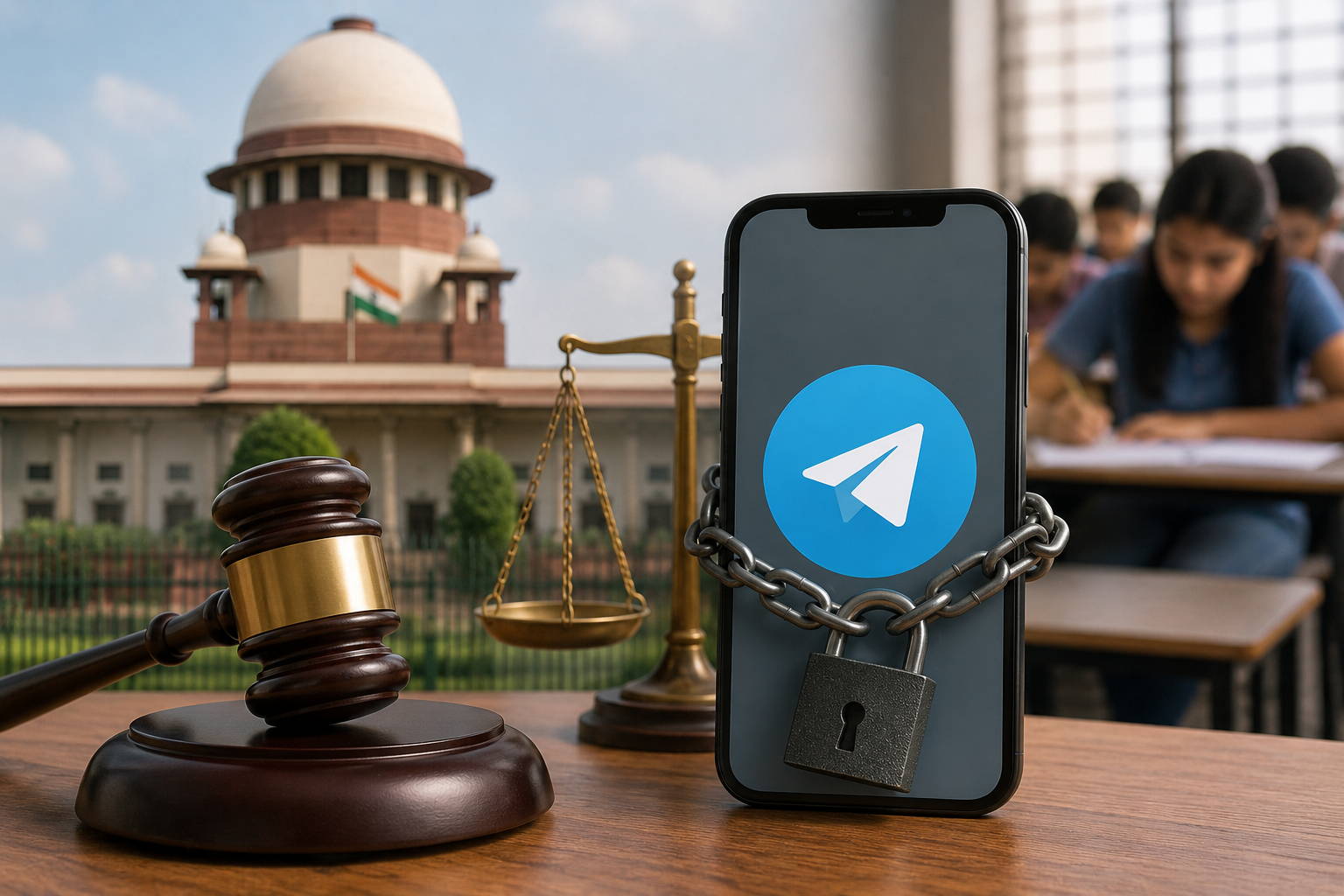
Court Rules Government’s Action Was Necessary to Protect Examination Integrity; Restriction to Remain Until June 22
In a major development related to the ongoing efforts to safeguard national examinations, the Delhi High Court has upheld the Central Government's decision to temporarily block access to the Telegram messaging platform ahead of the NEET-UG 2026 re-examination. The court dismissed Telegram's challenge against the order, observing that the government's action was proportionate and represented the "least restrictive measure" available to prevent potential misuse of the platform.
The ruling comes amid heightened concerns over examination security following allegations of question paper leaks that led to the cancellation of the original NEET-UG examination conducted earlier this year.
Court Backs Government’s Authority Under IT Act
While delivering its verdict, the High Court held that the Centre was empowered under Section 69A of the Information Technology Act, 2000, to restrict access to online platforms when necessary in the interest of public order and national importance.
The court noted that the temporary nature of the restriction and its limited duration demonstrated that authorities had adopted a balanced approach rather than imposing a permanent ban.
According to the court, the government's decision was aimed specifically at protecting the integrity of a highly sensitive national examination affecting lakhs of students across the country.
The judgment is expected to serve as an important precedent regarding the government's powers to regulate digital platforms during critical public events.
Background: NEET-UG Exam Cancelled Amid Paper Leak Allegations
The controversy began after allegations emerged that the NEET-UG 2026 examination paper had been leaked before the test.
Following widespread concerns raised by students, parents and educational institutions, the National Testing Agency (NTA) cancelled the examination and announced a re-test scheduled for June 21.
The matter is currently being investigated by the Central Bureau of Investigation (CBI), which is examining allegations of organized malpractice and unauthorized circulation of examination materials.
The cancellation affected millions of medical aspirants and triggered a nationwide debate about examination security and accountability.
Why Telegram Came Under Scrutiny
Authorities argued that certain features available on Telegram had allegedly been used to circulate misleading information and facilitate the sharing of examination-related content.
Government agencies expressed concerns that the platform could once again be misused to spread unauthorized material ahead of the re-examination, potentially compromising the fairness of the process.
Based on recommendations from the NTA, the Ministry of Electronics and Information Technology (MeitY) issued an order restricting access to Telegram across India from June 16 until June 22, covering the period immediately before and after the re-exam.
Officials maintained that the move was preventive rather than punitive and was intended solely to ensure a fair testing environment.
Telegram Argues Ban Affected Millions of Users
During the hearing, Telegram challenged the legality and proportionality of the government's decision.
The company's legal representatives argued that the temporary restriction affected more than 150 million users in India, many of whom rely on the platform for communication, business activities and educational purposes.
Telegram contended that the government could have adopted narrower alternatives instead of imposing a nationwide restriction.
However, the court ultimately accepted the government's position that the temporary measure was justified given the extraordinary circumstances surrounding the examination.
Message Editing Feature Also Restricted
In addition to the temporary access restriction, the government directed Telegram to disable its message-editing feature in India until June 30.
Authorities claimed that edited messages had previously been used to create misleading evidence suggesting that examination papers were leaked before tests took place.
Officials believe that restricting this feature could help investigators distinguish between genuine and manipulated digital records during ongoing probes into examination irregularities.
The move reflects growing concerns among regulators regarding the misuse of digital communication tools in sensitive public matters.
Growing Focus on Examination Security
The NEET-UG controversy has reignited discussions about the security of large-scale competitive examinations in India.
Experts have called for stronger technological safeguards, enhanced monitoring mechanisms and stricter penalties for individuals involved in examination fraud.
Educational institutions and policymakers are increasingly exploring advanced digital security systems, including artificial intelligence-based monitoring and encrypted examination distribution networks, to prevent future breaches.
The incident has highlighted the growing challenge of balancing digital freedoms with the need to protect critical public processes.
Impact on Students and Medical Aspirants
For the millions of students preparing for medical admissions, the primary focus remains the successful conduct of the June 21 re-examination.
Authorities have assured candidates that additional security measures have been implemented to ensure transparency and fairness throughout the process.
Students have been advised to rely only on official communication channels for examination-related updates and avoid unverified information circulating on social media platforms.
A Significant Legal and Digital Policy Milestone
The Delhi High Court's decision represents an important moment in India's evolving digital governance framework. By upholding the temporary restriction, the court has reinforced the government's authority to take targeted actions aimed at protecting public interest while emphasizing the need for proportionality and limited duration.
As India continues to grapple with challenges posed by digital misinformation and online misuse, the ruling is likely to influence future debates surrounding platform accountability, cybersecurity and the regulation of technology services during sensitive national events.