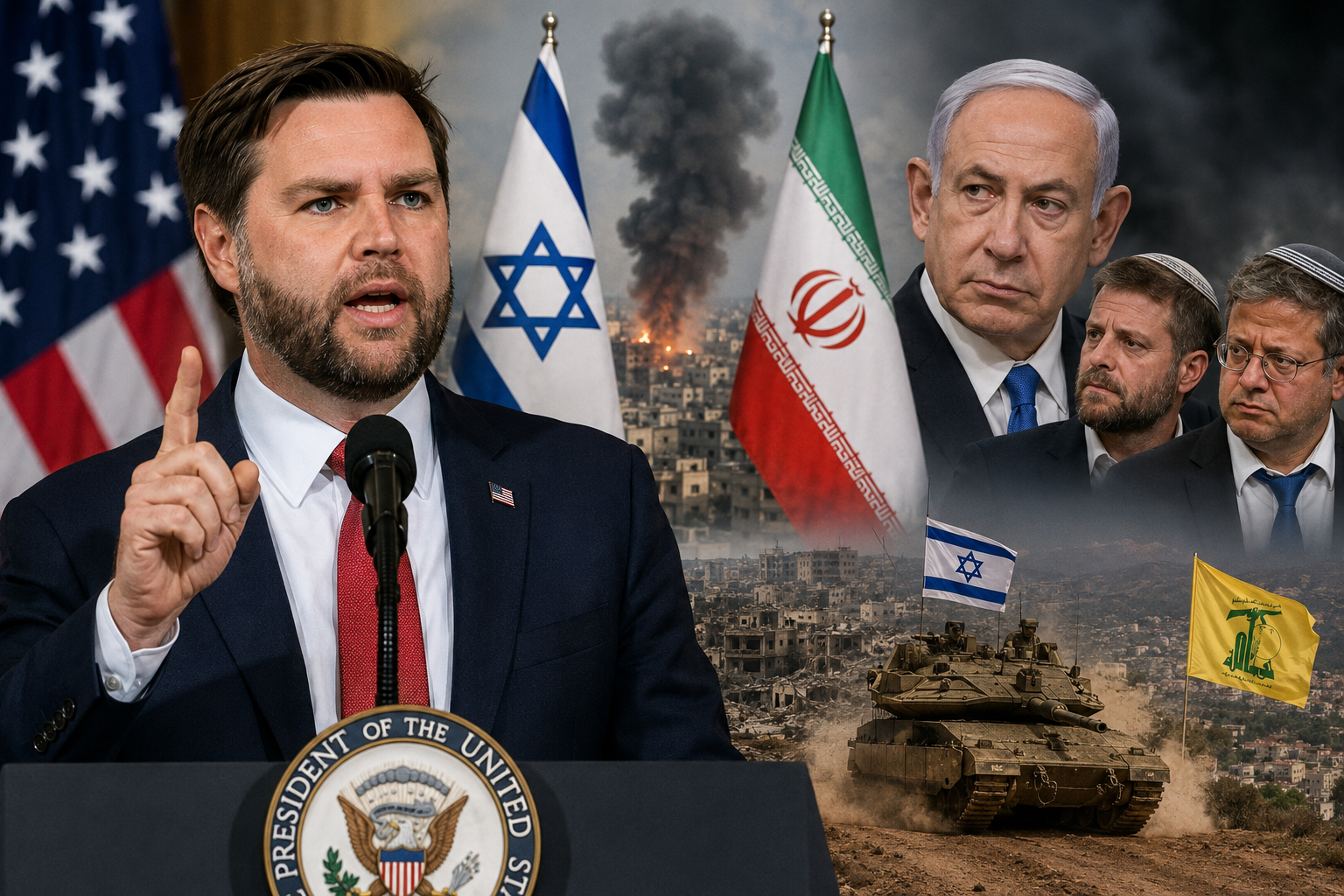
US Vice President Defends Diplomatic Agreement, Signals Growing Differences Between Washington and Tel Aviv
A rare public disagreement has emerged between the United States and Israel after US Vice President JD Vance sharply criticized Israeli opposition to the recently announced US-Iran agreement. Defending the deal as a step toward regional stability, Vance argued that military action alone cannot resolve long-term security challenges and urged Israeli leaders to place greater trust in their closest ally, the United States.
The comments mark one of the strongest public rebukes of Israeli government officials by a senior member of the Trump administration and highlight increasing tensions over the future of Middle East security policy.
Vance Defends US-Iran Agreement
The controversy centers around a new agreement aimed at reducing hostilities between Iran and its regional adversaries. While Washington views the deal as an opportunity to prevent a broader conflict, critics in both the United States and Israel argue that it leaves key issues unresolved.
Among the primary concerns are Iran’s ballistic missile programme, its nuclear ambitions and the lack of a detailed roadmap for dismantling sensitive military infrastructure.
Vance rejected criticism that the agreement represents a strategic concession, insisting that diplomacy remains a critical tool for maintaining regional stability.
Direct Message to Israeli Hardliners
In unusually blunt remarks, Vance questioned the strategy advocated by some members of Israeli Prime Minister Benjamin Netanyahu’s coalition government.
He argued that Israel faces complex security challenges that cannot be addressed through military operations alone.
According to Vance, Israel must combine military preparedness with diplomatic engagement if it hopes to achieve lasting security in an increasingly volatile region.
The comments were widely interpreted as being directed toward members of Israel’s nationalist and far-right political factions, who have strongly opposed the agreement and called for a tougher stance against Iran and Hezbollah.
Concerns Over Israel’s Growing Dependence on US Support
Vance also reminded Israeli leaders of the crucial role played by American military and diplomatic assistance.
The United States remains Israel’s largest security partner, providing advanced defense systems, intelligence cooperation and substantial military funding. According to Vance, this partnership should encourage closer coordination rather than public confrontation.
His remarks underscored Washington’s view that strong bilateral ties remain essential for maintaining stability across the Middle East.
Lebanon Operations Add to Diplomatic Friction
Another source of tension between Washington and Tel Aviv is Israel’s ongoing military activity in southern Lebanon.
Despite diplomatic efforts to reduce regional hostilities, exchanges between Israeli forces and Hezbollah have continued, raising concerns that broader conflict could re-emerge.
US officials have reportedly expressed concern that expanded military operations could undermine ongoing peace efforts and complicate negotiations involving Iran and other regional actors.
The issue has become an increasingly important point of discussion between American and Israeli policymakers.
Trump Calls for Regional Restraint
President Donald Trump has publicly backed the agreement and urged all parties to honor commitments aimed at reducing violence.
The White House believes that maintaining a ceasefire and encouraging diplomatic engagement offers the best opportunity to avoid a wider regional confrontation.
Trump has also called for restraint from both Israel and Hezbollah, signaling that Washington prefers a negotiated approach over continued escalation.
While reaffirming support for Israel’s security, the administration has emphasized the importance of preserving diplomatic momentum.
Netanyahu Balances Security and Diplomacy
Israeli Prime Minister Benjamin Netanyahu has maintained that Israel will continue taking necessary steps to protect its national security.
He has stressed that military deployments and defensive measures remain essential in areas where security threats persist.
At the same time, Netanyahu has reaffirmed the importance of maintaining strong relations with Washington, acknowledging the strategic value of the US-Israel partnership.
The challenge for Israel’s leadership will be balancing domestic security concerns with growing international pressure for diplomatic solutions.
Regional Implications Being Closely Watched
Analysts believe the current disagreement reflects broader questions about the future direction of Middle East policy.
While the United States appears focused on preventing another major regional conflict through diplomacy, some Israeli leaders remain skeptical that negotiations can adequately address security threats posed by Iran and its allies.
The coming months will likely determine whether the US-Iran agreement can deliver meaningful progress and whether Washington and Tel Aviv can bridge their differences on key strategic issues.
What It Means for Global Markets
Geopolitical developments in the Middle East continue to have significant implications for global financial markets, energy prices and investor sentiment.
Any improvement in regional stability could support global economic confidence and reduce volatility in crude oil markets. Conversely, renewed tensions between Israel, Iran and Hezbollah could trigger fresh uncertainty across commodity, currency and equity markets worldwide.
Investors will therefore closely monitor diplomatic developments, military activity and policy decisions from both Washington and regional capitals in the weeks ahead.