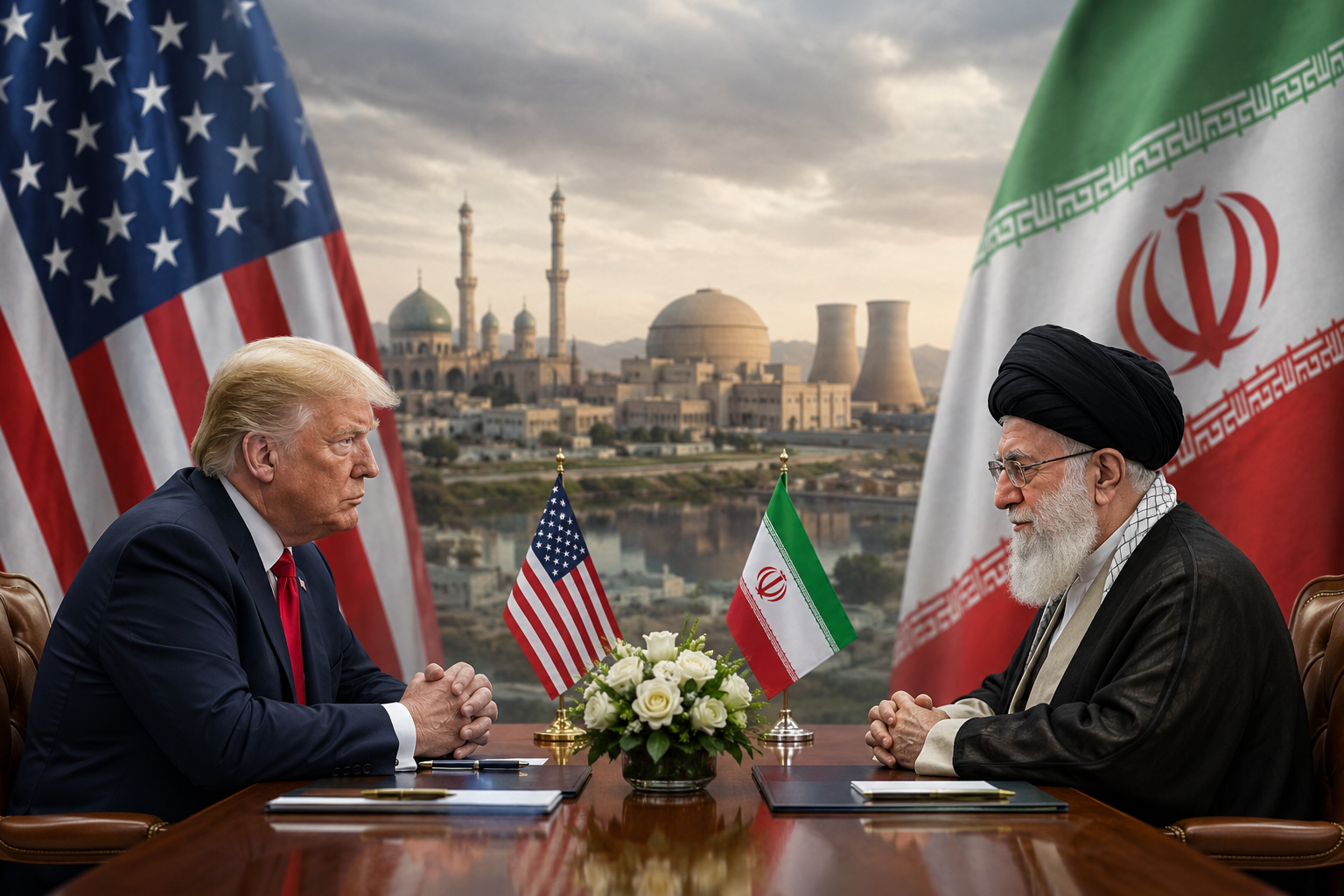
Iran’s Supreme Leader Backs Agreement While Warning Against Accepting American Demands
Iran’s Supreme Leader Mojtaba Khamenei has offered strong remarks on the newly signed US-Iran memorandum of understanding (MoU), claiming that US President Donald Trump employed “all kinds of leverage” to secure the breakthrough agreement. His comments come a day after Washington and Tehran formally agreed to a framework aimed at reducing tensions and opening the door to a broader peace settlement over the next 60 days.
The agreement, signed by President Donald Trump and Iranian President Masoud Pezeshkian, is being viewed as one of the most significant diplomatic developments in the Middle East in recent years. While supporters see it as an opportunity to avoid further conflict and stabilize global energy markets, critics on both sides remain cautious about its long-term success.
Khamenei Claims US Was More Eager for a Deal
In a public message addressed to the Iranian people, Khamenei suggested that although Iranian negotiators worked extensively to reach an understanding, it was the United States that showed greater urgency in securing an agreement.
According to Khamenei, the Trump administration utilized every available diplomatic and political tool to bring negotiations to the current stage. His remarks appeared aimed at reinforcing Iran’s position that it negotiated from a position of strength rather than weakness.
The Iranian leader emphasized that Tehran agreed to the framework only after receiving assurances that the rights of the Iranian people and the interests of the broader Resistance Front would be protected throughout the negotiation process.
Approval Granted Despite Initial Opposition
One of the most notable revelations from Khamenei’s statement was that he initially opposed moving ahead with the agreement. However, he later approved the framework after receiving commitments from President Pezeshkian and members of Iran’s Supreme National Security Council.
Khamenei stated that senior officials accepted responsibility for safeguarding Iran’s national interests and assured him that negotiators would reject any demands they considered excessive or contrary to Iranian sovereignty.
Given the Supreme Leader’s decisive role in shaping Iran’s foreign and security policies, his endorsement is considered essential for the continuation of negotiations and the successful implementation of any future agreement.
Future Talks Do Not Mean Acceptance of US Positions
While expressing support for the memorandum, Khamenei made it clear that future face-to-face discussions with American officials should not be interpreted as Iran accepting Washington’s demands.
He stressed that negotiations remain a tool for protecting Iranian interests rather than a sign of policy alignment with the United States. The comments are likely intended to reassure domestic audiences, particularly conservative factions that remain skeptical of engagement with Washington.
Iranian officials have repeatedly maintained that any final agreement must respect the country's independence, security interests and right to peaceful nuclear development.
A Critical 60-Day Negotiation Window
The memorandum establishes a 60-day period during which both nations will work toward a more comprehensive agreement. Discussions are expected to focus on Iran’s nuclear programme, sanctions relief, regional security issues and mechanisms to reduce the risk of future military confrontation.
Diplomatic observers believe the negotiations could reshape regional geopolitics if both sides can bridge longstanding differences. However, significant challenges remain, particularly regarding verification mechanisms, sanctions implementation and mutual trust.
The coming weeks will therefore be crucial in determining whether the current framework evolves into a lasting diplomatic settlement or becomes another unsuccessful chapter in the long and complicated history of US-Iran relations.
Impact on Global Markets and Energy Prices
Financial markets are closely monitoring developments surrounding the agreement. Any sustained easing of tensions between the United States and Iran could have meaningful implications for global oil markets, shipping routes and investor sentiment.
The Strait of Hormuz remains one of the world’s most strategically important energy corridors, carrying a substantial portion of global crude oil exports. Reduced geopolitical risk in the region could help stabilize oil prices and support global economic growth.
Investors are also watching for signs that easing sanctions on Iran could gradually increase energy supplies in international markets, potentially influencing commodity prices and inflation trends worldwide.
White House Signals Negotiations Remain Ongoing
Meanwhile, the White House has indicated that technical discussions are still being finalized. Planned meetings involving senior American and Iranian negotiators have reportedly been delayed due to logistical issues, highlighting that the current memorandum remains an interim framework rather than a final settlement.
US officials continue to emphasize that substantial work remains before a comprehensive agreement can be achieved. The administration has described the memorandum as a starting point for broader discussions aimed at reducing tensions and promoting long-term regional stability.