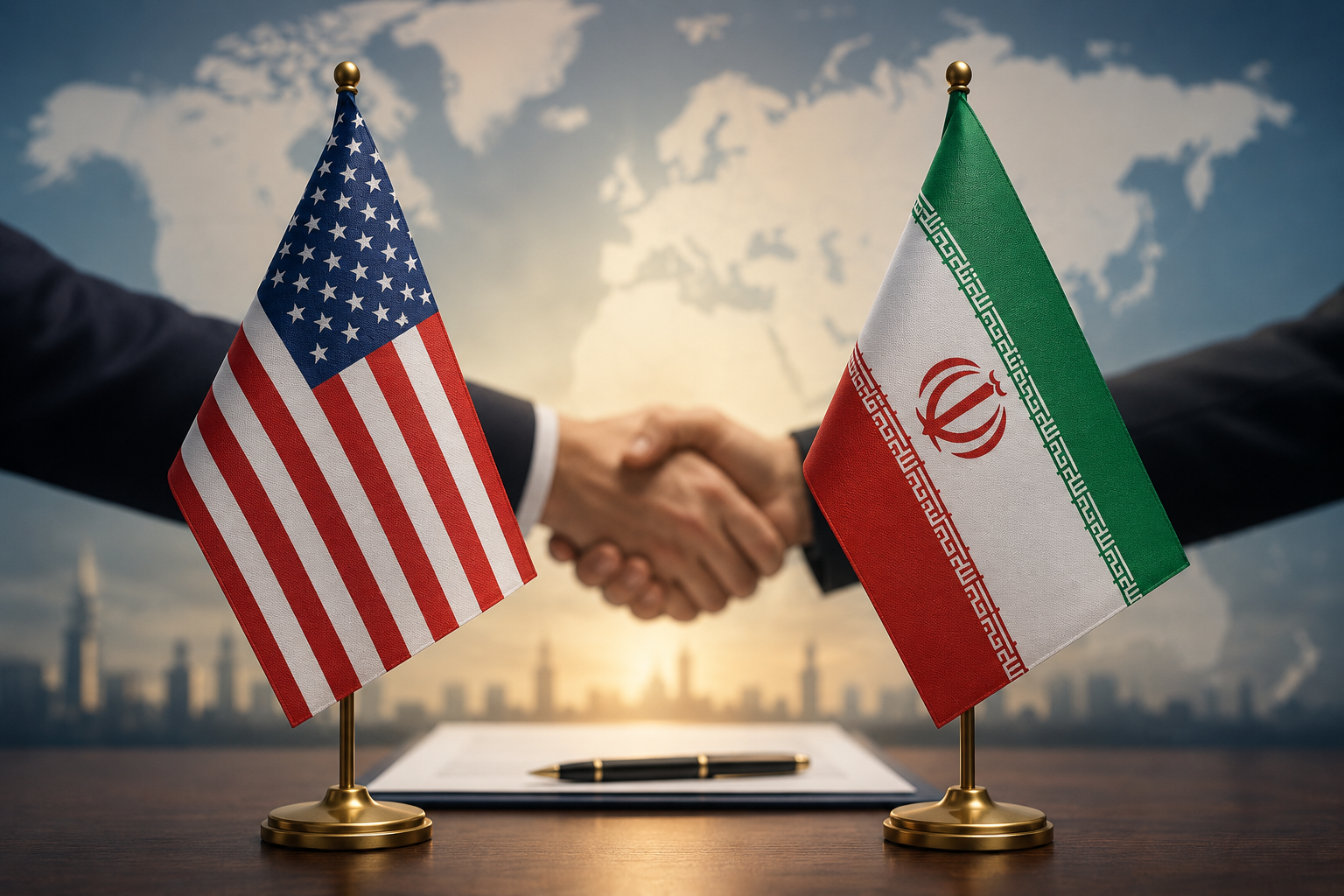
Interim US-Iran Agreement Draws Praise, Criticism and Market Attention
The United States and Iran have signed a memorandum of understanding (MoU) aimed at paving the way for a broader peace agreement within the next 60 days, marking one of the most significant diplomatic developments in the Middle East in recent years. While US President Donald Trump has presented the framework as a major step toward regional stability and economic certainty, the agreement has triggered intense debate among political leaders, security experts and international observers.
The interim accord is expected to serve as the foundation for negotiations on a comprehensive settlement addressing Iran's nuclear program, sanctions relief, regional security concerns and freedom of navigation through key maritime routes. However, the announcement has immediately divided opinion both within the United States and internationally.
Critics Warn of Premature Concessions
Opponents of the agreement argue that Washington has offered substantial benefits to Tehran before securing verifiable commitments on critical issues. Among the concerns raised are provisions related to sanctions relief, access to frozen Iranian assets and the possibility of easing economic restrictions while negotiations remain ongoing.
Several conservative lawmakers and commentators have questioned whether the United States is relinquishing valuable leverage without obtaining concrete guarantees regarding Iran's nuclear ambitions and military activities.
Some critics have described the agreement as a strategic miscalculation that could strengthen Iran economically while leaving major security concerns unresolved. Others argue that the framework resembles previous diplomatic efforts that failed to produce lasting changes in Tehran's regional behavior.
Trump Administration Defends the Framework
The Trump administration has strongly defended the agreement, emphasizing that the memorandum represents only the first stage of a broader diplomatic process rather than a final settlement.
President Trump has argued that the framework reduces the risk of military confrontation, stabilizes energy markets and creates a pathway toward a more comprehensive agreement. Administration officials maintain that any sanctions relief or financial benefits will remain tied to Iran's compliance with future commitments.
Supporters of the deal also contend that diplomacy offers a more sustainable solution than prolonged military escalation. They argue that opening negotiations can reduce tensions across the Middle East while protecting global economic interests.
Republicans Split Over the Deal
The agreement has exposed divisions within the Republican Party. While some conservative voices have criticized the framework as overly generous toward Iran, others have praised Trump's efforts to avoid another prolonged conflict in the region.
Supporters argue that the agreement demonstrates pragmatic leadership by prioritizing diplomacy over military intervention. They believe that reducing geopolitical tensions could strengthen economic stability and lower risks for global markets.
The differing reactions highlight the broader debate over how the United States should engage with Iran and whether diplomatic engagement can effectively address longstanding security concerns.
India Welcomes Efforts to Restore Stability
India has welcomed the understanding between Washington and Tehran, expressing hope that the process will contribute to peace and stability across West Asia. New Delhi has consistently emphasized the importance of maintaining uninterrupted trade and energy flows through critical maritime routes, particularly the Strait of Hormuz.
For India, stability in the Gulf region carries significant economic importance due to the country's dependence on energy imports and extensive trade ties with Middle Eastern nations. Reduced geopolitical tensions could help lower volatility in global crude oil prices and support economic growth.
At the same time, Indian political leaders have noted that broader regional challenges remain, including evolving strategic relationships involving Pakistan and China.
Potential Impact on Global Energy Markets
Financial markets are closely monitoring developments surrounding the agreement. Any reduction in tensions between the United States and Iran could have significant implications for global energy markets, particularly crude oil prices.
The Strait of Hormuz remains one of the world's most important energy transit routes, handling a substantial portion of global oil shipments. Greater stability in the region could reduce supply disruption risks and improve investor confidence.
Lower geopolitical uncertainty may also benefit global equity markets, emerging economies and energy-importing nations that are vulnerable to sharp increases in crude oil prices.
Key Issues Still Unresolved
Despite the signing of the memorandum, several critical issues remain unresolved. Negotiators must still address Iran's nuclear activities, regional security arrangements and broader geopolitical concerns affecting the Middle East.
Questions also remain regarding the implementation timeline, verification mechanisms and the specific conditions under which sanctions relief would be granted. The coming weeks will be crucial in determining whether both sides can convert the framework into a durable and enforceable agreement.
Analysts caution that significant diplomatic challenges remain and that progress toward a final settlement will depend on the willingness of both nations to compromise on sensitive issues.
Outlook: A Critical 60-Day Window
The next 60 days are expected to be decisive for the future of US-Iran relations. If negotiations succeed, the agreement could mark an important step toward reducing regional tensions and improving economic stability. Failure to reach a final accord, however, could reignite uncertainty and increase geopolitical risks.
For investors, policymakers and businesses worldwide, the outcome of these talks will be closely watched, as developments in the Middle East continue to influence energy markets, global trade and international financial conditions.
Smart Investment Take
While the memorandum has generated sharp political debate, financial markets are likely to focus on its economic implications. A successful agreement could ease pressure on global oil prices, improve risk sentiment and support international trade flows. However, unresolved security concerns and implementation risks mean that volatility in energy and commodity markets may persist until a final agreement is reached.