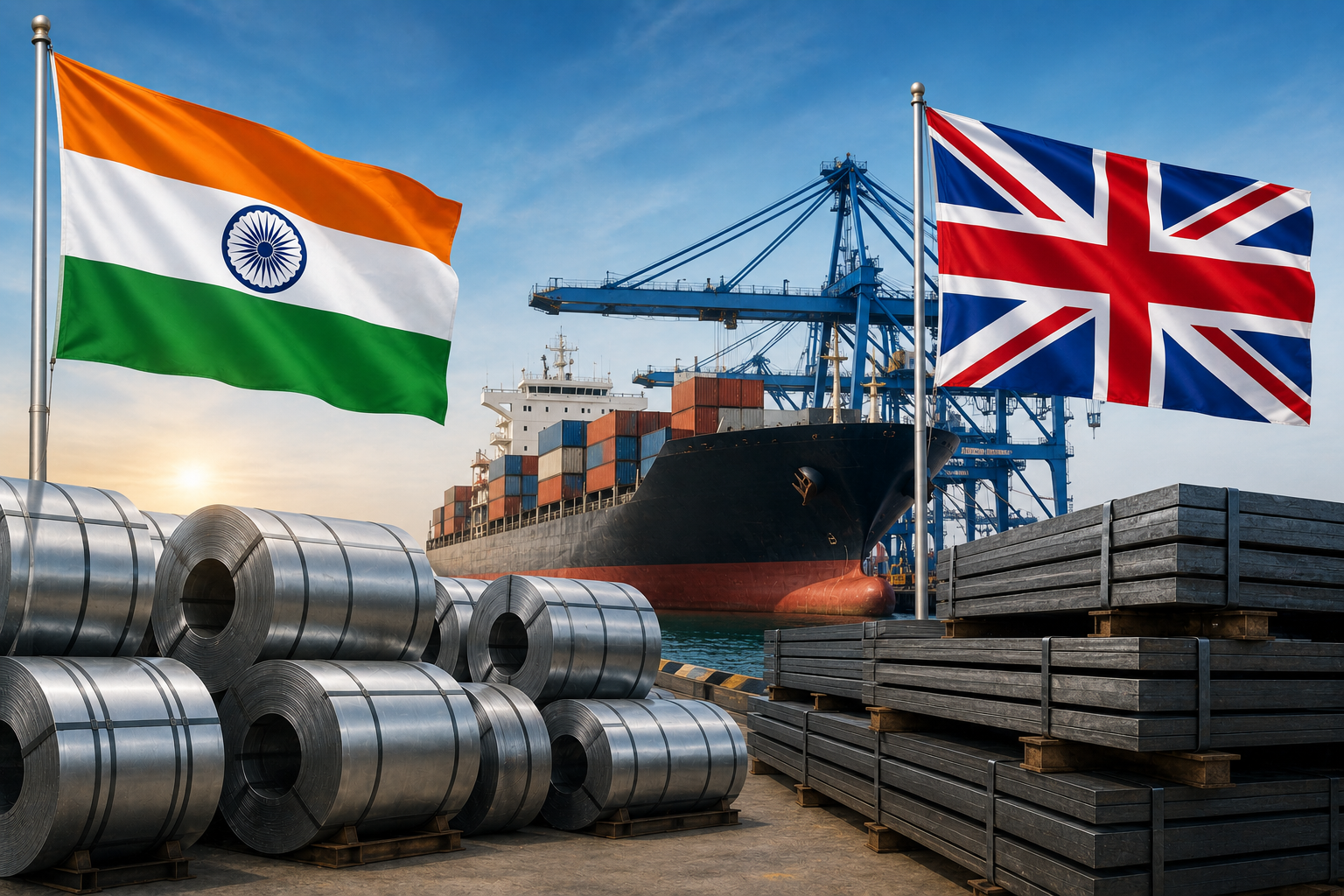
Breakthrough Clears Final Hurdle for India-UK CETA, Set to Take Effect from July 15
In a significant boost for India's steel industry and export sector, the United Kingdom has agreed to exempt approximately 85% of Indian steel exports from its upcoming safeguard measures. The development resolves one of the most contentious issues that had threatened to delay the implementation of the India-UK Comprehensive Economic and Trade Agreement (CETA), paving the way for the landmark trade pact to come into force on July 15.
The agreement is expected to provide certainty to Indian steel manufacturers, preserve market access in the UK, and strengthen economic ties between the two nations.
Key Trade Obstacle Finally Resolved
The UK's planned steel safeguard regime had emerged as a major sticking point during discussions surrounding the implementation of CETA. Indian exporters were concerned that additional restrictions could undermine the benefits of the trade agreement and reduce competitiveness in one of India's important export destinations.
Following intensive negotiations, both governments reached a compromise that protects the overwhelming majority of India's steel exports while addressing Britain's concerns regarding domestic industry protection.
Officials confirmed that nearly 85% of India's current steel shipments to the UK will remain exempt from the safeguard measures.
Quota System Protects Remaining Exports
For the remaining steel exports that may fall within the safeguard framework, India has secured access through a combination of country-specific quotas and residual quotas negotiated under CETA.
This arrangement ensures that Indian steel exporters will continue to have predictable access to the British market, even under the new trade protection measures.
Industry experts believe the quota structure will minimize disruptions and provide exporters with the flexibility needed to maintain supply commitments to UK customers.
Why the UK Introduced Steel Safeguards
The United Kingdom has been reviewing protective measures for its steel sector amid concerns over global excess production capacity and the risk of import surges affecting domestic manufacturers.
Safeguard measures are designed to protect local industries from sudden increases in imports that could negatively impact employment and production levels. Similar policies have been adopted by several countries as governments seek to support strategic industries during periods of global economic uncertainty.
However, such measures often create challenges during free trade negotiations, particularly for exporting nations seeking expanded market access.
CETA Expected to Transform Bilateral Trade
The resolution of the steel issue removes a major hurdle for the implementation of the India-UK Comprehensive Economic and Trade Agreement, one of the most significant bilateral trade agreements signed by India in recent years.
The agreement is expected to:
- Expand bilateral trade volumes
- Reduce tariffs on a broad range of products
- Enhance market access for exporters
- Increase investment flows
- Strengthen industrial cooperation
- Support job creation and economic growth
Both countries view the agreement as a strategic step toward deepening economic integration and creating new opportunities for businesses.
Major Opportunity for Indian Steel Producers
The exemption is expected to benefit India's steel sector significantly, particularly companies with a strong export presence in Europe and the UK.
Indian producers have steadily expanded their footprint in international markets through competitive pricing, quality improvements, and diversified product offerings. Continued access to the UK market is likely to support export growth and improve long-term business visibility.
The development could also encourage additional investments in steel manufacturing capacity and export-oriented production facilities.
Strengthening India's Position in Global Trade
The successful outcome demonstrates India's growing influence in international trade negotiations and its ability to secure favorable terms for key industries.
As global trade patterns continue to evolve, agreements such as CETA are becoming increasingly important for diversifying export markets and reducing dependence on any single region.
The trade pact is expected to strengthen India's role in global supply chains and enhance its reputation as a reliable manufacturing and export hub.
Positive Implications for Investors
Investors are likely to view the development positively, especially companies operating in the steel, metals, engineering, logistics, and export-oriented manufacturing sectors.
Improved market access, greater trade certainty, and stronger bilateral relations could create new growth opportunities for listed companies with exposure to international markets.
The agreement may also support broader investor confidence in India's export competitiveness and trade policy framework.
Outlook
With the steel safeguard dispute now resolved, attention shifts to the formal rollout of the India-UK CETA on July 15. The agreement is expected to unlock substantial opportunities for businesses across multiple sectors while strengthening one of India's most important economic partnerships.
For the steel industry, the exemption provides a significant competitive advantage and ensures continued access to a valuable export market, reinforcing India's position as a leading global steel producer and exporter.