Resolution Clears Key Hurdle for India-UK Trade Pact Implementation from July 15
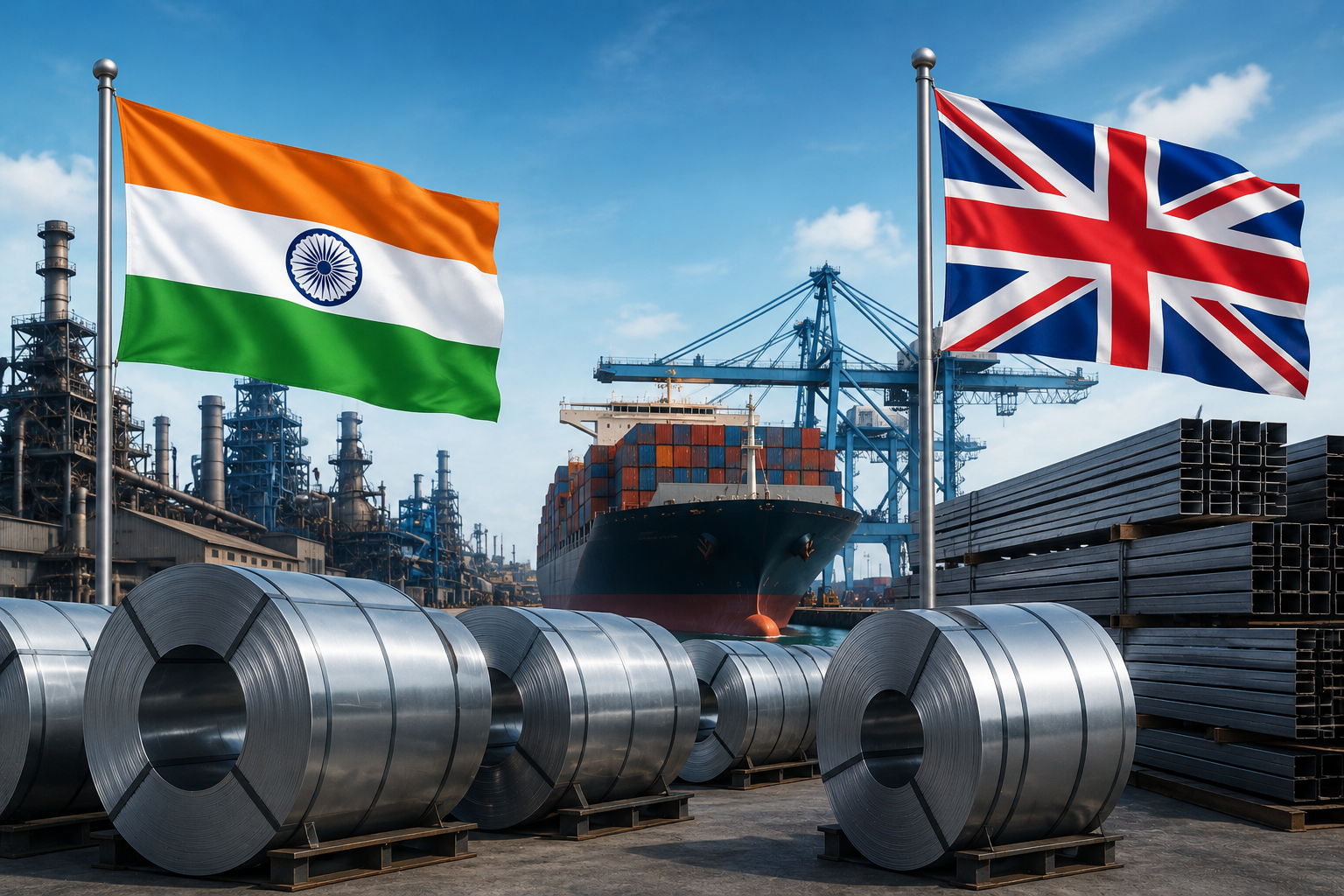
India's steel industry has received a significant boost after the United Kingdom agreed to exempt nearly 85% of Indian steel exports from its upcoming safeguard measures. The breakthrough resolves one of the final obstacles to the implementation of the India-UK Comprehensive Economic and Trade Agreement (CETA), paving the way for the landmark trade pact to come into effect from July 15.
The development is expected to provide greater certainty for Indian steel exporters while strengthening bilateral trade relations between the two countries.
Steel Safeguard Issue Finally Resolved
The UK's proposed steel safeguard regime had emerged as a major concern during discussions surrounding the implementation of the India-UK trade agreement. Indian exporters feared that restrictive quotas and import controls could limit access to one of their important overseas markets.
Following extensive negotiations, both sides have now reached a mutually acceptable arrangement that protects the majority of India's steel shipments from the new restrictions.
Government officials indicated that approximately 85% of India's current steel exports to the UK will remain outside the scope of the safeguard measures.
Market Access Preserved for Remaining Exports
For the remaining 15% of exports that could potentially be affected, India has secured access through a combination of country-specific quotas and residual quotas under the trade agreement framework.
This mechanism ensures that Indian steel producers will continue to enjoy predictable access to the UK market while minimizing disruptions caused by the safeguard regime.
Industry experts believe the arrangement strikes a balance between protecting British domestic producers and maintaining healthy trade flows with India.
What Is Driving the UK's Steel Safeguards?
The UK, like several other economies, has been reviewing protective measures for its steel sector amid concerns over global oversupply, trade diversion, and rising imports from multiple countries.
Safeguard measures are designed to prevent sudden surges in imports that could negatively impact domestic manufacturers. However, such restrictions often become contentious in free trade negotiations as exporting nations seek greater market access.
The latest agreement demonstrates the willingness of both governments to find pragmatic solutions that support economic cooperation.
CETA Set to Unlock New Opportunities
The resolution of the steel issue removes one of the last major barriers to the implementation of the Comprehensive Economic and Trade Agreement.
The India-UK CETA is expected to:
- Reduce tariffs on a wide range of goods
- Improve market access for businesses
- Enhance investment flows between the two countries
- Strengthen cooperation across manufacturing and services sectors
- Boost bilateral trade volumes over the coming years
The agreement is widely viewed as one of India's most significant trade deals in recent years.
Positive Impact on Indian Steel Producers
The exemption is particularly important for Indian steel manufacturers that have built a strong presence in the UK market.
Leading producers stand to benefit from:
- Greater export visibility
- Reduced regulatory uncertainty
- Stable access to UK buyers
- Enhanced competitiveness under the trade agreement
- Opportunities to expand market share
The UK remains an attractive destination for value-added steel products, engineering materials, and specialized industrial grades produced by Indian companies.
Trade Relations Enter New Phase
The implementation of CETA marks a new chapter in India-UK economic relations. Both countries have been working to deepen trade and investment ties, with sectors such as manufacturing, technology, financial services, pharmaceuticals, and renewable energy expected to benefit.
Analysts believe the agreement could significantly increase bilateral trade over the next decade and create new opportunities for businesses on both sides.
Market Implications
The resolution of the steel safeguard dispute is likely to be viewed positively by investors, particularly those tracking India's metals and export-oriented sectors. Companies with meaningful exposure to European and UK markets could benefit from improved trade conditions and enhanced export prospects.
The agreement also reinforces India's position as a key global manufacturing hub and highlights its growing ability to negotiate favorable trade arrangements with major economies.
Outlook
With the steel safeguard issue now resolved, attention shifts to the formal implementation of the India-UK CETA on July 15. The agreement is expected to strengthen economic cooperation, boost bilateral commerce, and create fresh opportunities across multiple industries.
For India's steel sector, the exemption provides a valuable competitive advantage and ensures continued access to a key international market at a time when global trade conditions remain increasingly complex.