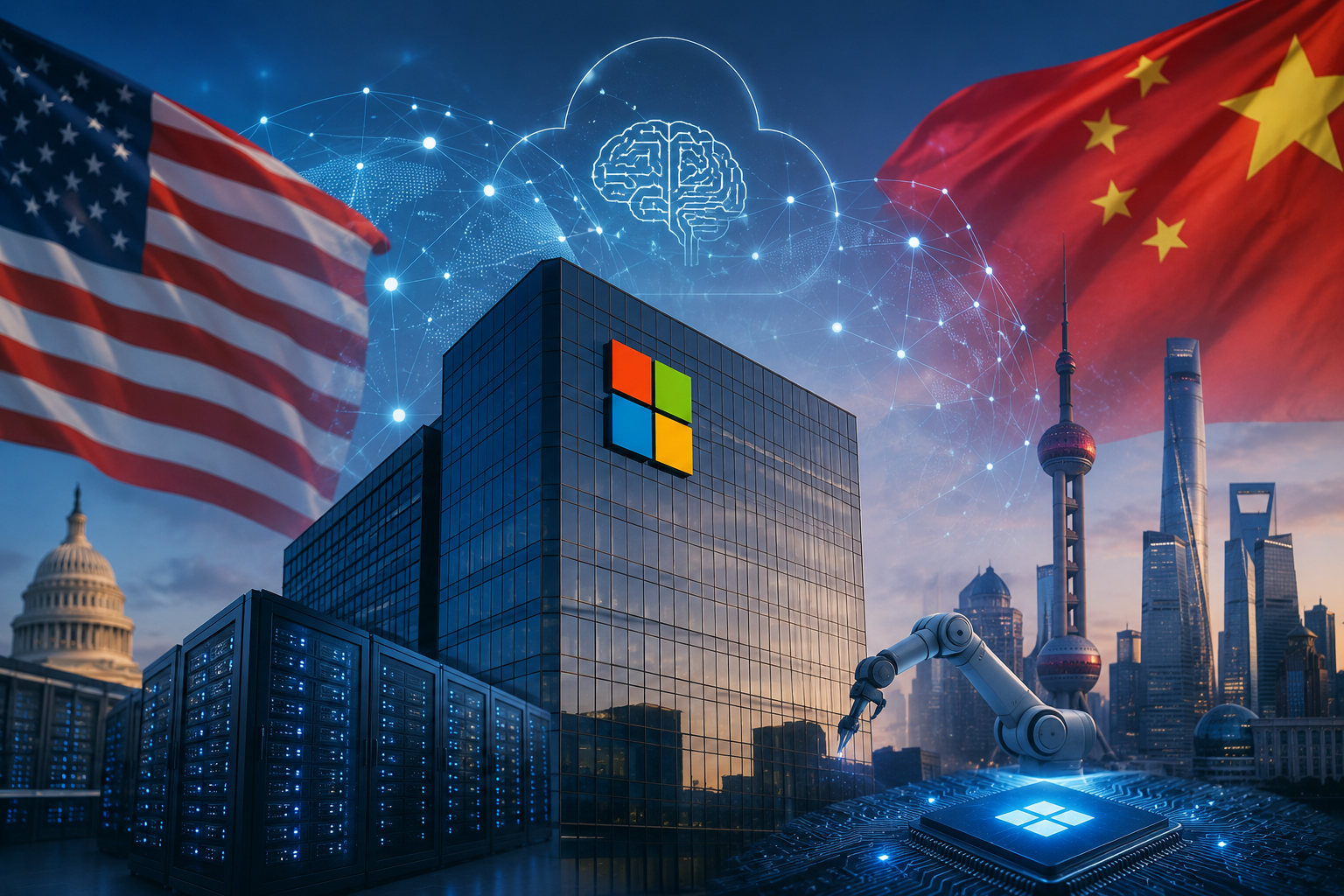
Chinese Tech Giants Become Major Customers as Microsoft Strengthens Position in Global AI Race
Microsoft has emerged as a significant player in China's rapidly growing artificial intelligence market, building a substantial business by providing access to advanced AI models through its Azure cloud platform. The development highlights the complex relationship between commercial opportunities and geopolitical tensions as the United States and China compete for leadership in artificial intelligence.
Despite increasing restrictions and growing concerns about technology transfer, Microsoft has successfully positioned itself as a bridge between cutting-edge Western AI innovation and China's booming technology ecosystem.
Chinese Tech Firms Drive AI Growth
Several of China's largest technology companies have reportedly become major users of Microsoft's AI services. Social media giant and AI innovator ByteDance is said to be among Microsoft's biggest AI customers globally, with annual spending on cloud and AI services reportedly exceeding $1 billion.
Other prominent Chinese firms, including Ant Group, Tencent, and Meituan, are also leveraging Microsoft's Azure platform to access advanced AI capabilities for a variety of business applications.
The growing demand reflects the increasing importance of artificial intelligence across industries such as social media, e-commerce, financial services, cloud computing, and enterprise software.
Microsoft's Unique Position in China's AI Ecosystem
Unlike some leading AI developers that have restricted access to their models in China, Microsoft has maintained a carefully structured presence in the market.
Through its strategic partnership with OpenAI, Microsoft offers access to advanced GPT-based models via Azure cloud services while operating within regulatory frameworks. This has allowed the company to capture growing demand from Chinese enterprises seeking access to world-class AI tools.
The strategy has enabled Microsoft to establish itself as one of the few major international technology companies with meaningful participation in both the American and Chinese AI ecosystems.
AI Revenue Growth Accelerates
Microsoft's AI-related business in China has reportedly become one of its fastest-growing regional operations. Internal company discussions have highlighted exceptionally strong growth in Azure AI revenue from Chinese customers, reflecting the rapid adoption of generative AI technologies across the country.
As Chinese companies increasingly integrate AI into their products and services, demand for cloud infrastructure, computing power, and advanced language models continues to rise sharply.
Industry analysts believe China's AI market could become one of the largest globally over the next decade, creating significant opportunities for technology providers.
Balancing Opportunity and Geopolitical Risk
Microsoft's growing AI business in China comes at a time when concerns over national security, intellectual property protection, and technological competition are intensifying.
The United States has implemented various export controls and technology restrictions aimed at limiting China's access to advanced semiconductor and AI technologies. At the same time, American policymakers continue to debate the risks associated with providing advanced AI capabilities to Chinese entities.
This creates a delicate balancing act for global technology companies seeking to capture growth opportunities while complying with evolving regulations.
Competition Intensifies in Global AI Race
Chinese technology companies are not merely consumers of AI technologies; they are increasingly developing their own advanced models. Firms such as ByteDance, Tencent, Alibaba, and Baidu have invested heavily in domestic AI research and product development.
Many of these companies operate popular AI chatbots, enterprise platforms, and large language models that compete directly with international offerings.
As a result, the AI landscape is evolving into a highly competitive environment where collaboration and competition often coexist.
Cloud Computing Becomes a Strategic Asset
Microsoft's Azure platform has become a key gateway through which enterprises access AI technologies. The company's ability to combine cloud infrastructure, AI models, data services, and enterprise software creates a compelling ecosystem for businesses seeking to accelerate digital transformation.
For Chinese firms expanding internationally, access to global cloud infrastructure and advanced AI capabilities remains particularly valuable.
Experts note that cloud computing providers are increasingly becoming strategic enablers of the AI economy rather than simply infrastructure vendors.
Market Implications
The growing adoption of AI services by Chinese companies underscores the enormous commercial potential of generative AI. Investors are closely monitoring how leading technology firms monetize AI products and expand cloud-based services.
Microsoft's success in attracting major enterprise customers strengthens its position in the global AI market and reinforces the strategic importance of Azure as a long-term growth driver.
The development also highlights how AI is becoming a central battleground in the broader technology competition between the world's two largest economies.
Outlook
As artificial intelligence adoption accelerates worldwide, Microsoft appears determined to maintain a presence in both Western and Asian markets despite increasing geopolitical complexity. The company's ability to navigate regulatory challenges while serving major Chinese technology firms could provide a significant competitive advantage in the global AI race.
However, evolving government policies, export controls, and concerns over technology security are likely to remain key factors shaping the future of AI collaboration between the United States and China. The balance between innovation, commercial opportunity, and national security will continue to define the next phase of the global artificial intelligence industry.