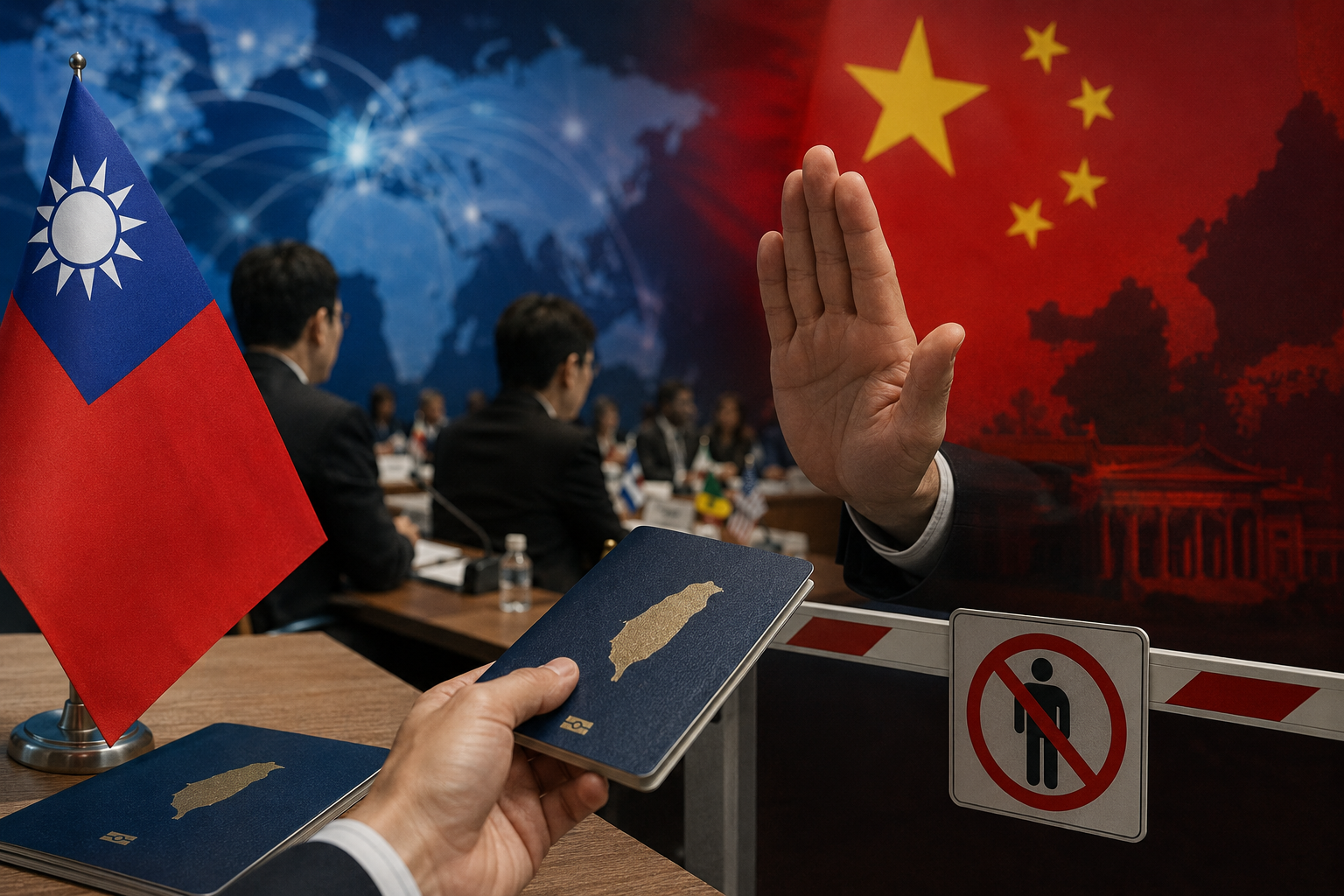
Taipei Accuses Beijing of Expanding Global Campaign to Isolate Taiwan from International Events
Taiwan has raised fresh concerns over what it describes as an escalating campaign by China to restrict its participation in international forums and diplomatic engagements. Taiwan's Foreign Minister Lin Chia-Lung has warned that Beijing's efforts to pressure other countries into limiting Taiwan's access to global events have become the "new normal," highlighting growing tensions across the Taiwan Strait.
The remarks come after a controversial incident in Kenya, where Taiwanese delegates were reportedly denied entry to an international ocean conference, intensifying concerns about China's expanding diplomatic influence around the world.
Taiwan Delegates Denied Access at International Conference
The latest dispute emerged during the Our Ocean Conference in Mombasa, Kenya, where Taiwanese representatives were reportedly prevented from attending the event. According to Taiwan's Foreign Ministry, two delegates carrying Taiwanese passports were denied entry, detained for several hours, and had their travel documents temporarily confiscated before being allowed to leave the country.
Following the incident, the remaining members of Taiwan's delegation withdrew from the conference in protest.
Kenyan authorities defended their actions by citing adherence to the "One China" policy, under which Taiwan is not recognized as a sovereign state.
Beijing's Growing Diplomatic Influence
Taipei argues that the Kenya incident reflects a broader pattern of diplomatic pressure being exerted by Beijing on countries and international organizations.
China views Taiwan as part of its territory and opposes any actions that could imply international recognition of the island's sovereignty. As a result, Beijing has consistently sought to limit Taiwan's participation in multilateral institutions, international conferences, and diplomatic activities.
Taiwanese officials claim that these efforts have intensified in recent years, particularly among developing nations that maintain strong economic ties with China.
Challenges for Taiwan on the Global Stage
Taiwan's international space remains constrained due to Beijing's influence. The island is excluded from many major international organizations and often participates under alternative names when allowed to attend global events.
For example, Taiwan competes in international sporting competitions under the designation "Chinese Taipei" and faces restrictions in organizations such as the World Health Organization and the World Health Assembly.
Analysts note that these limitations have become a central challenge for Taiwan's foreign policy as it seeks greater engagement with the international community.
Strategic Competition Extends Beyond the Taiwan Strait
The dispute also highlights the growing geopolitical competition between China and Taiwan on the global stage. While military tensions often dominate headlines, diplomatic influence has become another important battleground.
Beijing has increasingly leveraged its economic power, trade relationships, and infrastructure investments to strengthen support for its One China policy among developing countries across Africa, Asia, and Latin America.
Taiwan, meanwhile, continues to deepen partnerships with democratic nations that support its participation in international affairs.
Economic and Business Implications
The Taiwan issue remains one of the most closely watched geopolitical risks for global markets. Rising tensions between Beijing and Taipei have significant implications for international trade, technology supply chains, semiconductor production, and regional security.
Taiwan plays a critical role in the global semiconductor industry, making stability in the region essential for technology companies, manufacturers, and investors worldwide.
Any deterioration in cross-strait relations could impact global supply chains and influence investment decisions across multiple sectors.
Global Attention on Taiwan's International Status
The latest controversy in Kenya underscores the ongoing debate surrounding Taiwan's role in international institutions and global governance. As China continues to expand its diplomatic reach, Taiwan faces increasing challenges in maintaining visibility and representation on the world stage.
Many democratic nations have called for Taiwan's meaningful participation in international forums, particularly in areas such as public health, climate change, technology, and maritime cooperation.
Outlook
With geopolitical competition between China and Taiwan showing little sign of easing, diplomatic disputes over Taiwan's international participation are likely to remain a recurring feature of global affairs. The Kenya incident serves as another reminder of how the Taiwan issue increasingly influences diplomacy, international organizations, and strategic relationships far beyond East Asia.
For investors and policymakers alike, developments surrounding Taiwan will remain a critical factor in assessing geopolitical risks, global trade stability, and the future direction of international relations.