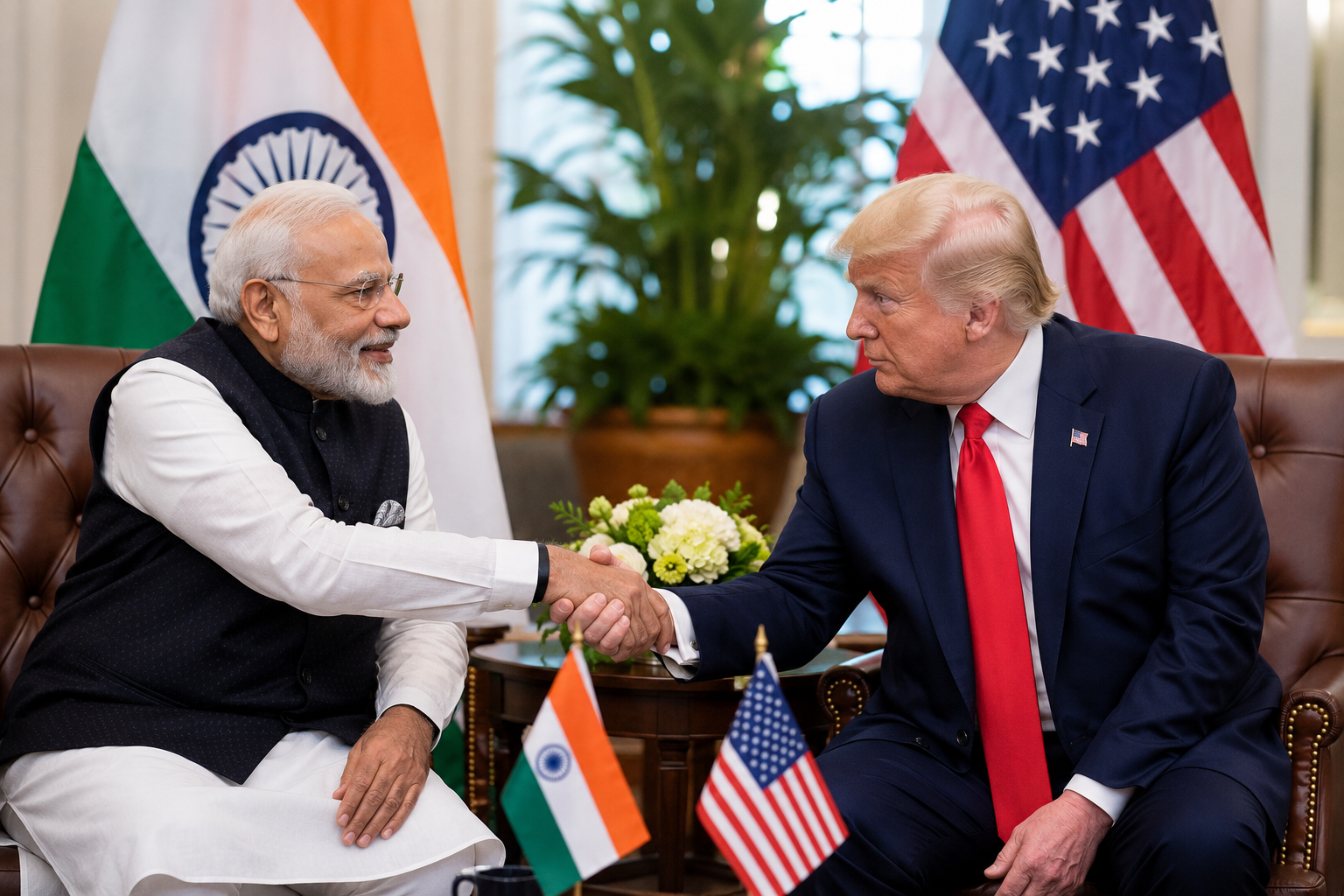
High-Level Meeting at G7 Summit Signals Fresh Momentum for Bilateral Trade and Strategic Cooperation
India and the United States have taken a significant step toward strengthening economic relations, with Prime Minister Narendra Modi and US President Donald Trump directing officials to expedite negotiations for a bilateral trade agreement. The development emerged from a high-profile meeting between the two leaders on the sidelines of the G7 Summit, highlighting renewed efforts to deepen one of the world's most important strategic partnerships.
The meeting marks a crucial phase in India-US relations as both nations seek to expand trade, investment, technology collaboration, and supply-chain resilience amid an increasingly complex global economic environment.
Trade Agreement Takes Center Stage
During the discussions, both leaders acknowledged the substantial progress achieved in ongoing negotiations for an interim trade agreement. Officials have been tasked with finalizing a balanced, mutually beneficial, and commercially meaningful deal at the earliest opportunity.
The proposed agreement is expected to address several key areas, including tariff reductions, market access, investment facilitation, digital trade, intellectual property protection, and supply-chain cooperation. Policymakers on both sides view the agreement as a stepping stone toward a broader and more comprehensive economic partnership.
US Trade Representative to Visit India
In a sign of growing urgency, US Trade Representative Jamieson Greer is scheduled to visit India next week to continue negotiations with Indian counterparts.
The visit is expected to focus on resolving pending issues and identifying areas where both countries can achieve faster convergence. Trade experts believe the upcoming discussions could prove decisive in shaping the framework of the interim agreement.
Strategic Partnership Expands Beyond Trade
The Modi-Trump meeting extended well beyond economic matters. Both leaders reviewed progress under the India-US COMPACT initiative, which aims to accelerate cooperation across defense, technology, energy, manufacturing, and innovation sectors.
The initiative has become a key pillar of bilateral relations, helping both countries collaborate on critical technologies, defense modernization, clean energy transitions, and resilient global supply chains.
Officials from both governments noted progress across several sectors, reflecting the growing strategic alignment between New Delhi and Washington.
Economic Opportunities for Both Nations
A successful trade agreement could generate significant economic benefits for both countries. India stands to gain enhanced access to the US market, while American companies could benefit from greater opportunities in one of the world's fastest-growing major economies.
Key sectors likely to benefit include:
- Information Technology and Digital Services
- Pharmaceuticals and Healthcare
- Manufacturing and Industrial Goods
- Renewable Energy
- Defense Production
- Electronics and Semiconductor Supply Chains
- Agriculture and Food Processing
Analysts believe deeper trade integration could support job creation, increase foreign direct investment, and strengthen economic growth on both sides.
Geopolitical and Security Discussions
The leaders also discussed developments in West Asia and broader geopolitical issues affecting global trade and energy security. Prime Minister Modi emphasized the importance of maintaining stability in the region and ensuring uninterrupted commercial activity through critical maritime routes.
With tensions in key energy-producing regions impacting global markets, both countries recognize the importance of safeguarding supply chains and ensuring the smooth flow of international commerce.
A Turning Point After Recent Challenges
India-US relations faced several challenges in recent years, including tariff disputes, visa-related concerns, and differences over certain geopolitical issues. However, recent diplomatic engagement suggests both governments are committed to rebuilding trust and advancing shared economic interests.
The latest meeting is being viewed as a positive signal by businesses and investors seeking greater policy certainty and stronger economic cooperation between the two nations.
Market Impact and Investor Outlook
Financial markets will closely monitor the outcome of upcoming negotiations. A successful trade agreement could improve investor confidence, encourage cross-border investments, and create new opportunities for export-oriented industries.
Sectors with strong exposure to US demand—including IT services, pharmaceuticals, engineering exports, and specialty manufacturing—could emerge as major beneficiaries of deeper economic engagement.
Outlook
With political support from the highest levels of both governments and negotiations entering an advanced stage, expectations are rising for meaningful progress in the coming months. If finalized, the India-US trade agreement could become a landmark achievement, reinforcing economic ties, boosting investment flows, and strengthening the strategic partnership between the world's largest and oldest democracies.