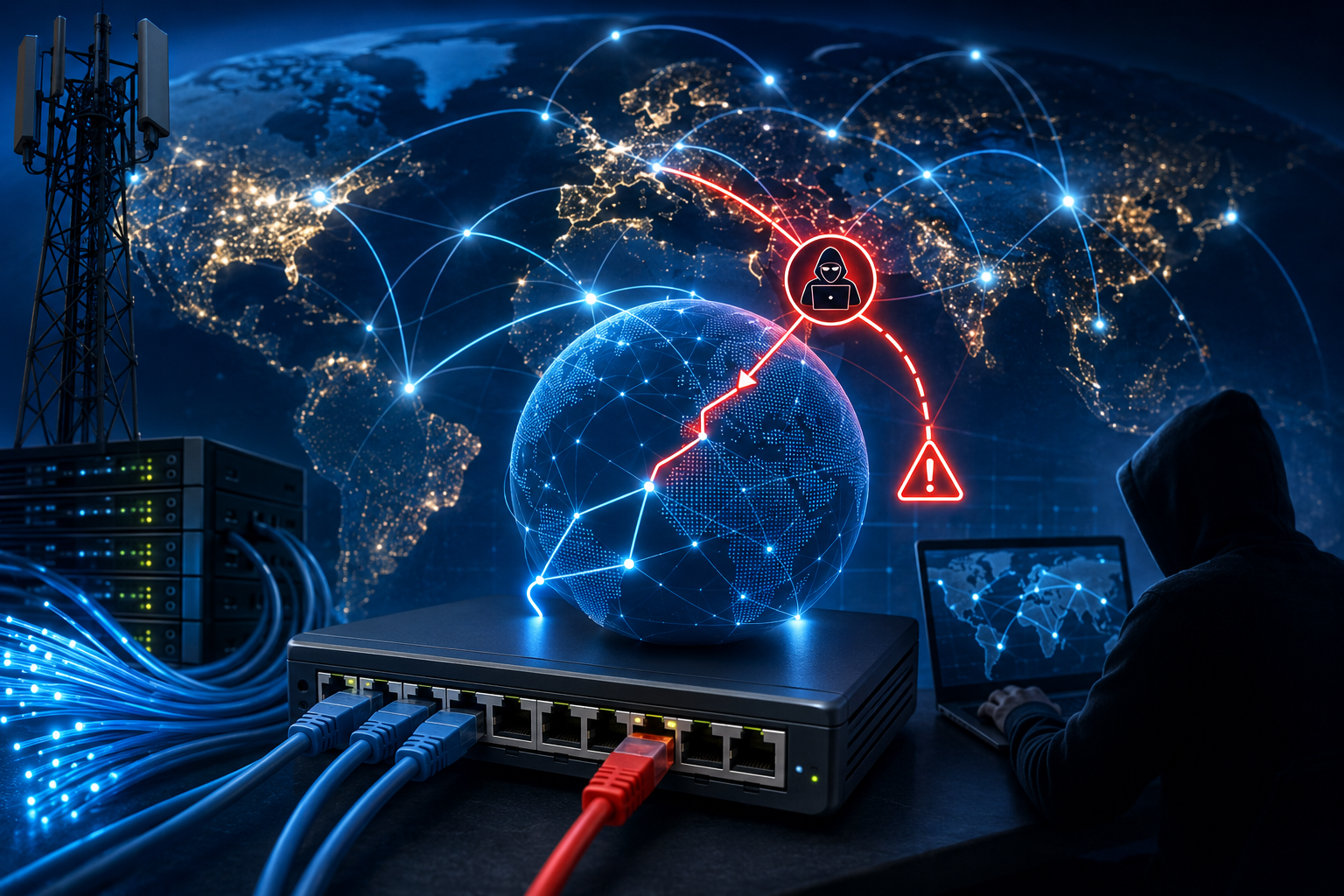
A Technical Internet Protocol Becomes the Center of a High-Stakes Battle Between Telegram, Telecom Operators and Regulators
The ongoing dispute involving Telegram, Indian authorities, and Reliance Jio has unexpectedly drawn public attention to one of the internet's most critical yet least understood technologies—the Border Gateway Protocol (BGP).
The controversy erupted after Telegram founder Pavel Durov alleged that internet traffic linked to Telegram was being disrupted through a technique known as BGP hijacking. Reliance Jio has categorically denied the allegations, calling them baseless and reiterating its commitment to global internet-routing standards.
While the dispute continues to unfold, it has highlighted a crucial issue: the internet's infrastructure still relies heavily on trust, making it vulnerable to both accidental errors and deliberate manipulation.
Why the Telegram Controversy Matters Beyond Messaging Apps
The disagreement surfaced after the Indian government temporarily restricted Telegram access ahead of the NEET-UG 2026 re-examination, citing concerns over examination-related malpractice and misinformation.
Telegram challenged the move in court, arguing that the restriction disproportionately affected millions of users. Shortly thereafter, Durov claimed that Telegram users outside India were also facing connectivity issues due to suspicious routing activity allegedly originating from Indian networks.
Although the allegations remain unverified, the episode has triggered wider discussions among cybersecurity experts, telecom operators, and internet governance bodies regarding the security of global internet infrastructure.
What is BGP? The Invisible Traffic Controller of the Internet
Most internet users assume that the internet operates as one giant network. In reality, it is a collection of more than 75,000 independent networks worldwide.
These networks include:
- Telecom operators
- Internet service providers
- Cloud computing companies
- Data centers
- Universities
- Government agencies
- Technology giants
Every time a user accesses a website, sends a message, watches a video, or conducts an online transaction, data must travel across multiple networks before reaching its destination.
The system responsible for coordinating these journeys is the Border Gateway Protocol, commonly known as BGP.
Often referred to as the "GPS of the Internet," BGP tells networks where data should travel and which routes are available for reaching specific destinations.
Without BGP, global internet connectivity would effectively collapse.
How BGP Keeps the Internet Running
Imagine a package being shipped from Mumbai to a remote village in Arunachal Pradesh.
The courier company that collects the parcel may not directly serve the final destination. Instead, the package moves through several courier networks before arriving at its endpoint.
For this process to work efficiently, every courier company must know which destinations its partner networks can reach.
BGP performs the same function for internet traffic.
When a user sends data, BGP helps determine:
- Which network should handle the traffic
- The most efficient path available
- Alternative routes if a network fails
- How data reaches servers located across the globe
This routing process occurs continuously and within milliseconds.
What is BGP Hijacking?
The challenge lies in the fact that BGP was originally designed around trust rather than verification.
When a network announces that it can deliver traffic to a particular destination, other networks generally accept that information and begin routing traffic accordingly.
If a network mistakenly or intentionally advertises routes that do not belong to it, internet traffic can be redirected away from its intended destination.
This practice is known as BGP hijacking.
Potential consequences include:
Service Disruptions
Users may lose access to websites, applications, or online services.
Slower Connections
Traffic may take inefficient routes, causing latency and performance issues.
Traffic Monitoring Risks
In severe cases, internet traffic may pass through unauthorized networks where it could potentially be observed or manipulated.
Large-Scale Outages
A routing mistake at one network can affect millions of users across multiple countries.
Why Does This Vulnerability Still Exist?
BGP was developed in the late 1980s when the internet was primarily used by academic institutions, research organizations, and government agencies.
At that time:
- Internet participants were relatively few.
- Security threats were limited.
- Cybercrime was virtually non-existent.
- Global social media platforms had not yet emerged.
As a result, developers prioritized connectivity and scalability over security.
Although the internet has evolved dramatically, BGP's basic architecture remains largely unchanged, creating vulnerabilities that persist today.
Industry Efforts to Secure Internet Routing
Recognizing these risks, internet governance organizations and network operators have launched several initiatives to improve routing security.
Among the most significant is Resource Public Key Infrastructure (RPKI), which enables networks to verify whether routing announcements are legitimate.
Another major initiative is MANRS (Mutually Agreed Norms for Routing Security), supported by the Internet Society.
These frameworks aim to reduce:
- Route hijacks
- Route leaks
- Misconfigurations
- Traffic interception risks
However, adoption remains inconsistent across global networks, leaving vulnerabilities in certain parts of the internet ecosystem.
Similar Incidents Have Occurred Before
The current Telegram controversy is far from the first routing-related dispute.
Over the years, several high-profile incidents have demonstrated how routing errors can impact internet services worldwide.
Airtel-Google Routing Incident (2015)
A routing error involving telecom operator Airtel briefly disrupted access to certain Google services for users in different regions.
Vodafone Idea Route Leak (2020)
Researchers reported routing anomalies involving Vodafone Idea that altered traffic paths and highlighted the risks associated with internet route management.
Global Cryptocurrency Hijacking Cases
Several cryptocurrency exchanges have experienced losses after attackers exploited BGP vulnerabilities to redirect users to fraudulent websites.
These incidents demonstrate that routing security remains a critical challenge for the global internet.
Reliance Jio Rejects Allegations
In response to Telegram's claims, Reliance Jio stated that it had not engaged in any unauthorized routing activity and continues to follow established global internet-routing practices.
The company emphasized that its network operations comply with industry standards and rejected suggestions of any deliberate interference.
As of now, no independent technical investigation has publicly confirmed the allegations made by Telegram.
Why Investors and Businesses Should Care
For businesses operating in today's digital economy, internet reliability is no longer just a technology issue—it is a business continuity issue.
Any disruption to internet routing can impact:
- Financial transactions
- Cloud services
- Digital payments
- E-commerce platforms
- Enterprise communications
- Social media operations
As governments and businesses become increasingly dependent on digital infrastructure, securing internet routing systems will become a strategic priority worldwide.
Smart Investment Insight
The Telegram-Reliance Jio controversy highlights an often-overlooked reality: the global internet still depends on a decades-old trust-based routing system. While BGP has successfully enabled the internet's explosive growth, concerns around routing security, cyber resilience, and digital sovereignty are becoming increasingly important. As digital infrastructure becomes central to economic growth and national security, strengthening internet routing safeguards will remain a major focus for policymakers, telecom operators, and technology companies alike.