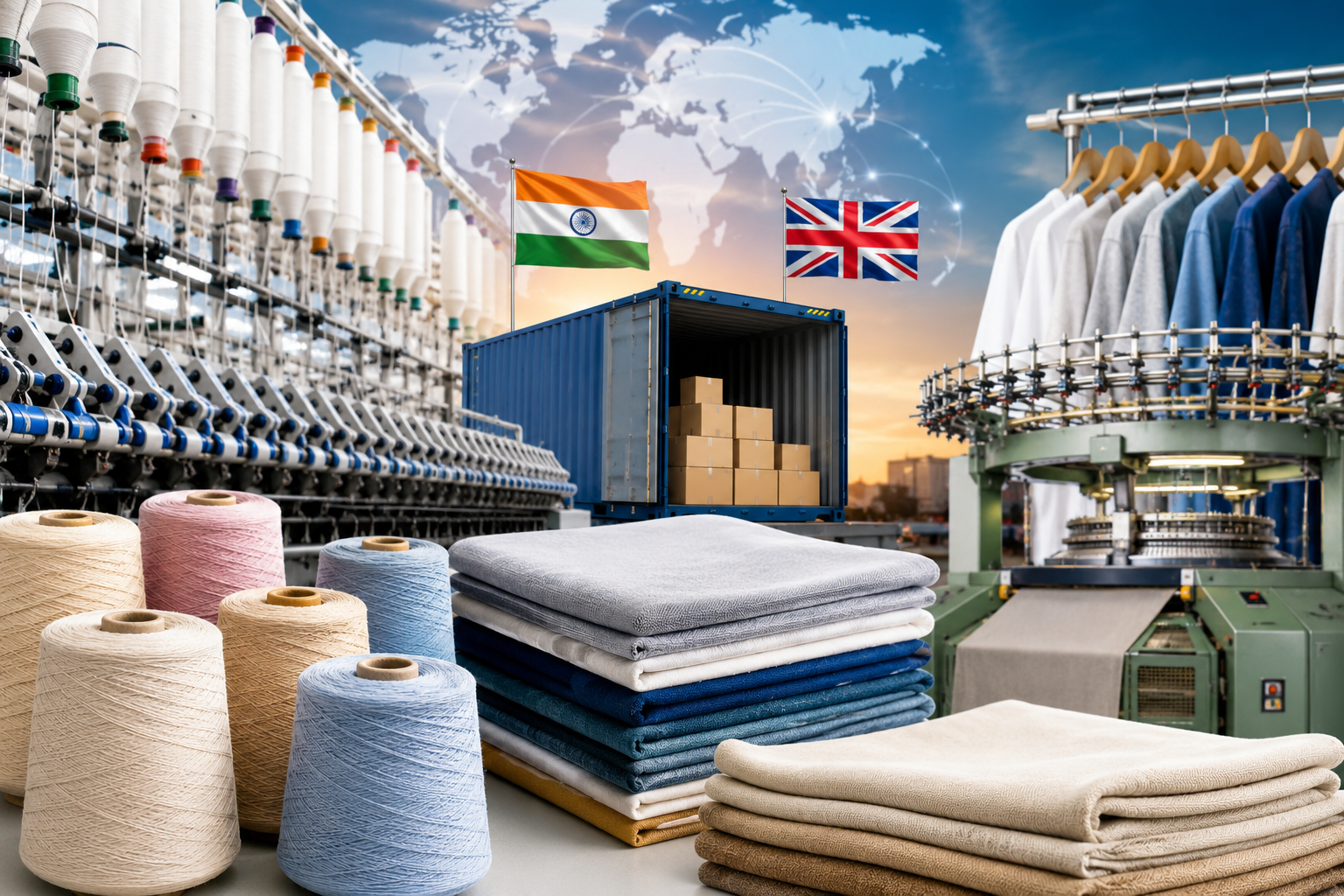
Duty-Free Market Access Sparks Investor Optimism; Export-Focused Companies Lead Gains
Shares of textile and apparel companies witnessed strong buying interest on Thursday after reports suggested that the much-anticipated India-United Kingdom Free Trade Agreement (FTA) will officially come into force on July 15, 2026. The development is being viewed as a major positive for India's export-oriented textile sector, with investors betting on improved competitiveness and higher order inflows in the coming years.
Leading textile stocks outperformed the broader market, with Himatsingka Seide surging nearly 8 percent during intraday trade. Gokaldas Exports gained around 6 percent, while Indo Count Industries, Kitex Garments, Nitin Spinners and Pearl Global Industries also posted healthy gains. The rally came even as benchmark indices traded in a narrow range, highlighting sector-specific optimism.
Why the India-UK FTA Matters
The India-UK Free Trade Agreement is one of the most significant trade deals signed by India in recent years. Under the agreement, nearly 99 percent of Indian exports will gain duty-free access to the UK market.
For textile exporters, this is particularly important because Indian textile and apparel products currently face tariffs of around 12 percent when entering the UK. Once the agreement becomes operational, these duties will be eliminated, making Indian products more price competitive.
The reduction in tariffs is expected to strengthen India's position against competing textile-exporting nations and help manufacturers secure larger orders from global retailers and brands.
Textile Companies Positioned to Benefit
Industry experts believe that companies with strong export presence, integrated manufacturing facilities and established relationships with international buyers are likely to be the biggest beneficiaries of the agreement.
Companies such as Gokaldas Exports, Indo Count Industries, Pearl Global Industries and Himatsingka Seide have significant exposure to overseas markets and are expected to benefit from improved access to UK customers.
Market participants expect increased enquiries from global apparel brands, home textile retailers and sourcing companies looking to diversify their supply chains and reduce costs.
UK Market Offers Significant Growth Potential
The United Kingdom remains an important destination for Indian textile exports. India's apparel exports to the UK are estimated at approximately $1.4 billion annually, while home textile exports contribute nearly $300 million.
Despite this, India's share in overall UK textile imports remains relatively low compared to its manufacturing capabilities. The FTA is expected to create new opportunities for Indian exporters to increase market share across categories such as garments, home furnishings, bedding products and technical textiles.
Industry observers note that several European and British buyers have already begun evaluating Indian manufacturing facilities and supply chains ahead of the agreement's implementation.
Competitive Edge Over Global Rivals
India's textile industry enjoys several structural advantages, including abundant cotton availability, a large skilled workforce and a diversified manufacturing ecosystem.
The recent removal of customs duties on cotton imports has further improved raw material availability and cost competitiveness. Combined with tariff-free access to key international markets, these factors could help Indian exporters strengthen their global standing.
The FTA also narrows the competitive gap with countries that have historically enjoyed preferential market access, allowing Indian manufacturers to compete more effectively on pricing and quality.
Positive Outlook for Export Growth
Analysts expect the benefits of the UK trade agreement to start reflecting in export volumes and corporate earnings from FY27 onwards. The agreement is likely to support higher order inflows, revenue growth and margin expansion for leading textile companies.
In addition, ongoing trade discussions with the European Union and other major economies could provide further growth opportunities for the sector over the medium term. A successful conclusion of additional trade agreements would further enhance India's export competitiveness and strengthen its position in global textile supply chains.
Challenges Cannot Be Ignored
While the FTA represents a major opportunity, industry experts caution that tariff benefits alone will not guarantee long-term success. Indian textile manufacturers continue to face challenges related to logistics costs, infrastructure efficiency, sustainability requirements and evolving consumer preferences.
To maximize the benefits of the agreement, companies will need to invest in technology upgrades, operational efficiency, product innovation and compliance with international quality standards.
Global buyers are increasingly prioritizing sustainability and supply chain transparency, making these areas critical for future growth.
Market Outlook
The implementation of the India-UK Free Trade Agreement marks an important milestone for India's textile and apparel industry. The removal of import duties is expected to improve export competitiveness, attract higher sourcing volumes and create new growth opportunities for leading textile manufacturers.
While the full impact will unfold over the next few years, investor enthusiasm reflects confidence that the agreement can become a significant catalyst for India's textile export story.
Smart Investment Take
The India-UK FTA is a structural positive for export-oriented textile companies. Stocks with strong international exposure, scalable manufacturing capabilities and established customer relationships could emerge as long-term winners. Investors should closely monitor order book growth, export trends and management commentary as the benefits of the agreement begin to materialize.