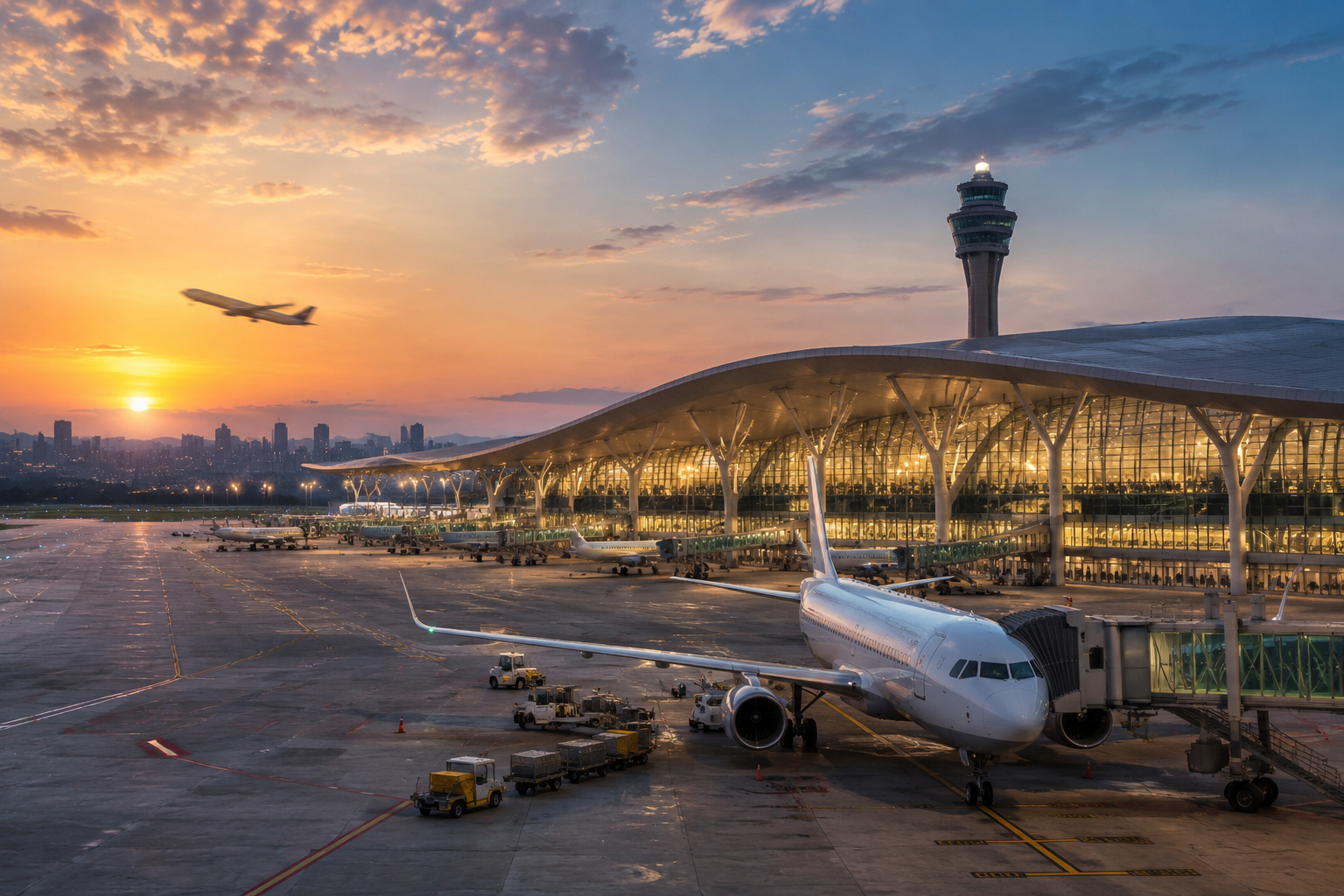
International Cargo Flights First, Passenger Services to Follow as IndiGo and Air India Express Prepare Operations
The Navi Mumbai International Airport is expected to begin international operations from July 15, marking a significant milestone in India’s aviation infrastructure expansion and strengthening the Mumbai Metropolitan Region’s air connectivity ecosystem.
Developed by the Adani Group, the greenfield airport will first commence international freighter services, followed by passenger flights shortly after, according to senior officials.
Phased Rollout: Cargo Operations to Lead the Expansion
As per BVJK Sharma, CEO of Navi Mumbai International Airport Ltd, international cargo (freighter) operations will be the first to go live on July 15.
Key operational highlights include:
- Initial focus on international cargo connectivity
- Expected ramp-up to around 18 weekly freighter flights
- Progressive scaling of logistics infrastructure
Authorities are currently completing customs formalities, regulatory notifications, and operational readiness trials before full-scale activation.
Passenger International Flights to Begin Shortly After Cargo Launch
Following the cargo rollout, international passenger services are expected to commence in phases.
Major airlines preparing operations include:
- IndiGo
- Air India Express
This dual-launch strategy is aimed at balancing early revenue generation through cargo while gradually expanding passenger traffic capacity.
Strategic Impact: Decongesting Mumbai Airport and Expanding Capacity
The Navi Mumbai airport is designed to act as a second major aviation hub for the Mumbai Metropolitan Region, easing pressure on the heavily congested Chhatrapati Shivaji Maharaj International Airport.
Expected benefits include:
- Reduced congestion at Mumbai’s primary airport
- Increased international flight handling capacity
- Improved regional connectivity for business and tourism
- Enhanced cargo movement efficiency for export-import trade
Passenger and Traffic Growth Projections
Currently, the airport handles around:
- 20,000 passengers per day
- 150 aircraft movements (arrivals + departures)
By year-end, projections indicate:
- Up to 50,000 passengers per day
- Around 380 aircraft movements daily
This rapid scale-up reflects strong demand expectations from both domestic and international carriers.
Customs Readiness and Regulatory Clearances Near Completion
Officials from the Central Board of Indirect Taxes and Customs (CBIC) have reviewed operational readiness, with final approvals and notifications being processed.
Key milestones include:
- Completion of Section 45 compliance procedures
- Courier and cargo system trials
- Expected trade notification by early July
These steps are crucial for enabling smooth international freight and passenger operations.
Global Recognition Before Launch: Listed Among World’s Most Beautiful Airports
Even before full international operations begin, the Navi Mumbai airport has already gained global recognition.
It was recently named among the Prix Versailles “World’s Most Beautiful Airports 2026”, alongside airports in:
- Guangzhou (China)
- Frankfurt (Germany)
- Pittsburgh (USA)
- San Diego (USA)
- Cambodia
This positions the airport as both a functional and architectural landmark in global aviation infrastructure.
Market Perspective: Aviation, Logistics and Infra Stocks in Focus
From an investment standpoint, the launch is expected to positively influence multiple sectors:
1. Aviation & Airline Stocks
- Increased international route capacity
- Lower congestion-driven delays
- Expansion opportunities for budget carriers
2. Logistics & Cargo Ecosystem
- Higher export-import throughput
- Growth in air freight demand
- Stronger integration with Mumbai industrial belt
3. Infrastructure & Realty
- Boost to Navi Mumbai development corridor
- Rising commercial real estate demand near airport zone
- Long-term valuation uplift for infra-linked assets
Conclusion: A Structural Growth Catalyst for Western India
The upcoming international operations at Navi Mumbai International Airport represent a structural shift in India’s aviation capacity, particularly for the western region. With cargo-led rollout followed by passenger expansion, the airport is positioned to become a key global gateway supporting trade, tourism, and long-term infrastructure-led economic growth.