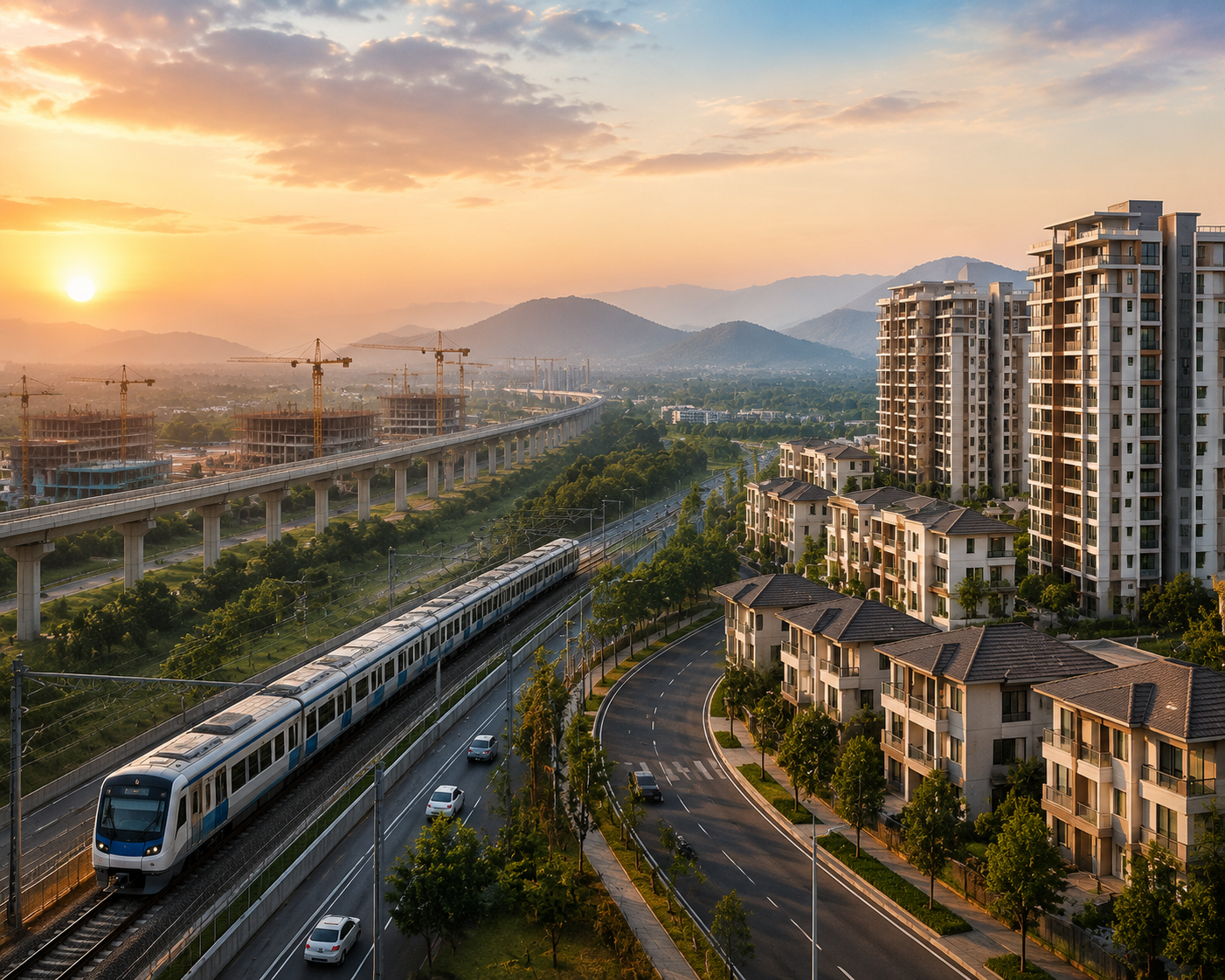
Infrastructure-Led Expansion, Employment Growth & Land Constraints Shape Next Decade Outlook
Neral is rapidly emerging as one of the most promising residential destinations within the broader Mumbai 3.0 development narrative, supported by large-scale infrastructure investments and shifting urban migration patterns.
According to insights from Liases Foras Research, the region is positioned to benefit from a structural transformation in the Mumbai Metropolitan Region (MMR), driven by ₹4.04 lakh crore worth of infrastructure investments, expanding employment corridors, and tightening land availability in core Mumbai areas.
Mumbai 3.0: Expanding Beyond Core City Limits
The “Mumbai 3.0” concept reflects the gradual expansion of Mumbai’s real estate footprint beyond traditional suburban clusters into emerging satellite towns such as Neral.
Key growth drivers include:
- Large-scale metro and rail connectivity expansion
- Development of new economic and industrial corridors
- Rising housing demand from middle-income urban migrants
- Decongestion of core Mumbai residential zones
This shift is expected to redistribute population density and unlock new housing markets in peripheral regions.
Infrastructure Investments Fueling Growth Momentum
A major catalyst for Neral’s rise is the massive infrastructure pipeline across the MMR region.
Highlights include:
- Multi-lakh crore infrastructure development across transport and utilities
- Improved connectivity via rail, road, and proposed transit systems
- Expansion of employment hubs beyond Mumbai’s traditional business districts
These developments are expected to significantly reduce travel friction, making peripheral markets more viable for residential settlement.
Neral’s Strategic Advantage in the Real Estate Cycle
Neral is increasingly being viewed as a value-driven residential alternative due to:
- Lower entry prices compared to central Mumbai and Navi Mumbai
- Availability of larger land parcels for development
- Green and less congested living environment
- Early-stage infrastructure-led appreciation potential
Analysts suggest that such locations typically benefit the most during early phases of urban expansion cycles.
5X Appreciation Potential Over the Long Term
Research estimates indicate that select micro-markets within the Mumbai 3.0 corridor, including Neral, may witness significant capital appreciation over the next decade.
Key supporting factors:
- Structural land scarcity in core Mumbai
- Steady increase in end-user housing demand
- Institutional participation in peripheral developments
- Infrastructure-led price re-rating cycles
However, experts also caution that such growth is long-term and dependent on execution of infrastructure timelines and demand absorption trends.
Expert View: Early-Stage Urban Expansion Opportunity
Real estate analysts note that markets like Neral typically follow a phased growth pattern:
- Infrastructure announcement phase
- Early speculative investment phase
- End-user demand acceleration
- Mature residential ecosystem development
Currently, Neral is believed to be in the early-to-mid expansion phase, where strategic investments tend to generate long-term returns.
Outlook: Peripheral Mumbai Markets Gain Strategic Importance
Going forward, the performance of Neral and similar micro-markets will depend on:
- Execution speed of infrastructure projects
- Job creation in emerging hubs
- Affordability trends in core Mumbai
- Interest rate and credit availability cycles
If infrastructure rollout remains on track, analysts expect sustained interest from both developers and long-term investors.
Conclusion
Neral’s emergence as part of the Mumbai 3.0 growth corridor highlights a broader shift in India’s urban real estate landscape. With Liases Foras Research projecting strong long-term appreciation potential supported by large-scale infrastructure investment, the region is increasingly positioned as a key destination for future residential expansion beyond Mumbai’s saturated core markets.