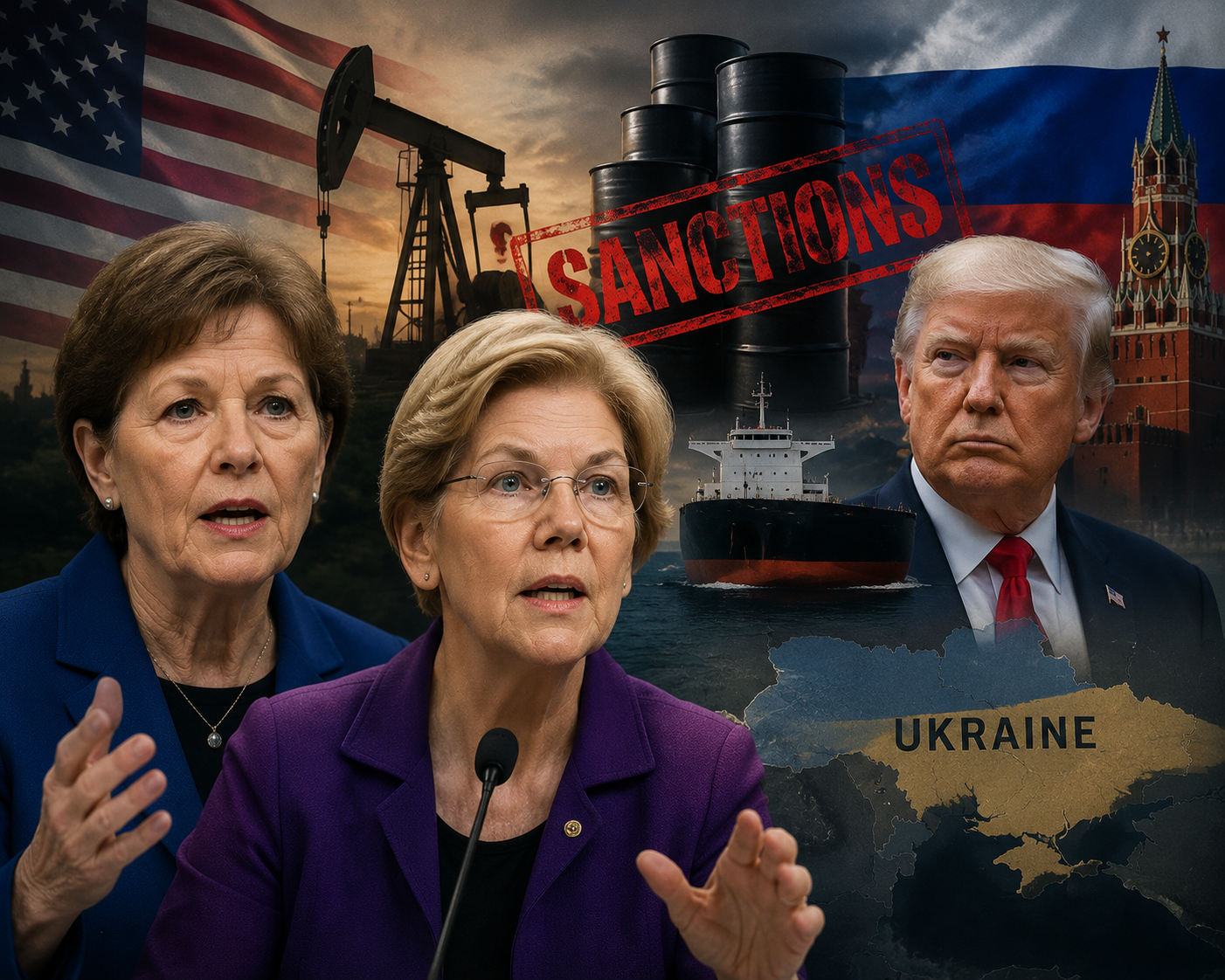
Political Pressure Builds Over Energy Sanctions, Global Oil Markets and Geopolitical Strategy
Two senior Democratic Senators have urged Donald Trump to refrain from extending any further sanctions waiver allowing the purchase of Russian oil, arguing that continued exemptions are indirectly funding Moscow’s ongoing war in Ukraine.
The call has intensified debate in Washington over the balance between global energy stability and geopolitical pressure on Russia, as oil market volatility remains a key global macro risk factor.
Senators Raise Concerns Over Sanctions Waiver Policy
U.S. Senators Jeanne Shaheen and Elizabeth Warren warned that extending the waiver would:
- Allow Russia to generate additional revenue from oil exports
- Strengthen Moscow’s war financing capabilities
- Undermine U.S. sanctions policy credibility
They argued that any continuation of the waiver contradicts Washington’s stated objective of reducing global energy disruptions.
The senators also claimed that continued exemptions could weaken diplomatic pressure on Russia regarding the ongoing conflict in Ukraine.
Oil Waiver Originally Designed to Stabilise Global Markets
The sanctions waiver was initially introduced in March as part of efforts to stabilise global crude markets amid geopolitical tensions.
Key developments include:
- Temporary exemption granted for select oil imports
- Extensions provided twice due to market volatility concerns
- Current waiver set to expire on June 17
The policy was intended to prevent sharp oil price spikes and ensure supply stability in global energy markets.
Energy Markets Caught Between Stability and Sanctions Pressure
The debate highlights a broader challenge facing global policymakers:
Supply Stability Concerns
- Avoiding sudden spikes in crude oil prices
- Ensuring adequate global supply flows
- Managing inflation risks linked to energy costs
Geopolitical Enforcement
- Limiting revenue streams for sanctioned nations
- Maintaining pressure on Russia over Ukraine conflict
- Aligning trade policy with foreign policy objectives
Policy Debate: Economic Pragmatism vs Strategic Pressure
Analysts note a growing divergence in U.S. policy thinking:
- One view prioritises market stability and inflation control
- The other emphasises long-term geopolitical containment of Russia
The senators argue that continued waivers weaken the effectiveness of sanctions and reduce incentives for conflict resolution.
Market Impact: Oil Prices Remain Sensitive to Policy Signals
Energy markets continue to react sharply to geopolitical developments:
- Crude oil remains highly sensitive to sanctions-related news
- Any tightening of restrictions could support upward price pressure
- Extended waivers may ease short-term volatility but raise long-term supply risks
Investors are closely watching U.S. policy signals, as they directly influence global inflation expectations and energy-linked sectors.
Outlook: Decision on Waiver Could Influence Global Energy Trajectory
The upcoming decision on the waiver extension may have wider implications:
- No extension: Potential upward pressure on oil prices
- Extension granted: Short-term price stability but geopolitical criticism
- Policy shift: Could reshape sanctions framework going forward
Conclusion
The debate over Russian oil sanctions waiver highlights the ongoing tension between energy market stability and geopolitical enforcement. With pressure mounting from lawmakers including Elizabeth Warren, the final decision by Donald Trump is expected to have significant implications for global oil markets, inflation trends, and international diplomatic alignment.