Global Survey Shows Strong Support for Industrial Automation While Human-Centric Roles Remain Off-Limits
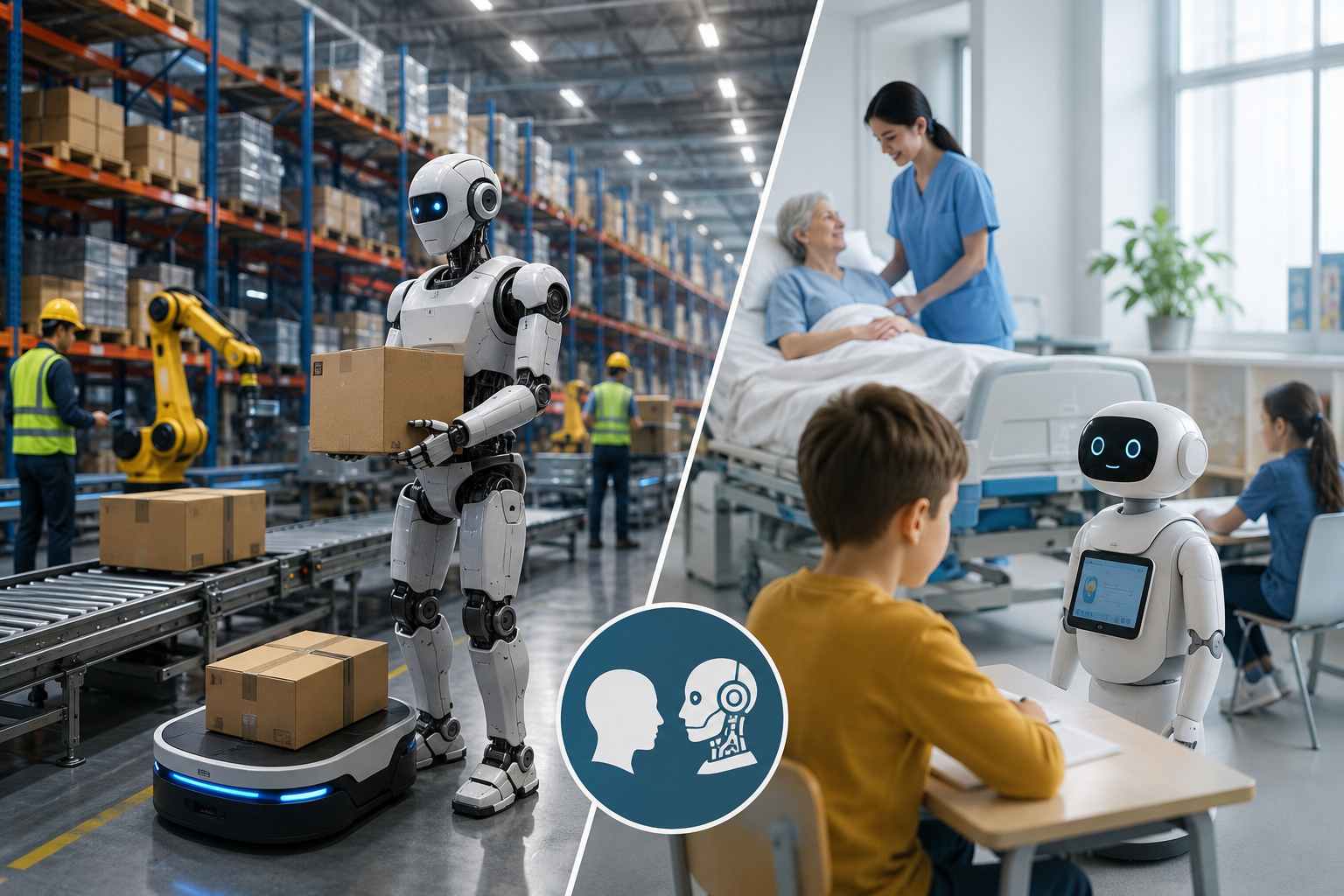
As artificial intelligence and robotics continue reshaping industries worldwide, a new global study by technology company Hexagon highlights a clear public preference regarding where robots belong. While most people are comfortable with robots handling physically demanding, repetitive, and hazardous work, they remain hesitant about deploying machines in roles that require empathy, trust, and human interaction.
The findings suggest that society is embracing automation as a productivity tool rather than a replacement for human relationships, creating important implications for businesses, investors, and policymakers navigating the next phase of technological transformation.
Warehouses and Factories Emerge as the Natural Home for Robots
According to Hexagon's Robot Generation study, public support for robotics is strongest in industrial and operational environments where efficiency, safety, and precision are paramount.
Respondents expressed the highest level of comfort with robots performing tasks such as:
- Heavy lifting and material handling
- Warehouse operations
- Factory production processes
- Hazard monitoring
- Repetitive manufacturing tasks
- Cleaning and maintenance activities
Nearly 68% of adults said they would prefer a robot to perform heavy lifting tasks, reflecting growing confidence in automation's ability to improve workplace safety and reduce physical strain on employees.
The results indicate that people increasingly view robots as tools that can complement human workers by taking over dangerous and monotonous responsibilities while allowing employees to focus on higher-value activities.
Human Touch Still Matters in Care and Education
While support for industrial automation continues to rise, the survey revealed significant resistance to deploying robots in caregiving and educational settings.
Only 12% of adults said they would choose a robot to provide caregiving services, making it one of the least accepted applications of robotics.
Similarly, respondents showed reluctance toward robots taking central roles in:
- Healthcare and patient care
- Childcare
- Teaching and education
- Emotional support services
- Elderly assistance involving personal interaction
The findings suggest that trust, empathy, compassion, and emotional intelligence remain qualities that people strongly associate with human workers rather than machines.
Experts note that while AI-powered tools may support healthcare professionals and educators, the public still values human judgment and interpersonal connection in these sectors.
Acceptance Depends on the Task, Not the Technology
One of the study's key conclusions is that public acceptance of robots is conditional rather than universal.
Beyond industrial work, respondents expressed moderate support for robots assisting with practical functions such as:
- Monitoring workplace hazards (52%)
- Cleaning shared spaces (50%)
- Searching and retrieving information (50%)
These results indicate that consumers evaluate robotics based on the nature of the task rather than rejecting or embracing automation outright.
The survey suggests that people are most comfortable with robots when they improve safety, accuracy, and efficiency without replacing meaningful human interactions.
Governance and Regulation Remain Critical
As robotic systems become more advanced and autonomous, concerns about oversight continue to grow.
A significant 86% of respondents said clear rules governing what robots can and cannot do are essential.
The demand for regulation reflects broader concerns surrounding:
- Safety standards
- Accountability
- Data privacy
- Ethical AI deployment
- Workplace impacts
- Human oversight
Businesses investing in robotics may therefore need to balance innovation with transparency and governance to maintain public trust.
Industry analysts believe regulatory frameworks will become increasingly important as autonomous systems move beyond factories and enter public-facing environments.
The Next Generation Is Far More Comfortable With Robots
One of the most striking findings from the study is the generational divide in attitudes toward robotics.
Children demonstrated significantly greater acceptance of robots across various environments compared with adults.
According to the research, younger respondents were approximately 50% more likely than adults to view robots as "full colleagues" in future workplaces.
This shift reflects a generation growing up alongside AI assistants, autonomous technologies, and intelligent devices, making robotic collaboration feel more natural.
As these younger generations enter the workforce, attitudes toward automation could evolve dramatically, potentially accelerating adoption across sectors currently viewed with skepticism.
Investment Implications: Robotics Sector Continues to Gain Momentum
The survey arrives at a time when global investment in robotics and automation technologies is accelerating.
Companies across manufacturing, logistics, warehousing, healthcare technology, and artificial intelligence are investing billions of dollars to improve productivity and address labor shortages.
Key growth areas include:
- Industrial robotics
- Warehouse automation
- Autonomous mobile robots
- AI-powered inspection systems
- Smart manufacturing platforms
- Collaborative robots (cobots)
Investors are increasingly viewing robotics as a long-term structural growth theme driven by aging populations, rising labor costs, supply-chain optimization, and advances in artificial intelligence.
The strong public support for robots in industrial settings may further encourage businesses to expand automation initiatives while avoiding applications that face greater social resistance.
The Future May Be Collaborative, Not Fully Automated
Rather than replacing human workers entirely, the study suggests the future workplace will likely feature closer collaboration between people and machines.
Robots appear most accepted when they augment human capabilities rather than substitute for uniquely human skills such as empathy, creativity, leadership, and caregiving.
As organizations adopt automation technologies, success may depend on designing systems that enhance human productivity while preserving the roles where personal interaction remains indispensable.
Bottom Line
Hexagon's global study reveals that public attitudes toward robotics are becoming increasingly sophisticated. People largely welcome robots in factories, warehouses, and hazardous environments where efficiency and safety benefits are clear. However, they remain cautious about introducing machines into hospitals, schools, and caregiving roles where human connection is considered essential.
For investors, the findings reinforce the long-term growth potential of industrial automation and robotics while highlighting the social and regulatory challenges that could shape adoption across more sensitive sectors. As technology continues to evolve, the most successful applications may be those that combine robotic efficiency with human judgment and empathy.