Investors eye key economic data and strategic diplomatic engagements for clues on inflation, growth and India's global positioning
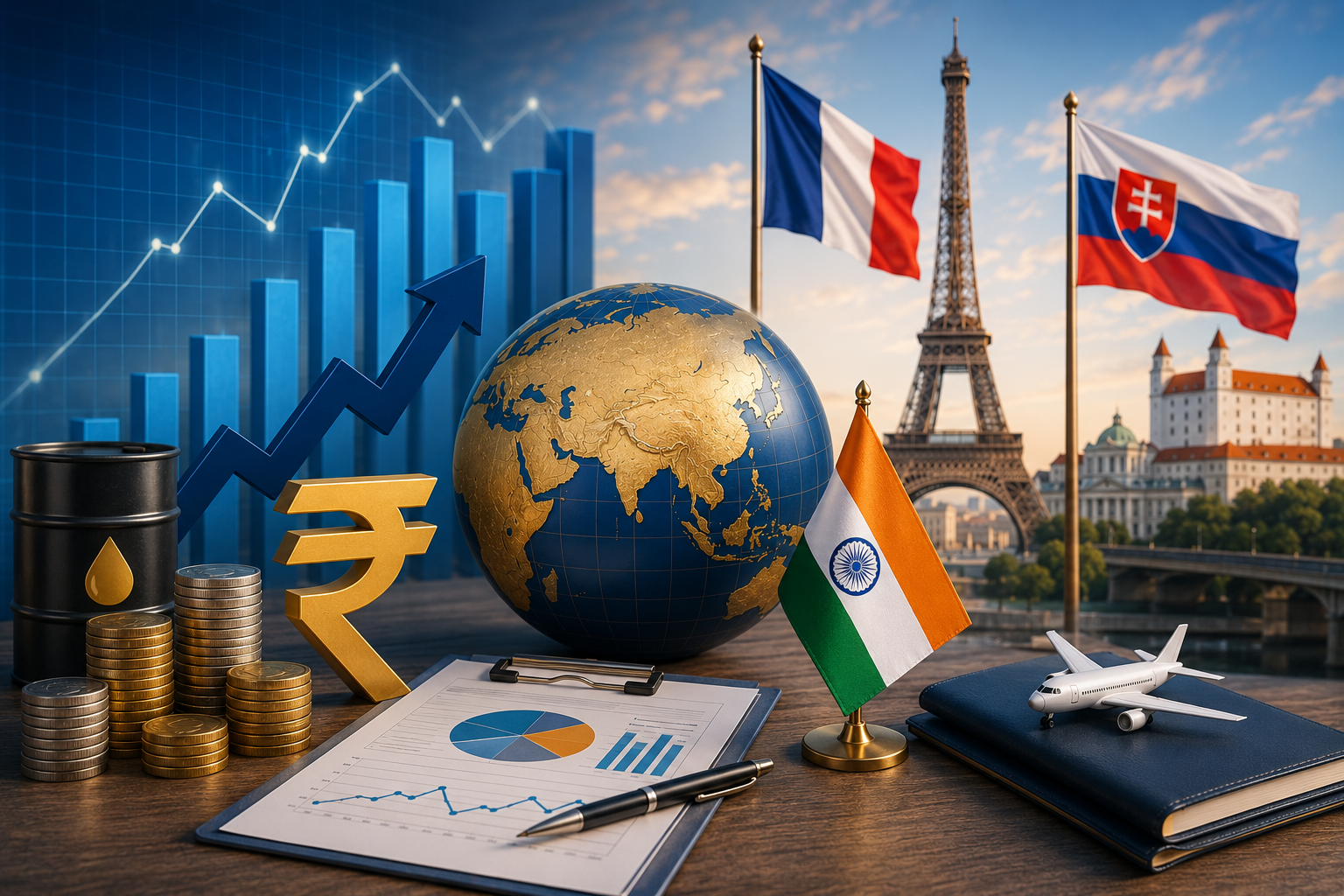
The coming week is expected to be crucial for policymakers, businesses and financial markets as several important economic indicators and diplomatic developments take centre stage. Market participants will closely monitor wholesale inflation figures, foreign exchange reserve data and Prime Minister Narendra Modi's multi-nation visit to Europe for insights into India's economic health and international partnerships.
These developments come at a time when global markets are navigating geopolitical uncertainties, fluctuating commodity prices and changing monetary policy expectations. The data and policy signals emerging this week could influence market sentiment, currency movements and investment decisions in the near term.
Revised WPI Data to Reveal Extent of Producer Price Pressures
One of the most anticipated releases this week is the Wholesale Price Index (WPI) inflation data. The latest figures are particularly significant because they are being released under the revised WPI series, which now uses 2022-23 as the base year instead of the earlier 2011-12 benchmark.
Wholesale inflation has become an important indicator for assessing cost pressures faced by producers and manufacturers. A sustained increase in wholesale prices often translates into higher production costs, which can eventually impact retail inflation and corporate profitability.
In April, wholesale inflation surged to 8.3%, marking its highest level in more than three years. The sharp rise was primarily driven by higher prices of crude oil, natural gas, mineral oils, metals and manufactured products. Economists will closely examine the May data to determine whether these pressures are easing or continuing to intensify.
Fuel Prices Remain a Key Inflation Driver
The fuel and power segment has emerged as the biggest contributor to wholesale inflation in recent months. Rising global energy prices and supply disruptions linked to geopolitical tensions have significantly increased costs across industries.
Higher fuel prices affect transportation, logistics, manufacturing and power generation, creating a ripple effect throughout the economy. Any moderation in energy costs could help ease inflationary pressures, while continued increases may raise concerns about future price stability.
Investors and policymakers will therefore pay close attention to the fuel component within the WPI data for indications of emerging trends.
Food Inflation Also Under Watch
Apart from energy costs, food prices remain a critical factor influencing inflation expectations. Agricultural commodities, cereals, vegetables and other essential food items have witnessed periodic price fluctuations due to weather conditions, supply chain challenges and global market developments.
Although wholesale food inflation remained relatively moderate compared with fuel inflation, any significant increase could affect household budgets and influence consumer demand patterns.
The upcoming data will provide valuable insights into whether food-related price pressures are beginning to build across the supply chain.
Forex Reserves Data to Gauge External Sector Strength
Another major focus this week will be the release of India's foreign exchange reserves data. The figures will offer a snapshot of the country's external financial position and its ability to withstand global economic volatility.
India maintains one of the world's largest foreign exchange reserve holdings, providing an important buffer against currency fluctuations, external shocks and capital flow volatility.
Recent data showed a decline in reserves due primarily to changes in foreign currency assets. Market participants will assess whether the trend continues or stabilises amid evolving global financial conditions.
Strong reserves are viewed as a key pillar supporting investor confidence, currency stability and overall macroeconomic resilience.
Rupee Stability Remains Important
Foreign exchange reserves play a vital role in maintaining confidence in the Indian rupee. As global markets react to changing interest rate expectations, geopolitical developments and commodity price movements, reserve levels provide an indication of the country's ability to manage external risks.
A healthy reserve position can help cushion the economy against sudden capital outflows and support stability in financial markets.
Currency traders and institutional investors will therefore monitor the latest figures closely for signals regarding India's external sector strength.
PM Modi's Europe Visit Carries Strategic Significance
Beyond economic data, Prime Minister Narendra Modi's visit to France and Slovakia is expected to attract considerable attention from policymakers and business leaders.
The visit highlights India's growing engagement with Europe and its efforts to deepen cooperation in technology, manufacturing, defence, infrastructure and innovation. Discussions with European leaders are expected to focus on strengthening bilateral trade, investment partnerships and strategic collaboration.
The visit also underscores India's increasing role in global economic and geopolitical affairs at a time of significant international realignment.
Strengthening Industrial and Technology Partnerships
One of the key themes of the European visit is expected to be industrial cooperation. Slovakia, known for its strong automotive manufacturing capabilities, presents opportunities for collaboration in vehicle production, engineering and industrial technology.
France remains an important partner for India across defence, aerospace, clean energy and innovation sectors. The inauguration of new collaborative initiatives and business partnerships could create fresh opportunities for investment and technology transfer.
Such engagements support India's long-term objective of strengthening domestic manufacturing capabilities while integrating more deeply into global value chains.
G7 Participation Highlights India's Global Influence
Prime Minister Modi's participation in the Group of Seven (G7) meeting further reinforces India's growing international stature.
As one of the world's fastest-growing major economies, India is increasingly viewed as a key partner in discussions related to global growth, energy security, supply chains, climate initiatives and technological transformation.
The meetings provide an opportunity for India to strengthen diplomatic ties while advancing its economic interests on the global stage.
Market Outlook: Data and Diplomacy to Shape Investor Sentiment
The combination of key economic releases and high-level diplomatic engagements makes this an important week for markets. Wholesale inflation figures will help assess domestic price pressures, while forex reserves data will provide insight into external stability.
At the same time, outcomes from Prime Minister Modi's European engagements could open new avenues for trade, investment and industrial cooperation.
For investors, policymakers and businesses, the week's developments will offer valuable clues about the direction of inflation, economic growth and India's evolving position in the global economy.