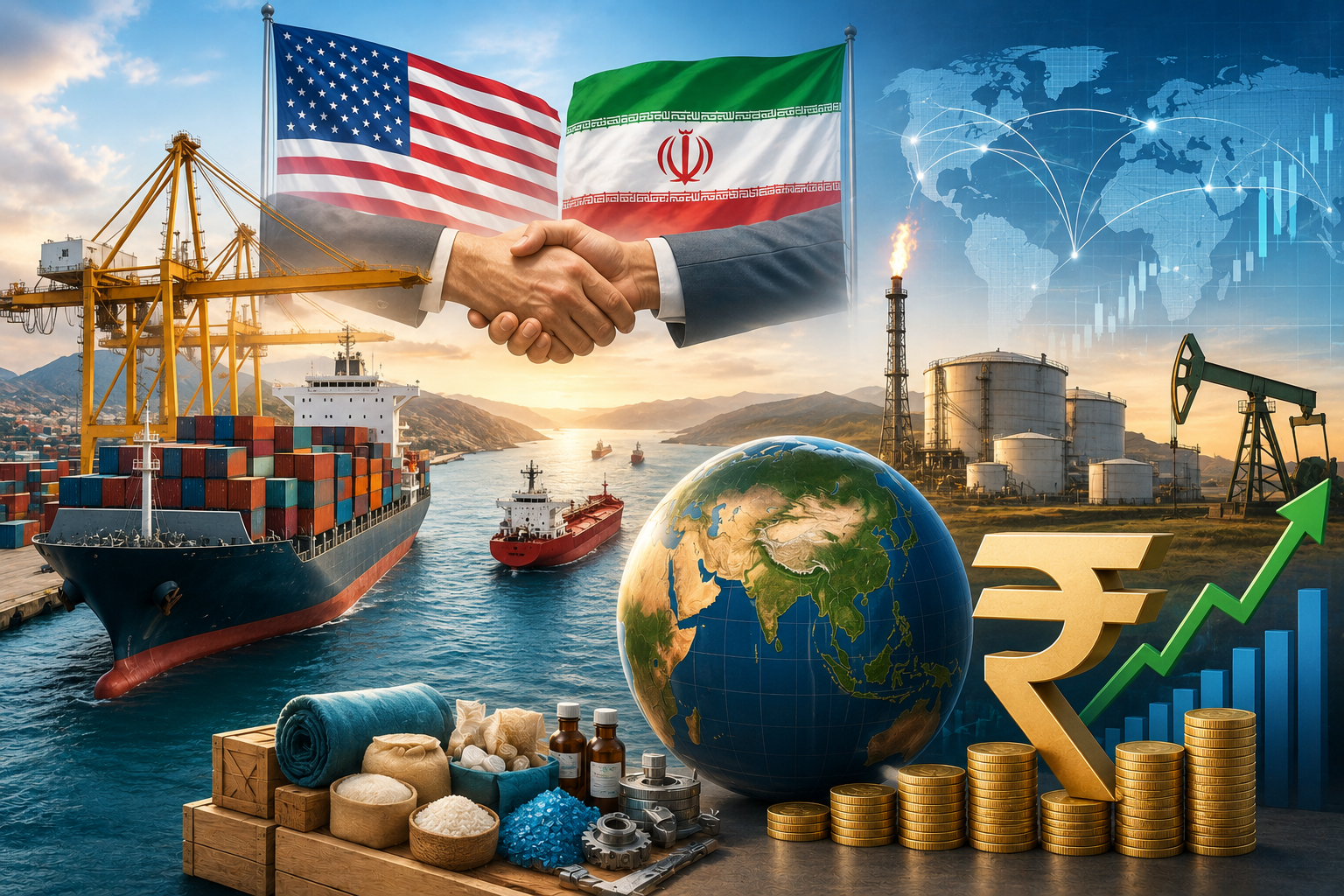
Reopening of the Strait of Hormuz expected to reduce energy costs, revive trade flows and strengthen India's economic outlook
India could emerge as one of the major beneficiaries of the newly announced peace agreement between the United States and Iran, as the deal is expected to restore stability in global energy markets, revive trade routes across West Asia and improve overall economic sentiment.
The agreement, which is set to be formally signed in Switzerland on June 19, marks the end of a 107-day conflict that disrupted global shipping, pushed crude oil prices above $100 per barrel and created significant uncertainty for businesses worldwide. The reopening of the strategically important Strait of Hormuz is expected to bring immediate relief to countries heavily dependent on energy imports, including India.
Strategic Waterway Reopens After Months of Disruption
The Strait of Hormuz is one of the world's most critical energy corridors, handling a substantial portion of global crude oil, liquefied natural gas (LNG) and liquefied petroleum gas (LPG) shipments.
During the conflict, disruptions in maritime traffic increased freight charges, insurance costs and delivery timelines. Many shipping companies were forced to reroute vessels through longer routes around Africa's Cape of Good Hope, significantly raising transportation expenses.
With the waterway expected to reopen fully, trade flows are likely to normalize, reducing logistics costs and improving supply-chain efficiency across Asia and Europe.
Major Relief for India's Energy Imports
India relies heavily on West Asia for its energy requirements. Nearly half of the country's crude oil imports originate from the region, while a substantial portion of LNG and LPG supplies also pass through the Strait of Hormuz.
The conflict had sharply increased India's energy import costs, putting pressure on government finances, corporate profitability and household budgets. Elevated oil prices also raised concerns about inflation and the country's current account deficit.
The peace agreement is expected to stabilize energy markets, potentially leading to lower crude oil prices and reducing India's import bill. A decline in fuel costs would benefit transportation, aviation, manufacturing and other energy-intensive sectors.
Rupee May Gain Support from Lower Oil Prices
One of the immediate economic benefits could be increased stability for the Indian rupee. Rising crude oil prices typically increase demand for foreign currency, placing pressure on the domestic currency.
With energy prices expected to moderate, India's foreign exchange outflows may decline, supporting the rupee and helping reduce imported inflation. Currency stability could also improve investor confidence and attract additional foreign investment into Indian financial markets.
Market participants believe a stable rupee environment would provide greater certainty for exporters, importers and multinational companies operating in India.
Exporters Expect Strong Recovery in West Asia Trade
Indian exporters are optimistic that easing geopolitical tensions will revive demand across Gulf nations and accelerate trade growth over the coming quarters.
The conflict significantly affected India's exports to the region, disrupting established supply chains and delaying shipments. Merchandise exports to West Asia witnessed a sharp decline during the height of the crisis as businesses faced logistical challenges and higher transportation costs.
With trade routes reopening and economic activity expected to normalize, exporters anticipate stronger demand for engineering goods, pharmaceuticals, chemicals, food products, textiles, machinery and agricultural commodities.
Industry leaders believe the restoration of normal business conditions could create fresh opportunities for Indian companies looking to expand their presence in Gulf markets.
Manufacturing Sector Likely to Benefit
Lower energy costs are expected to provide a significant boost to India's manufacturing sector. Rising crude oil and gas prices had increased production expenses for several industries, including chemicals, metals, plastics, cement and transportation.
As fuel and logistics costs decline, manufacturers could see improved margins and greater competitiveness in global markets. Reduced input costs may also encourage capacity expansion and support industrial growth.
Experts believe lower commodity prices could strengthen India's position as a global manufacturing hub while enhancing export competitiveness.
GCC Remains a Critical Trade Partner
The Gulf Cooperation Council (GCC), comprising the UAE, Saudi Arabia, Qatar, Oman, Kuwait and Bahrain, remains one of India's most important trading regions.
India exports a wide range of products to GCC nations, including engineering goods, refined petroleum products, agricultural commodities, pharmaceuticals, gems and jewellery, textiles and machinery. The region also serves as a major source of crude oil, natural gas, petrochemicals and fertilisers.
Any improvement in economic conditions across the Gulf is therefore likely to have a direct positive impact on India's trade performance and industrial activity.
Inflation Risks Could Ease
The recent conflict contributed to concerns about rising inflation, particularly through higher fuel and transportation costs. A sustained decline in energy prices could help moderate inflationary pressures across multiple sectors of the economy.
Lower logistics expenses can reduce the cost of moving goods, while cheaper fuel can benefit businesses and consumers alike. This may provide policymakers with greater flexibility in managing economic growth and financial stability.
Outlook: Positive Signals for India's Economy
The US-Iran peace agreement has the potential to become a significant positive development for India's economy. Stable energy supplies, lower transportation costs, stronger export demand and improved currency stability could collectively support economic growth over the coming months.
While markets will continue to monitor the implementation of the agreement and geopolitical developments in the region, the reopening of the Strait of Hormuz is being viewed as a major step toward restoring global trade confidence.
For India, the deal could create a favorable environment for exports, manufacturing and investment, strengthening the country's growth prospects at a time when global economic uncertainty remains elevated.