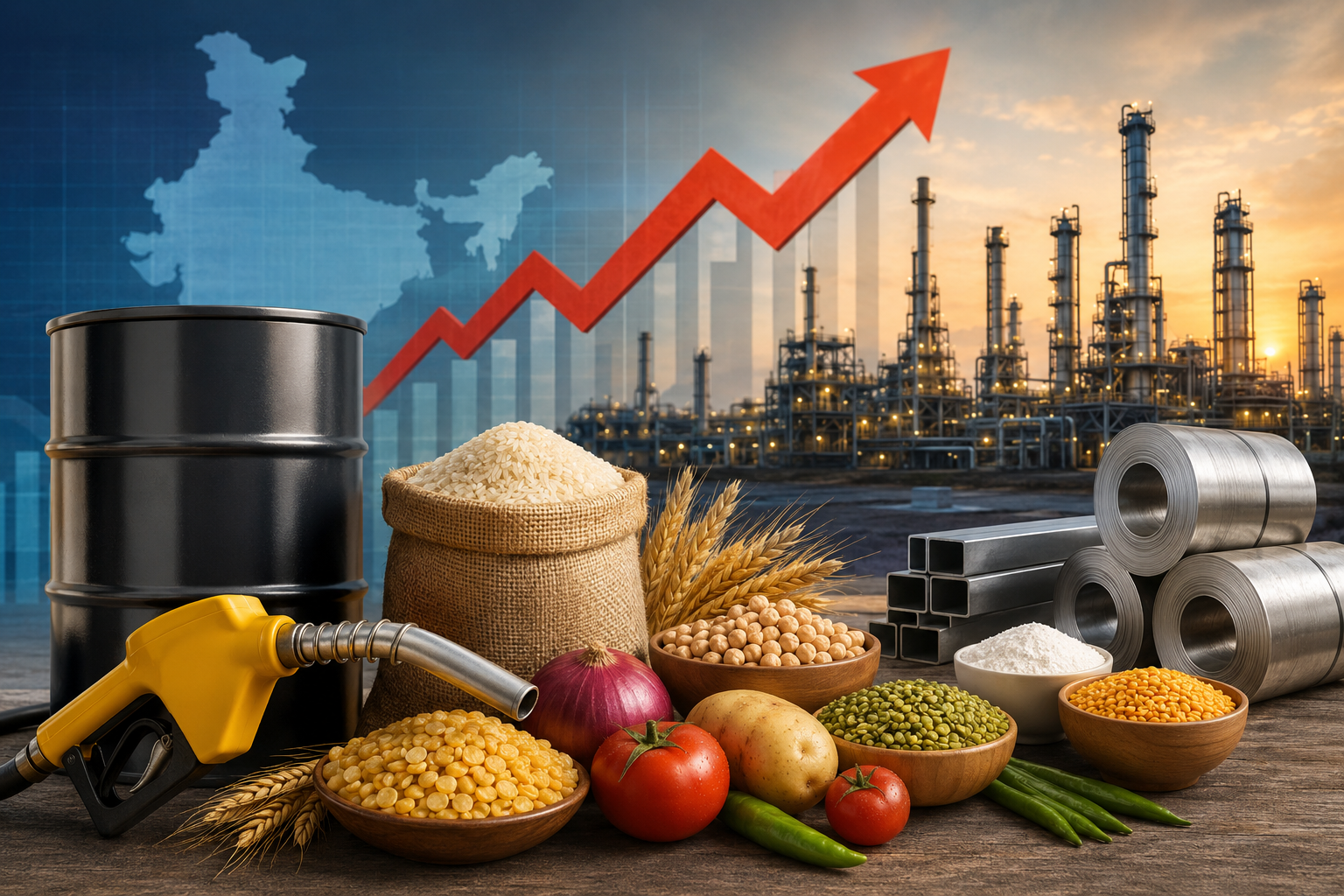
Rising energy costs, higher food prices and stronger manufacturing inflation push wholesale price growth to a multi-month high
India's wholesale inflation accelerated significantly in May, highlighting growing cost pressures across the economy as elevated energy prices and rising food costs continued to impact businesses and producers. According to data released by the Ministry of Commerce and Industry, the Wholesale Price Index (WPI)-based inflation rose to 9.68% in May from 8.30% in April.
The increase reflects a broad-based rise in prices across fuel, food and manufacturing sectors, with energy costs emerging as the primary driver of inflation during the month. The latest reading comes amid continued volatility in global commodity markets and heightened geopolitical tensions in West Asia that have kept crude oil prices elevated.
Fuel and Power Segment Leads Inflation Surge
The fuel and power category remained the largest contributor to wholesale inflation in May. Inflation in the segment climbed to 30.33%, compared with 24.71% in April, as global crude oil and natural gas prices remained under pressure.
Within the category, crude petroleum and natural gas recorded inflation of 61.51%, while mineral oils witnessed inflation of 49.82%. Higher fuel prices have increased transportation and production costs across industries, creating a ripple effect throughout the economy.
Industry experts note that sustained energy inflation can impact profitability for sectors that rely heavily on fuel and raw materials, including manufacturing, logistics, chemicals and metals.
Food Inflation Continues to Rise
Food prices also contributed to the upward movement in wholesale inflation. The WPI Food Index rose to 4.49% in May from 3.11% in April, indicating increasing price pressures across agricultural commodities.
Inflation in primary articles increased to 4.99%, up from 3.78% in the previous month. Rising prices of cereals, vegetables, pulses and other farm products have added to overall inflationary trends, raising concerns about supply-side pressures and their potential impact on consumers.
While wholesale inflation does not directly reflect retail price movements, sustained increases at the producer level often filter through to consumer prices over time.
Manufacturing Sector Faces Higher Input Costs
Manufacturing inflation also strengthened during the month, rising to 7.48% from 6.68% in April. Higher costs of raw materials, fuel and industrial inputs contributed to the increase.
Key sectors driving manufacturing inflation included chemicals and chemical products, basic metals, petroleum products and other industrial goods. Rising input costs have forced producers to absorb part of the burden while passing some costs on through higher prices.
The trend suggests that industrial sectors continue to face margin pressures despite steady demand conditions.
New WPI Series Introduced
The May inflation data marks an important milestone as it is the first release under the revised WPI series with a new base year of 2022-23, replacing the earlier 2011-12 base year.
The updated index now covers 957 items compared to 697 items previously, providing broader representation of the economy. The revised basket includes renewable energy sources such as solar and wind power, as well as nuclear electricity, reflecting the evolving structure of India's energy sector.
Additionally, crude petroleum and natural gas have been shifted from the primary articles category to the fuel and power category to better capture movements in energy prices.
Producer Price Indices Introduced Alongside WPI
Along with the revised WPI series, the government has introduced new Producer Price Indices (PPIs), including Output PPI, Trial Input PPI and Service PPI for selected service sectors.
The Department for Promotion of Industry and Internal Trade (DPIIT) has indicated that WPI and PPI will coexist for the next five years. Eventually, PPIs are expected to become the primary measure of producer-level inflation, aligning India with international best practices and recommendations from global institutions.
Outlook: Inflation Trends Remain Key for Markets
The latest inflation data underscores the importance of monitoring global energy markets and domestic supply conditions in the coming months. Any renewed volatility in crude oil prices or disruptions in commodity supplies could keep wholesale inflation elevated.
For investors, rising producer prices remain an important indicator as they can influence corporate earnings, monetary policy expectations and sectoral performance. Markets will closely watch future inflation readings and global commodity trends for signs of either easing or persistent price pressures.
As India navigates an uncertain global environment, managing energy costs and maintaining stable food supplies will remain critical factors in controlling inflation and supporting economic growth.