Surging Electricity Demand, Massive Capacity Expansion and Transmission Investments Could Drive India's Next Infrastructure Growth Cycle
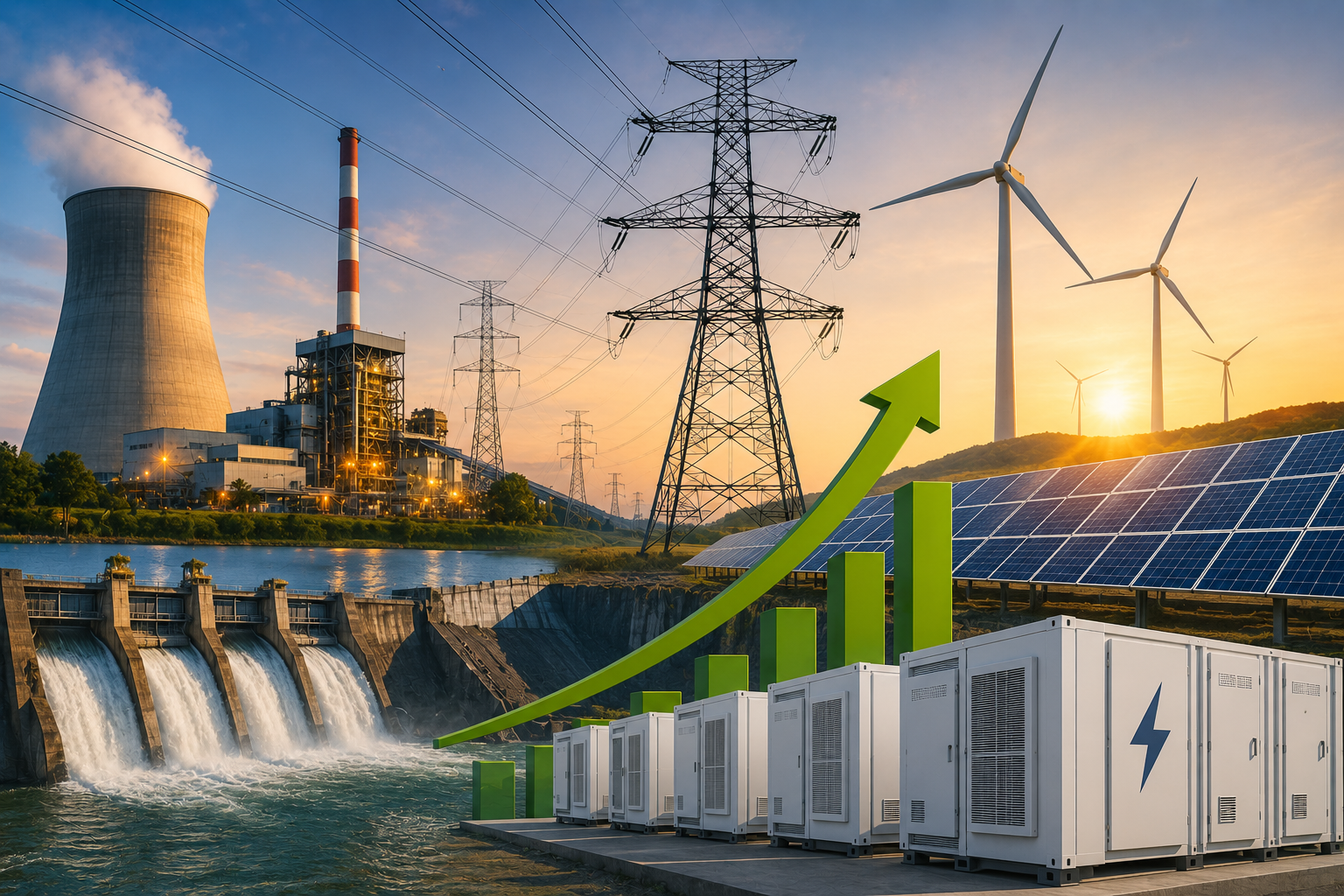
India's power sector is entering a transformative phase that could redefine the country's energy landscape over the next decade. Driven by rapidly rising electricity demand, aggressive capacity expansion plans, improving financial health of power distributors and a massive transmission infrastructure buildout, the sector is emerging as one of the most attractive long-term investment themes in the market.
Global brokerage Macquarie remains bullish on the sector, identifying NTPC as its preferred investment opportunity, followed by JSW Energy and Power Grid. The brokerage believes India is witnessing the early stages of a broad-based power upcycle that spans generation, transmission, distribution and energy storage infrastructure.
As the world's fastest-growing major economy continues to industrialize and digitize, electricity demand is expected to become one of the strongest structural growth drivers for the next decade.
Electricity Demand Reaches Record Levels
India's growing economy is creating unprecedented demand for electricity.
Peak power demand recently touched an all-time high of approximately 271 GW, highlighting the increasing strain on existing infrastructure. Rapid urbanization, rising industrial production, expanding manufacturing activity and growing household consumption are driving electricity usage across the country.
New-age sectors such as data centres, electric vehicles, artificial intelligence infrastructure and digital services are emerging as major power consumers, adding a new dimension to India's energy requirements.
In addition, rising temperatures and increasing air-conditioner penetration are contributing significantly to seasonal power demand growth.
Industry forecasts suggest that electricity consumption could continue growing at around 6 per cent annually through the end of the decade, making India one of the most attractive power markets globally.
India's Installed Power Capacity Set for Massive Expansion
To meet future demand, India is preparing for one of the largest capacity expansion programs in its history.
According to Macquarie, the country's installed power generation capacity could rise from approximately 538 GW currently to nearly 900 GW by FY32.
This expansion will involve a combination of renewable energy projects, thermal power generation, hydroelectric capacity and emerging energy technologies.
The scale of planned investments reflects the government's commitment to supporting economic growth while simultaneously advancing its clean-energy objectives.
Analysts believe that achieving these targets will require substantial capital expenditure across both public and private sector companies.
Coal Remains Critical Despite Renewable Energy Push
While renewable energy continues to dominate headlines, coal remains an essential component of India's power system.
Macquarie notes that thermal power plants continue to operate at relatively high utilization levels, providing the stability needed to support the grid during periods of fluctuating renewable energy generation.
Coal-based generation remains particularly important during peak demand periods and when renewable output declines due to weather conditions.
Industry experts believe India will continue pursuing a balanced energy strategy that combines renewable growth with reliable baseload generation.
This approach is expected to ensure energy security while supporting the country's long-term decarbonization goals.
Energy Storage Emerges as the Next Growth Frontier
One of the most important developments in India's energy transition is the growing focus on energy storage.
As solar and wind capacity expands, the need for large-scale storage systems is becoming increasingly critical.
Renewable energy generation often peaks during periods when demand is relatively low, creating challenges for grid management and power distribution.
Energy storage technologies help bridge this gap by storing excess electricity and supplying it during periods of higher demand.
Macquarie estimates that India may require approximately 74 GW of energy storage capacity over the coming years to support renewable integration and maintain grid reliability.
This creates a significant investment opportunity for companies operating in battery storage, pumped hydro and related infrastructure segments.
Transmission Infrastructure Enters a Capex Supercycle
Beyond power generation, transmission infrastructure is emerging as one of the strongest growth stories within the sector.
Macquarie believes India is entering a transmission-led capital expenditure supercycle that could attract investments exceeding $50 billion over the next decade.
The challenge stems from the geographical mismatch between renewable energy generation and electricity consumption.
Many of India's largest solar and wind projects are located in resource-rich states, while major demand centres are concentrated elsewhere.
Connecting these regions requires the construction of new transmission corridors, substations and grid infrastructure capable of moving large volumes of electricity efficiently across the country.
This trend is expected to create substantial opportunities for transmission-focused companies such as Power Grid.
Grid Modernization Becomes a National Priority
As electricity demand grows and renewable penetration increases, modernizing India's power grid is becoming increasingly important.
The existing transmission network must evolve to accommodate greater variability in power generation while maintaining reliability and stability.
Industry experts highlight that grid congestion and renewable energy curtailment have already emerged as challenges in certain regions.
Instances where solar power generation exceeded the grid's absorption capacity have underscored the need for faster infrastructure development.
Investments in smart grids, digital monitoring systems and advanced transmission technologies are expected to play a central role in addressing these challenges.
Distribution Companies Show Signs of Recovery
One of the most encouraging developments in the sector is the improving financial health of power distribution companies.
Historically, distribution companies have been viewed as the weakest link in India's power value chain due to persistent losses, inefficient billing systems and high transmission losses.
However, reforms introduced through government programs and smart-metering initiatives are beginning to deliver tangible results.
Aggregate technical and commercial losses have declined significantly, while billing efficiency and collection rates have improved.
The reduction in overdue payments and stronger financial performance suggest that the sector is becoming more sustainable than in previous decades.
Improved distributor finances are expected to benefit generators and transmission companies by ensuring more timely payments and healthier cash flows.
Regulatory Reforms Create Additional Tailwinds
Government policy continues to provide strong support for the sector.
Several ongoing reforms aim to create a more market-oriented electricity ecosystem, encourage competition and improve operational efficiency.
The proposed National Electricity Policy and related legislative initiatives seek to modernize the sector while promoting renewable integration and digital transformation.
Emerging concepts such as peer-to-peer electricity trading, digital energy platforms and market-based power pricing could fundamentally reshape the industry over time.
These reforms are expected to improve transparency, strengthen investor confidence and attract greater private-sector participation.
Why NTPC and JSW Energy Stand Out
Macquarie's preference for NTPC reflects the company's unique position within India's evolving power landscape.
NTPC combines the stability of a large thermal generation portfolio with growing exposure to renewable energy, transmission and green hydrogen initiatives.
Its scale, operational efficiency and strategic importance make it one of the most significant beneficiaries of rising electricity demand.
JSW Energy, meanwhile, has emerged as a favored private-sector play due to its expanding renewable portfolio, strong project pipeline and aggressive growth strategy.
The company is actively increasing its presence across multiple energy segments, positioning itself to benefit from India's transition toward a more diversified energy mix.
Risks Still Remain
Despite the positive outlook, the sector is not without challenges.
Large-scale infrastructure projects continue to face risks related to land acquisition, environmental clearances, financing and execution delays.
Fuel supply uncertainties, particularly in coal markets, could also affect generation economics.
Global supply-chain disruptions, commodity-price volatility and geopolitical tensions remain additional factors that investors must monitor.
Furthermore, maintaining grid reliability while integrating increasing amounts of renewable energy will require careful planning and substantial investment.
The Bottom Line
India's power sector appears to be entering one of its strongest growth phases in decades. Rising electricity demand, massive generation expansion, energy storage deployment, transmission infrastructure investments and improving distribution economics are creating a powerful foundation for long-term growth.
Macquarie's bullish outlook reflects confidence that these structural drivers will continue supporting the sector for years to come. With NTPC, JSW Energy and Power Grid positioned as key beneficiaries, investors are increasingly viewing the power sector as a central component of India's broader infrastructure and economic growth story.
As India moves toward becoming a trillion-dollar energy market, the ongoing power sector transformation could create some of the most significant investment opportunities of the coming decade.