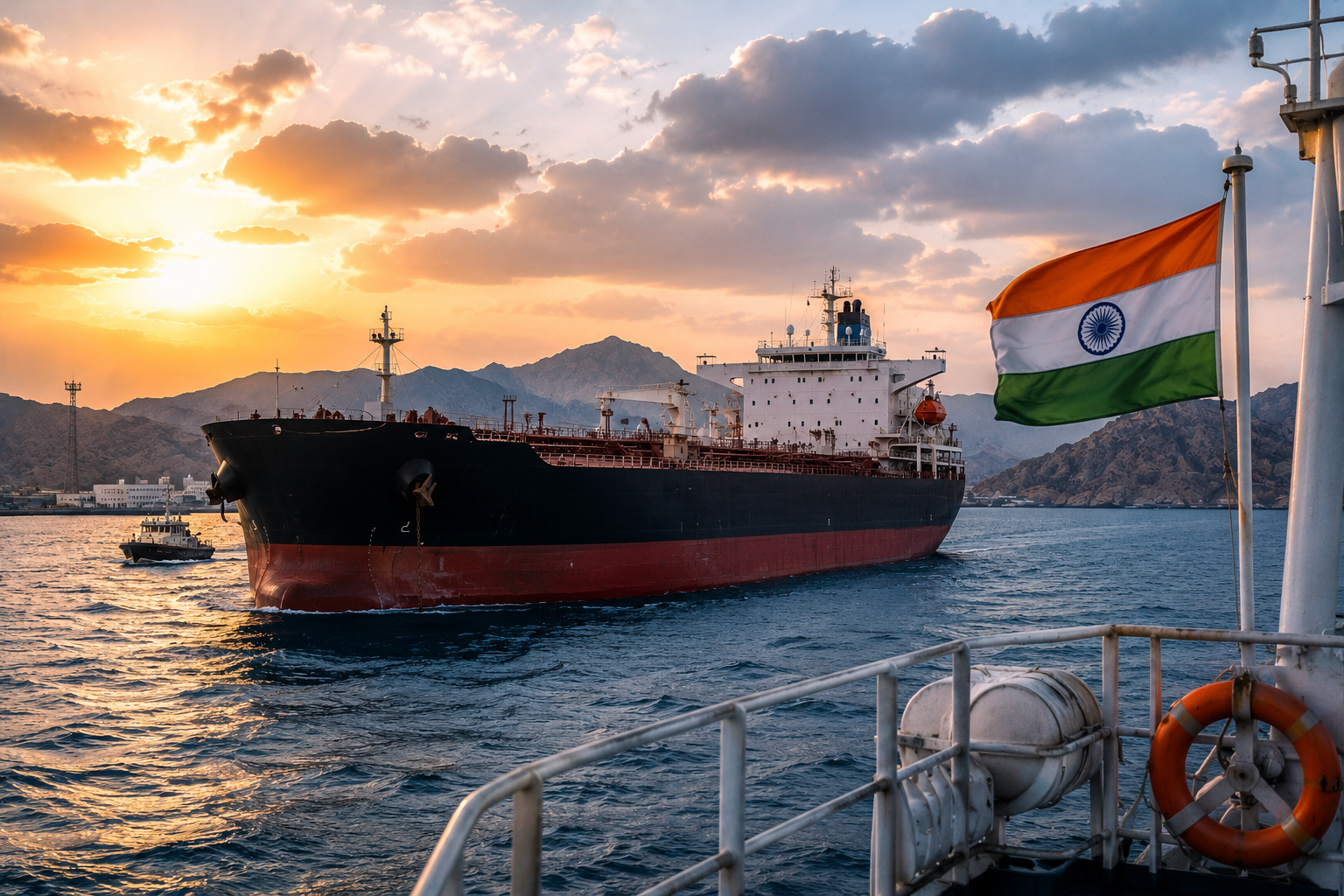
Third Vessel-Related Incident This Week Highlights Rising Risks in Critical Gulf Shipping Routes
A fresh maritime incident involving tanker MT Jalveer near the coast of Oman has renewed concerns over the safety of commercial shipping operations in the Gulf region. The development comes amid escalating geopolitical tensions in West Asia and follows a series of recent attacks on vessels operating in strategically important international waters.
Indian authorities have confirmed that they are closely monitoring the situation after the incident was reported off Shinas port in Oman. While details regarding the nature of the incident remain limited, the event marks the third vessel-related occurrence involving Indian-linked maritime interests within a week, drawing attention to the increasing risks faced by global shipping operators.
The latest development has also intensified concerns about the security of critical sea lanes that handle a substantial portion of the world's energy exports and international trade.
Indian Embassy Monitoring Situation
The Indian Embassy in Oman stated that it is coordinating with local authorities and monitoring developments closely to obtain more information about the incident.
Officials have not yet confirmed whether Indian crew members were aboard MT Jalveer at the time of the incident. However, diplomatic channels remain actively engaged to assess the vessel's condition and ensure the safety of all personnel involved.
The embassy emphasized that updates will be shared as more information becomes available from Omani authorities and maritime agencies.
Given the large number of Indian seafarers employed across international shipping fleets, any maritime incident in the region attracts immediate attention from Indian officials.
Incident Follows Deadly Attacks on Commercial Vessels
The MT Jalveer incident comes just a day after attacks on other merchant vessels operating in the Gulf region resulted in casualties among Indian crew members.
Indian authorities earlier confirmed the deaths of three Indian seafarers who had initially been reported missing following attacks on commercial ships in the region.
The tragic incidents have heightened concerns within the maritime community and raised questions regarding the security environment facing civilian vessels navigating waters affected by geopolitical tensions.
The recent events have also prompted greater scrutiny of shipping operations and safety measures across the Gulf and surrounding maritime corridors.
Strategic Importance of Gulf Shipping Routes
The waters surrounding Oman and the Strait of Hormuz represent one of the most important maritime trade corridors in the world.
A significant portion of global crude oil exports, liquefied natural gas shipments, and international cargo traffic passes through these routes every day. Any disruption in this region can have immediate consequences for energy markets, shipping costs, and global supply chains.
The Strait of Hormuz alone serves as a critical gateway connecting major oil-producing nations with international markets. As a result, geopolitical developments in the area are closely monitored by governments, investors, and businesses worldwide.
Industry experts warn that sustained instability could lead to higher transportation costs, increased insurance premiums, and longer delivery times for global trade.
Impact on Energy Markets
The latest maritime incident comes at a time when global oil prices are already experiencing heightened volatility due to tensions in West Asia.
Energy traders remain sensitive to any developments that could threaten the movement of crude oil through the Gulf region. Concerns over shipping disruptions have contributed to fluctuations in oil prices as markets assess potential supply risks.
For India, which imports a substantial portion of its crude oil requirements, stability in Gulf shipping routes is particularly important. Any prolonged disruption could increase import costs and add pressure to domestic energy markets.
Analysts believe that continued uncertainty in the region could keep energy prices elevated in the near term.
Shipping Industry Faces Growing Security Challenges
Global shipping companies are increasingly confronting a more complex operating environment characterized by geopolitical conflicts, military activity, and evolving security threats.
Many operators have strengthened risk management protocols, increased monitoring of sensitive routes, and implemented additional safety measures to protect vessels and crew members.
Shipping firms are also reviewing contingency plans and alternative routes where feasible, although such adjustments often involve higher costs and longer transit periods.
The recent incidents underscore the challenges faced by the maritime industry as it balances operational efficiency with crew safety and security concerns.
India's Maritime Interests Under Spotlight
India has significant economic and strategic interests tied to the Gulf region.
A large share of the country's energy imports, merchandise trade, and maritime commerce depends on uninterrupted access to Gulf shipping routes. Additionally, thousands of Indian seafarers work aboard international vessels operating across the region.
As a result, developments affecting maritime security have direct implications for India's trade flows, energy security, and workforce abroad.
The government is expected to remain actively engaged with regional partners and international maritime organizations to ensure the safety of Indian nationals and safeguard commercial interests.
Diplomatic Attention Intensifies
The recent maritime incidents have also taken on diplomatic significance as governments seek greater clarity regarding attacks on commercial vessels and the broader security environment in the region.
International efforts to protect freedom of navigation and maintain safe shipping corridors are likely to gain increased attention as geopolitical tensions continue to evolve.
For global policymakers, ensuring stability in major trade routes remains essential to supporting economic growth and preventing disruptions to international commerce.