Founder Denies Fund Diversion Claims, Says Accounting Transactions Were Misunderstood Amid Ongoing Investigation
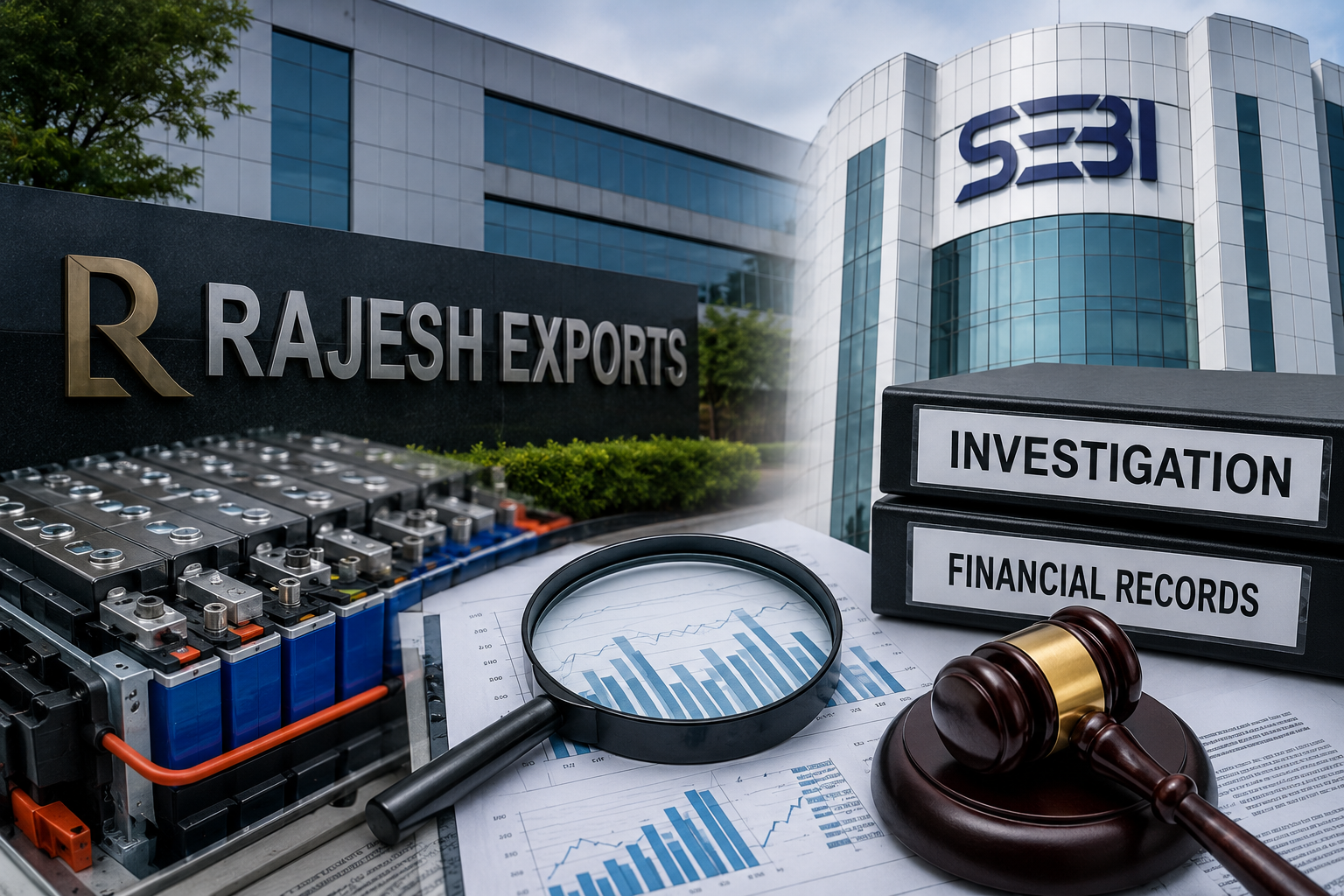
Rajesh Exports Ltd has found itself at the center of a major regulatory controversy after the Securities and Exchange Board of India (Sebi) raised concerns regarding alleged irregular transactions involving its battery subsidiary, ACC Energy Storage, and promoter-linked entity Elest Pvt Ltd. However, company founder and chairman Rajesh Mehta has firmly rejected the allegations, stating that there was no diversion of funds and that the regulator has misinterpreted the accounting treatment of the transactions in question.
The dispute has drawn significant attention from investors because it not only involves allegations related to corporate governance and disclosures but could also impact the company’s participation in one of India's most ambitious battery manufacturing initiatives under the government’s Advanced Chemistry Cell (ACC) Production-Linked Incentive (PLI) scheme.
As investigations continue, the outcome could have important implications for Rajesh Exports’ future growth plans, investor confidence, and its role in India's emerging battery manufacturing ecosystem.
Founder Rejects Allegations of Financial Impropriety
Speaking on the issue, Rajesh Mehta strongly denied any wrongdoing and insisted that the transactions highlighted by Sebi have been misunderstood.
According to Mehta, the regulator's observations are based on an incorrect interpretation of accounting entries rather than evidence of actual fund diversion. He emphasized that there was no misappropriation of funds and maintained that the company has complied with applicable regulations.
The management has indicated that it intends to cooperate fully with authorities and provide all necessary clarifications regarding the transactions under review.
The company believes that a detailed examination of the accounting records will help address concerns raised by the regulator.
Understanding the Sebi Investigation
The controversy centers around transactions involving ACC Energy Storage, a subsidiary focused on battery manufacturing, and Elest Pvt Ltd, an entity linked to the promoters.
According to Sebi's interim findings, Elest acquired a significant stake in ACC Energy during early 2025. The regulator has questioned certain financial transactions that occurred after the acquisition, including the movement of funds between the two entities and investments made without detailed disclosures regarding valuation methodology.
Sebi has expressed concerns that the ownership and transaction structure may not have been adequately disclosed to shareholders and market participants.
The regulator's order also highlights questions regarding transparency, related-party disclosures, and corporate governance practices.
Cross-Holding Structure Under Regulatory Lens
One of the key issues being examined is the cross-holding arrangement between ACC Energy and Elest.
Regulators believe the structure may have altered the effective ownership profile of ACC Energy while potentially creating ambiguity regarding control and financial interests.
Corporate governance specialists note that such arrangements often attract scrutiny because they can make it difficult for investors to fully understand the economic relationships between entities.
As a result, disclosure requirements in such cases are typically stringent to ensure transparency and protect shareholder interests.
Sebi's investigation seeks to determine whether investors received complete and accurate information regarding these arrangements.
Forensic Audit Ordered for Greater Clarity
To further examine the matter, Sebi has directed a forensic audit of the company's books and transactions.
The audit will independently review accounting practices, ownership structures, financial flows, disclosures, and related-party dealings across the entities involved.
Forensic audits are generally used in situations where regulators require a detailed and independent assessment of complex financial transactions.
The findings are expected to play a crucial role in determining whether any regulatory violations occurred and what corrective actions may be necessary.
Investors are likely to closely follow the audit process, as its conclusions could significantly influence market sentiment toward the company.
Questions Raised Over Reported Financial Figures
Beyond the specific transactions under review, Sebi's order has also raised concerns regarding reported subsidiary revenues across multiple financial years.
The regulator is examining whether certain revenue disclosures accurately reflected underlying business activity and whether reporting practices met regulatory standards.
These broader concerns have elevated the significance of the investigation, transforming it from a transaction-specific inquiry into a more comprehensive review of corporate reporting practices.
The company has stated that it intends to address all concerns through the appropriate legal and regulatory channels.
Potential Impact on Battery Manufacturing Ambitions
Perhaps the most significant business implication of the ongoing investigation relates to the company's participation in India's Advanced Chemistry Cell (ACC) Production-Linked Incentive scheme.
The government launched the scheme to establish domestic battery manufacturing capabilities and reduce dependence on imported energy storage technologies.
Rajesh Exports is among the companies selected to participate in the program, which represents a major component of India's broader electric mobility and clean energy strategy.
However, the regulatory scrutiny has prompted authorities to review the company's eligibility and compliance status.
Any adverse decision could affect the company's ability to access incentives and participate fully in the program.
Battery Plant Project Continues to Progress
Despite the regulatory challenges, Rajesh Exports maintains that work on its battery manufacturing project continues.
The company is developing a large-scale battery production facility in Hubli, Karnataka, which is expected to play a key role in its long-term growth strategy.
According to management, construction and implementation activities have made substantial progress, with the project reportedly more than halfway complete.
The facility is intended to support domestic battery production and contribute to India's ambitions of becoming a major player in advanced energy storage technologies.
Management remains optimistic about the project's future despite ongoing regulatory uncertainty.
Focus on Indigenous Battery Technology
A central element of the company's strategy is the development of indigenous battery technology.
Rajesh Mehta has emphasized that the company is working on advanced battery cell technology designed and developed within India.
The focus on domestic innovation aligns closely with national objectives related to manufacturing self-reliance, energy security, and technological advancement.
However, management acknowledges that research and development activities have taken longer than originally anticipated, contributing to delays in project execution.
The company has reportedly sought additional time to complete certain aspects of the project.
Industry Importance of the ACC PLI Scheme
The ACC PLI scheme is widely regarded as one of India's most important industrial initiatives.
The program aims to create a globally competitive battery manufacturing ecosystem capable of supporting electric vehicles, renewable energy storage, and advanced industrial applications.
Demand for battery technology is expected to grow significantly over the coming decade as India accelerates its transition toward clean energy and electric mobility.
Companies participating in the scheme are expected to play a critical role in building domestic supply chains and reducing reliance on imports.
For this reason, developments involving Rajesh Exports are being closely monitored by both policymakers and industry participants.
Investor Concerns and Market Reaction
The regulatory developments have naturally raised concerns among investors regarding corporate governance, compliance risks, and project execution timelines.
Market participants typically view regulatory investigations as significant events because they can affect business operations, reputation, funding access, and future growth opportunities.
At the same time, some investors are adopting a wait-and-watch approach, recognizing that the investigation remains ongoing and final conclusions have not yet been reached.
Future disclosures, audit findings, and regulatory decisions are likely to play an important role in shaping investor sentiment.
Outlook
Rajesh Exports faces a critical period as it seeks to address regulatory concerns while continuing to advance its battery manufacturing ambitions. The company's leadership remains confident that the allegations stem from accounting interpretations rather than actual wrongdoing, while regulators continue to examine the transactions and disclosures in question.
The coming months are expected to be decisive, particularly with the forensic audit underway and government authorities reviewing the company's position within the ACC PLI program.
For investors, the situation presents both uncertainty and significance. While regulatory scrutiny poses risks, the company's battery manufacturing project remains strategically important within India's broader clean energy and electric mobility vision. The eventual resolution of the matter could have far-reaching implications for the company, its shareholders, and the country's emerging battery ecosystem.