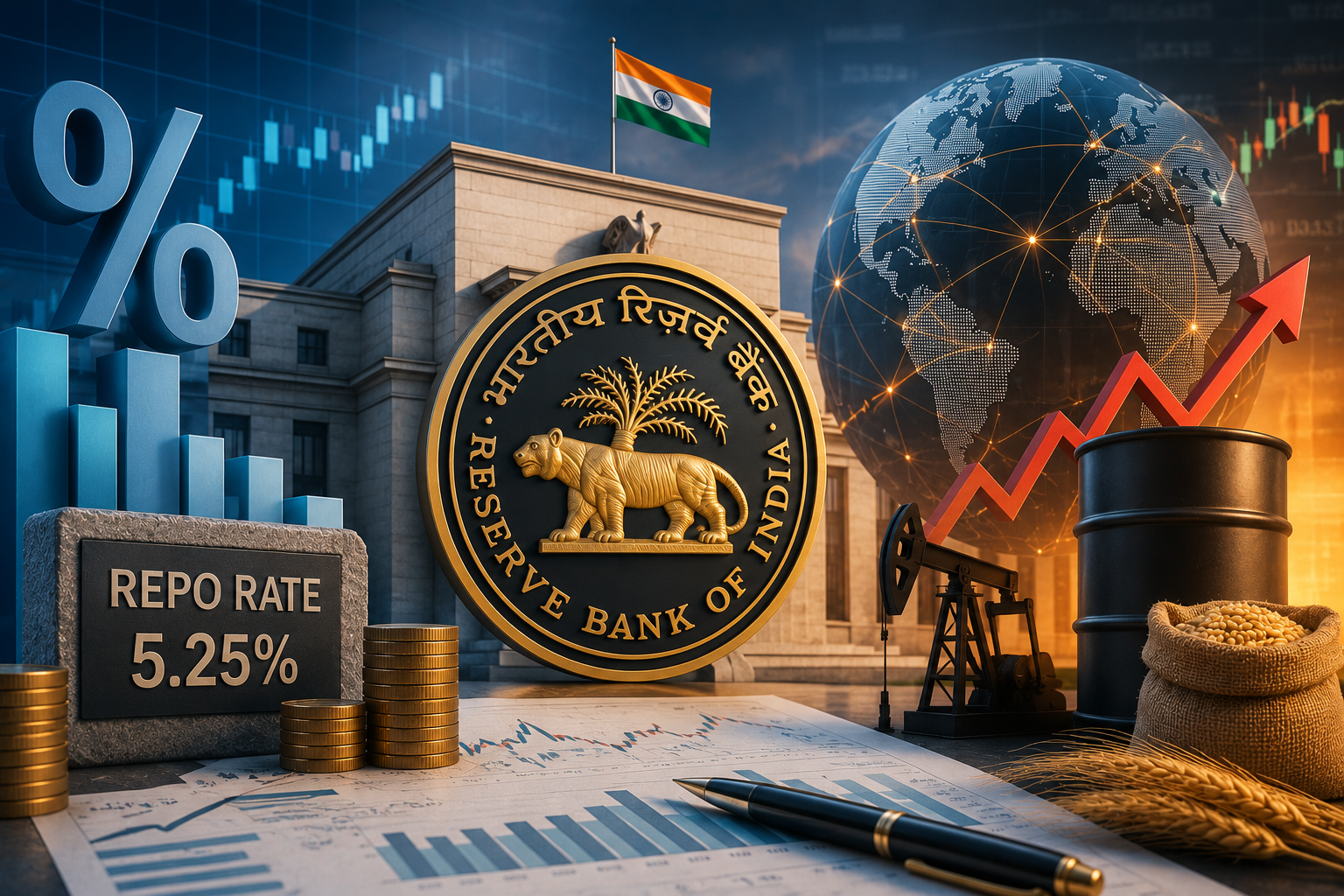
Central Bank Holds Rates Steady While Prioritising Price Stability, Growth Support, and Currency Resilience
The decision reflects the central bank's effort to strike a delicate balance between supporting economic growth and containing inflationary pressures at a time when global uncertainties continue to intensify. While maintaining its "neutral" policy stance, the RBI signaled that it remains prepared to respond swiftly should economic conditions deteriorate further.
The policy announcement underscores the increasing challenges facing policymakers as India navigates a complex environment shaped by volatile commodity markets, geopolitical conflicts, changing global interest rate expectations, and weather-related risks.
Inflation Concerns Move Back into Focus
One of the most significant developments from the policy review was the RBI's decision to raise its inflation forecast for FY27 to 5.1%, compared to its previous estimate of 4.6%.
The upward revision reflects concerns over rising energy prices, supply chain disruptions, and uncertainty surrounding agricultural output. The ongoing conflict in West Asia has pushed global crude oil prices higher, increasing the risk of imported inflation for energy-dependent economies such as India.
Food inflation also remains a key concern. The possibility of below-normal monsoon rainfall and adverse weather conditions linked to El Niño could impact agricultural production, potentially leading to higher food prices in the coming months.
The RBI acknowledged that while core inflation remains relatively stable, elevated commodity prices could gradually influence broader inflation expectations and wage growth across the economy.
Growth Forecast Lowered Amid External Challenges
While inflation projections have been revised upward, the RBI has simultaneously lowered its GDP growth forecast for FY27 from 6.9% to 6.6%.
The downgrade reflects the impact of rising global uncertainty on economic activity. Higher energy costs, weaker international demand, disrupted trade routes, and slower investment activity could weigh on growth momentum during the fiscal year.
Despite the revision, India's growth outlook remains among the strongest globally. The RBI continues to draw confidence from resilient domestic consumption, stable banking sector fundamentals, healthy corporate balance sheets, and ongoing government infrastructure spending.
Manufacturing and services activity have also remained relatively robust, supported by strong domestic demand and improving business confidence.
RBI Focuses on Protecting the Rupee
Beyond interest rates, one of the key themes of the policy announcement was currency stability.
The RBI unveiled a range of measures designed to attract foreign capital and support the rupee amid global financial market volatility.
These measures include:
- Expanded access for foreign investors to long-duration government securities under the Fully Accessible Route (FAR).
- Hedging cost support for Foreign Currency Non-Resident (FCNR) deposits.
- Concessional swap facilities for public sector entities raising external commercial borrowings.
- Regulatory changes aimed at improving foreign participation in India's debt markets.
These initiatives complement the government's recent decision to remove taxes on foreign