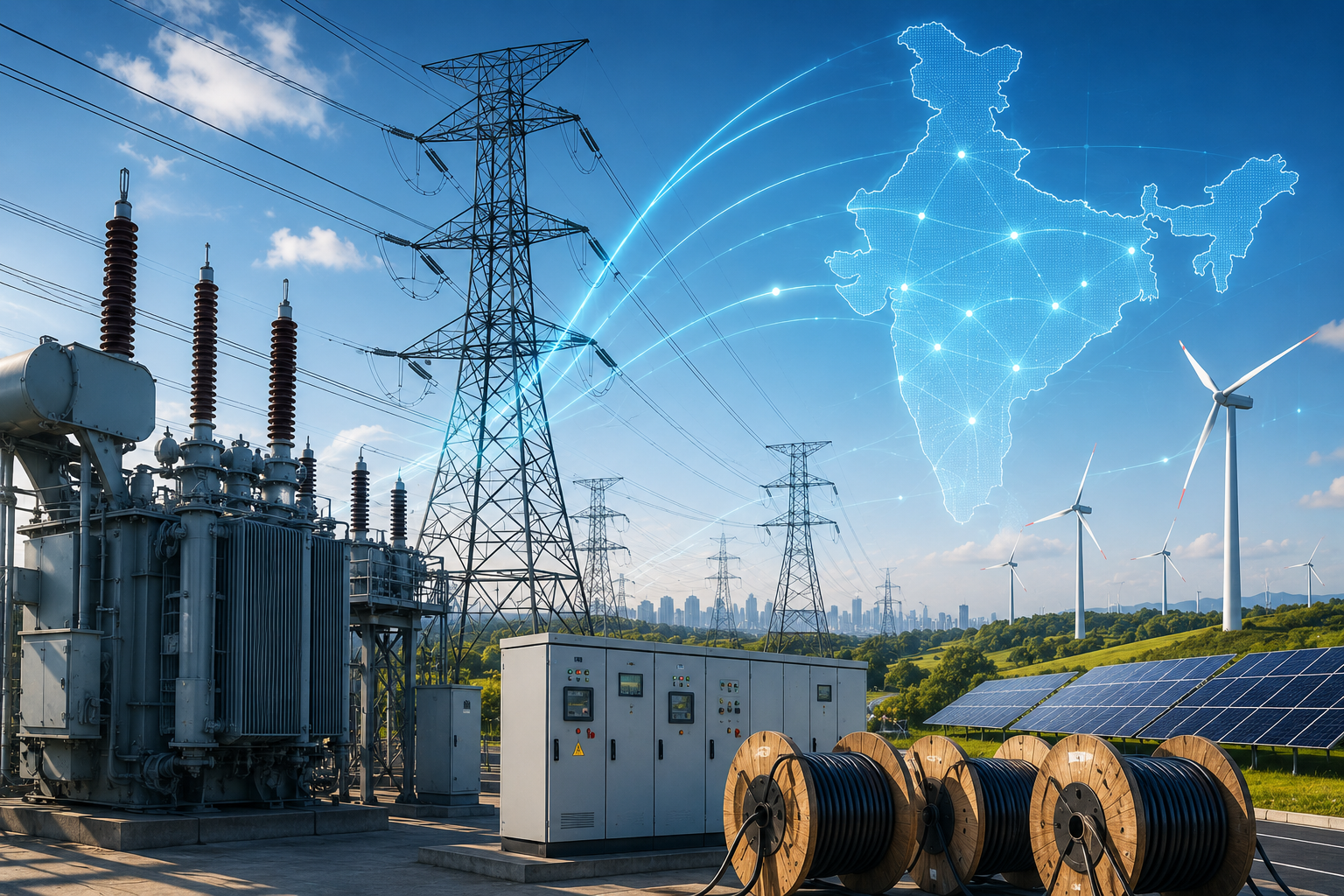
₹1.6 Trillion HVDC Opportunity and Massive Renewable Energy Expansion Could Trigger Multi-Year Growth Cycle
India's power transmission and electrical equipment sector is entering a transformational growth phase, according to global brokerage Citi, which has turned bullish on leading transmission and grid infrastructure companies amid the country's accelerating renewable energy ambitions.
The brokerage believes India is uniquely positioned to become one of the world's most important manufacturing and supply hubs for transmission and distribution (T&D) equipment, supported by massive domestic infrastructure spending, favorable policy support, increasing localization requirements, and rising global demand for grid modernization solutions.
As India works toward integrating 900 GW of renewable energy capacity by FY36, Citi estimates that High Voltage Direct Current (HVDC) infrastructure alone could create a business opportunity worth nearly ₹1.6 trillion for equipment manufacturers.
Against this backdrop, the brokerage has initiated coverage with ‘Buy’ ratings on Hitachi Energy India, GE Vernova T&D India, and CG Power, while maintaining a Neutral stance on Siemens Energy India.
India's Renewable Energy Push Creating Historic Infrastructure Opportunity
India is currently undertaking one of the world's largest clean energy transitions.
The government's ambitious renewable energy roadmap aims to significantly increase solar, wind, hybrid, and energy storage capacity over the next decade. However, generating renewable power is only one part of the equation. The country must also build an extensive transmission network capable of moving electricity efficiently from generation hubs to consumption centers.
This challenge is creating enormous opportunities for companies involved in transmission infrastructure, transformers, switchgear, grid automation, substations, and HVDC systems.
Citi believes the scale of investments required could drive a sustained multi-year growth cycle for the sector.
₹7.9 Trillion Transmission Expansion Plan to Drive Demand
According to industry estimates, India is expected to invest approximately ₹7.9 trillion in transmission infrastructure through FY36.
The expansion will be necessary to support renewable integration, strengthen grid reliability, reduce transmission losses, and improve electricity access across the country.
A significant portion of these investments will be directed toward:
- High-voltage transmission corridors
- Ultra-high voltage substations
- HVDC transmission systems
- Grid stabilization technologies
- Smart grid infrastructure
- Renewable energy evacuation projects
Such investments are expected to generate substantial order opportunities for domestic equipment manufacturers over the coming decade.
HVDC Technology Emerges as a Key Growth Driver
One of the most compelling themes highlighted by Citi is the growing importance of High Voltage Direct Current (HVDC) technology.
Unlike conventional alternating current (AC) transmission systems, HVDC networks are capable of transmitting large amounts of electricity over long distances with lower energy losses.
As renewable energy projects are often located far from urban demand centers, HVDC technology becomes increasingly critical for efficient power transfer.
Citi estimates that HVDC-related investments alone represent a ₹1.6 trillion opportunity for equipment manufacturers and engineering firms.
The segment also benefits from high technological barriers, specialized certifications, and limited competition, making it particularly attractive for established industry players.
Hitachi Energy Positioned to Benefit From HVDC Leadership
Among Citi's preferred picks, Hitachi Energy India stands out due to its strong leadership position in HVDC technology and grid infrastructure solutions.
The company possesses extensive expertise in:
- HVDC converter stations
- Grid automation
- Power quality solutions
- Digital substations
- Renewable integration technologies
As India accelerates transmission investments, Hitachi Energy is expected to secure a meaningful share of upcoming HVDC projects.
The company's technological capabilities and global parentage provide a significant competitive advantage in winning large-scale infrastructure contracts.
GE Vernova T&D Gains From Grid Modernization Trend
GE Vernova T&D India is another major beneficiary of the transmission buildout story.
The company has a strong presence across transmission equipment, grid solutions, protection systems, and substation technologies.
Increasing investments in:
- Renewable integration
- Smart grids
- Energy efficiency
- Transmission modernization
are expected to drive demand for the company's products and services.
Analysts believe GE Vernova's technology portfolio positions it well to participate in both domestic and international opportunities emerging from the global energy transition.
CG Power Expands Its Role in India's Electrical Infrastructure
CG Power has successfully transformed itself into one of India's fastest-growing electrical equipment manufacturers.
The company has strengthened its position across:
- Transformers
- Switchgear
- Industrial systems
- Railway electrification
- Power distribution equipment
As transmission investments accelerate, CG Power is expected to benefit from rising demand for critical grid infrastructure components.
The company's improving operational performance and expanding order book have also attracted growing investor interest in recent years.
India Becoming a Global Manufacturing Hub for T&D Equipment
A major factor supporting Citi's positive outlook is India's growing role in global electrical equipment manufacturing.
Industry estimates suggest that India already produces approximately 80 percent of the world's transmission and distribution products across several categories.
This manufacturing strength is becoming increasingly important as global markets face:
- Transformer shortages
- Supply chain disruptions
- Rising infrastructure investments
- Grid modernization requirements
- Renewable energy integration challenges
Indian manufacturers are therefore emerging as strategic suppliers to both domestic and international markets.
Global Energy Transition Creates Long-Term Demand
The bullish view extends beyond India.
Worldwide investments in transmission and distribution infrastructure are expected to accelerate sharply over the coming decades as countries modernize aging power grids and transition toward renewable energy.
Several structural trends are driving demand:
- Renewable energy expansion
- Electrification of transportation
- Artificial intelligence data centres
- Industrial electrification
- Energy security initiatives
- Smart city development
Collectively, these trends are expected to generate trillions of dollars in global power infrastructure spending.
Indian companies with strong manufacturing capabilities and competitive cost structures are well-positioned to capture a share of this opportunity.
Localization Policies Strengthen Competitive Advantage
Government policies promoting domestic manufacturing are creating additional tailwinds for established players.
Increasing localization requirements, certification standards, and quality regulations are raising barriers to entry for new competitors.
These measures support domestic manufacturing while enhancing the competitive position of existing industry leaders.
Companies with established production facilities, proven track records, and technical expertise are expected to benefit the most from these regulatory developments.
Data Centre Growth Adds Another Demand Catalyst
The rapid expansion of data centres is emerging as another powerful growth driver for the transmission sector.
Artificial intelligence, cloud computing, digital services, and enterprise technology adoption are increasing electricity consumption worldwide.
Large-scale data centres require reliable power infrastructure, backup systems, transmission networks, and grid connectivity solutions.
As global technology companies continue expanding data centre capacity, demand for transmission equipment and power infrastructure is expected to remain strong.
Risks Remain Despite Strong Growth Outlook
While Citi remains optimistic, the brokerage highlighted several risks that investors should monitor.
Potential challenges include:
- Delays in infrastructure execution
- Slower renewable energy deployment
- HVDC project postponements
- Rising competitive intensity
- Inflationary pressures
- Policy changes affecting localization norms
Execution risks remain important given the scale and complexity of upcoming projects.
Outlook: A Decade-Long Growth Story Unfolding
Citi's bullish outlook reflects the belief that India's transmission and electrical equipment sector is entering a prolonged investment cycle driven by renewable energy, electrification, and infrastructure modernization.
With a ₹7.9 trillion transmission buildout planned over the next decade and a ₹1.6 trillion HVDC opportunity emerging, companies such as Hitachi Energy, GE Vernova T&D India, and CG Power appear well-positioned to benefit from the country's evolving energy landscape.
As India moves closer to its clean energy goals, transmission infrastructure is likely to become one of the most important investment themes in the power sector, creating substantial opportunities for manufacturers, investors, and infrastructure developers alike.