Payments Giant Eyes Cybersecurity, AI, Analytics and Merchant Solutions for Future Growth
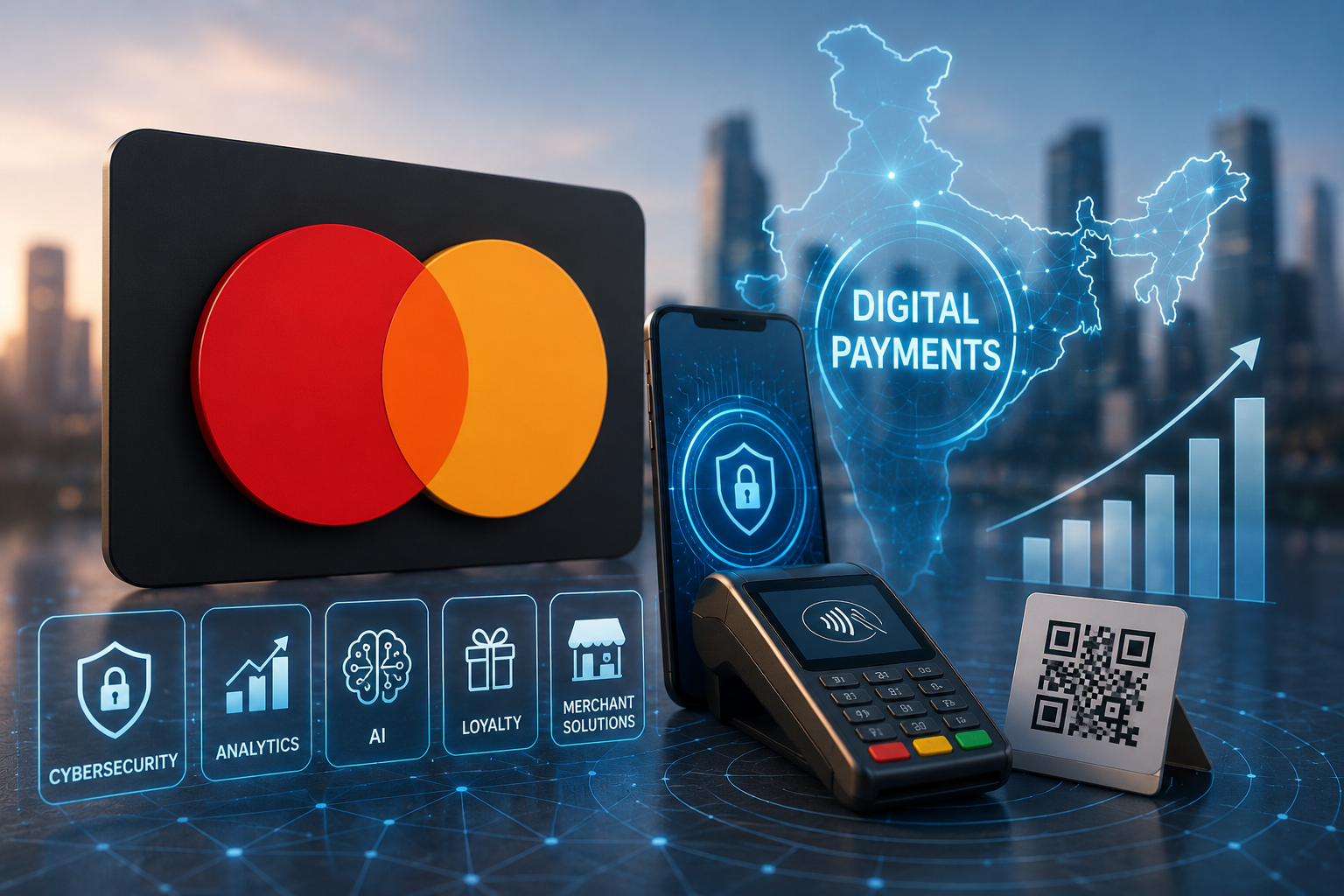
Global payments technology company Mastercard is accelerating its expansion into value-added services in India as the country's digital payments ecosystem undergoes a major transformation led by the rapid growth of the Unified Payments Interface (UPI). With traditional card-based payments facing increasing competition from real-time payment systems, Mastercard is diversifying its business model by investing heavily in cybersecurity, artificial intelligence (AI), analytics, consulting, loyalty solutions and merchant services.
The move highlights a broader shift among global payment companies as they seek new revenue streams beyond transaction-processing fees and payment network operations. India, one of the world's fastest-growing digital economies, has emerged as a key market in this transformation.
UPI's Rapid Growth Changes Competitive Landscape
India's digital payments sector has witnessed a dramatic evolution over the past decade, driven largely by the success of UPI. Developed by the National Payments Corporation of India (NPCI), UPI has become the country's preferred payment mechanism for consumers and businesses alike.
Today, UPI processes billions of transactions every month and accounts for a substantial share of India's digital payment volume. The platform's ease of use, interoperability and zero-cost transactions for consumers have significantly altered the competitive dynamics of the payments industry.
As consumers increasingly adopt instant bank-to-bank transfers for everyday transactions, traditional card networks are being compelled to explore adjacent business opportunities and technology-driven services to sustain long-term growth.
Mastercard Bets on Services-Led Growth
Mastercard's leadership has identified value-added services as a critical growth engine for its India operations. The company plans to deepen its presence in areas such as cybersecurity, fraud prevention, risk management, consumer insights, data analytics, AI-powered decision-making tools and customer loyalty solutions.
These offerings help banks, fintech companies, merchants and businesses improve operational efficiency, strengthen security and enhance customer engagement. Such services generate recurring revenue streams while complementing Mastercard's existing payments infrastructure.
Globally, value-added services have become an increasingly important contributor to Mastercard's financial performance, accounting for approximately 41 percent of the company's total revenue. The company now aims to replicate this success in India, where the segment remains relatively underpenetrated.
Cybersecurity and AI Become Strategic Priorities
As digital transactions continue to rise, cybersecurity has emerged as one of the most critical concerns for financial institutions and merchants. Mastercard is strengthening its capabilities in fraud detection, cyber threat intelligence, identity verification and transaction monitoring to help clients navigate an increasingly complex digital environment.
Artificial intelligence is expected to play a major role in this strategy. AI-powered solutions can help financial institutions detect fraudulent activities in real time, improve customer experiences through personalized recommendations, and optimize operational decision-making.
With cybercrime becoming more sophisticated and digital payment volumes growing rapidly, demand for advanced security solutions is expected to remain strong across India's banking and fintech sectors.
Expanding Merchant Acceptance Infrastructure
Apart from technology services, Mastercard is also focusing on increasing digital payment acceptance among merchants, particularly small businesses. The company sees significant growth opportunities in low-cost payment acceptance devices such as soundboxes, QR-based payment systems and digital checkout solutions.
As millions of small merchants continue their digital transformation journey, demand for affordable and reliable payment acceptance infrastructure is expected to increase. Mastercard aims to support this transition by providing solutions that simplify payment collection and improve customer convenience.
The company believes that expanding merchant acceptance remains a crucial component of India's broader digital economy growth story.
Three-Pronged Strategy for India
Mastercard's India growth strategy is built around three core pillars: consumer payments, commercial payments and value-added services.
The consumer payments segment includes credit cards, debit cards and digital payment solutions aimed at retail customers. Commercial payments focus on corporate spending, business-to-business transactions and cross-border payment services. Meanwhile, value-added services are expected to emerge as a major growth driver as enterprises increasingly seek technology solutions beyond basic payment processing.
This diversified approach allows Mastercard to participate in multiple segments of the financial ecosystem while reducing dependence on any single revenue stream.
India's Digital Economy Presents Massive Opportunity
India's rapidly expanding digital economy presents enormous opportunities for global payment companies. Rising smartphone penetration, increasing internet connectivity, government-led digital initiatives and growing adoption of fintech services have created one of the world's most dynamic payments markets.
Industry experts believe that while UPI will continue to dominate domestic retail transactions, there remains significant potential for payment companies to build complementary businesses around data, security, analytics, loyalty and enterprise services.
As financial institutions and businesses accelerate their digital transformation efforts, demand for sophisticated technology solutions is expected to grow substantially over the coming years.
Outlook
Mastercard's increased focus on value-added services reflects the changing nature of the global payments industry. While UPI continues to reshape India's payments landscape, opportunities remain abundant in areas such as cybersecurity, AI, analytics, consulting and merchant solutions.
By expanding beyond its traditional payments network business, Mastercard aims to position itself as a comprehensive technology partner for banks, fintech firms, merchants and enterprises. As India's digital economy continues to expand, the company's services-led strategy could become a key driver of future growth and profitability in one of its most important emerging markets.