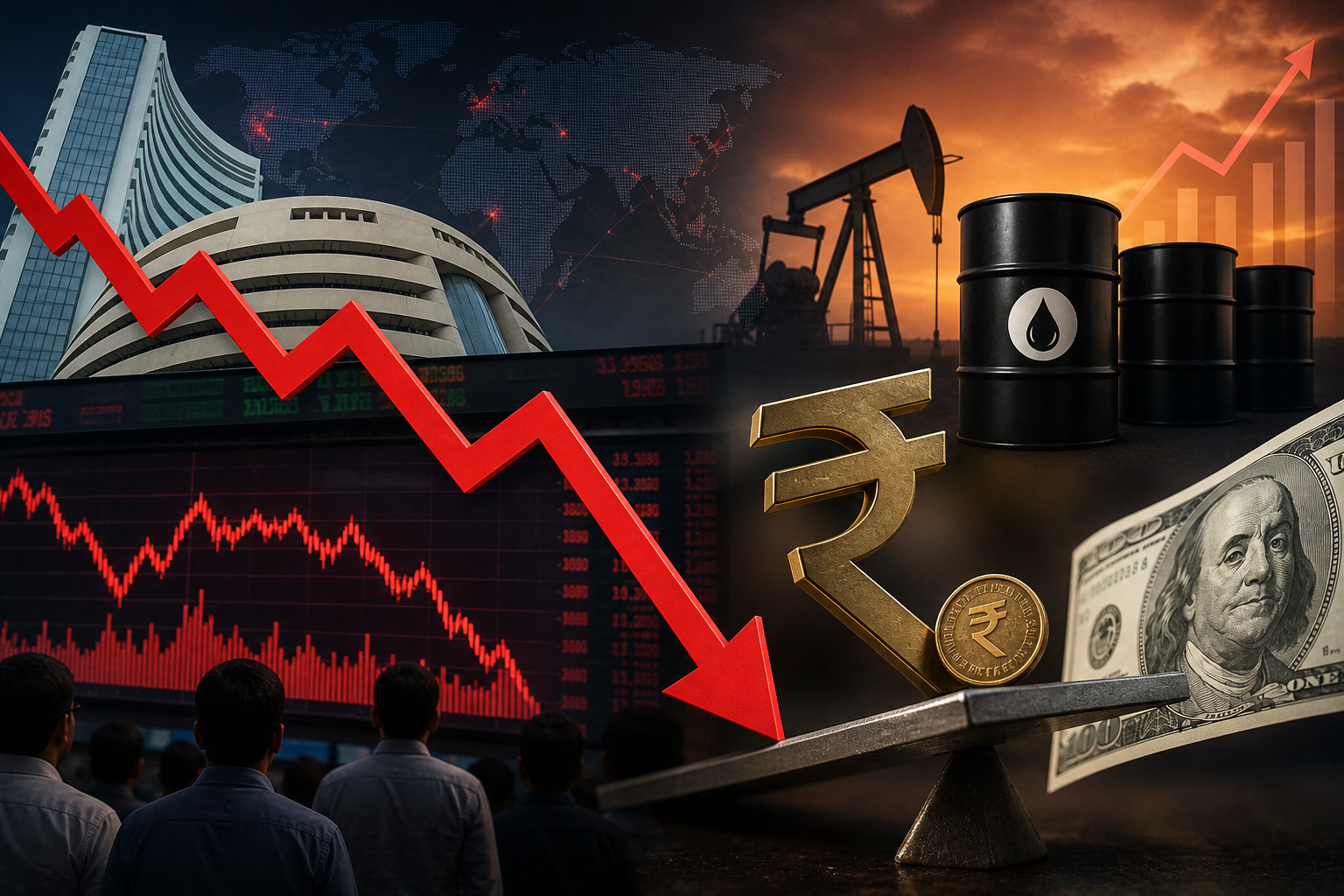
Rising Middle East Tensions Push Oil Prices Higher, Putting Pressure on India's Currency and External Position
The Indian rupee opened lower against the US dollar on Monday as investors reacted to rising crude oil prices and escalating geopolitical tensions in the Middle East. The domestic currency slipped by 9 paise in early trade, reflecting growing concerns over global energy markets and increased demand for safe-haven assets such as the US dollar.
The weakness in the rupee comes at a time when global investors are closely monitoring developments in West Asia, where ongoing conflicts have heightened uncertainty and triggered volatility across commodity and currency markets.
Rupee Opens Lower Amid Global Headwinds
In early interbank trading, the rupee opened at 94.93 against the US dollar before weakening further to 94.94. The decline follows a strong recovery in the previous trading session, when the currency had appreciated sharply amid expectations of support from the Reserve Bank of India (RBI).
Currency traders noted that despite favorable domestic market conditions, external factors such as rising oil prices, geopolitical tensions, and a strengthening dollar continued to exert pressure on emerging market currencies, including the rupee.
Crude Oil Rally Emerges as Major Concern
One of the biggest challenges facing the rupee is the recent spike in international crude oil prices. Brent crude climbed close to $93 per barrel as concerns intensified over potential disruptions to global energy supplies.
The escalation of tensions in the Middle East has increased fears of supply chain disruptions around key shipping routes, including the Strait of Hormuz, through which a significant portion of the world's oil trade passes.
For India, which imports more than 80 percent of its crude oil requirements, higher oil prices can widen the trade deficit, increase inflationary pressures, and weaken the domestic currency.
Safe-Haven Demand Boosts US Dollar
The US dollar remained firm in global currency markets as investors sought safety amid geopolitical uncertainty. The Dollar Index, which measures the greenback's strength against a basket of major currencies, hovered near the 99 level, reflecting strong demand for the world's reserve currency.
Historically, periods of geopolitical instability tend to strengthen the dollar as investors move capital toward safer assets, often resulting in pressure on emerging market currencies.
The ongoing conflict in the Middle East has reinforced this trend, making it more challenging for currencies such as the rupee to sustain gains.
RBI Continues to Play Stabilizing Role
Market participants believe the Reserve Bank of India has remained active in managing excessive volatility in the foreign exchange market. Recent movements suggest that the central bank continues to monitor currency fluctuations closely and intervene when necessary to ensure orderly market conditions.
The RBI's presence has helped prevent sharper declines in the rupee despite significant external pressures. Analysts note that maintaining currency stability remains important as global uncertainties continue to influence capital flows and investor sentiment.
Forex Reserves Witness Decline
Adding to market concerns, India's foreign exchange reserves have registered a notable decline in recent weeks. The latest central bank data showed that reserves fell by more than $7 billion during the most recent reporting period.
Although India's reserve position remains among the strongest in the emerging market universe, the decline highlights the challenges posed by currency management during periods of heightened global volatility.
Foreign exchange reserves serve as an important buffer against external shocks and provide the RBI with flexibility to manage excessive currency fluctuations.
Foreign Investors Continue Selling
Foreign institutional investors (FIIs) remained net sellers in Indian equities, adding another layer of pressure on the domestic currency. Sustained capital outflows often increase demand for dollars, contributing to rupee weakness.
However, analysts point out that India's strong economic growth outlook and resilient domestic demand continue to attract long-term investor interest despite short-term fluctuations.
Equity Markets Offer Some Support
Despite the weakness in the rupee, Indian stock markets opened in positive territory, supported by strong domestic economic indicators and selective buying across sectors.
The resilience of equity markets suggests that investors remain confident about India's medium-term growth prospects even as global risks create near-term volatility.
Strong manufacturing activity, healthy corporate earnings, and ongoing infrastructure investments continue to support the broader economic outlook.
Outlook: Currency Movement Tied to Oil and Geopolitics
Looking ahead, the direction of the rupee is likely to remain closely linked to developments in global oil markets and geopolitical events in the Middle East. Any easing of tensions could provide relief to crude prices and support the domestic currency.
Conversely, a prolonged escalation in regional conflicts could keep energy prices elevated and increase pressure on India's trade balance and currency.
For now, market participants expect the rupee to remain volatile as investors assess global developments, central bank actions, foreign fund flows, and movements in commodity prices.
While short-term challenges persist, India's strong economic fundamentals, sizeable forex reserves, and proactive central bank interventions are expected to help contain excessive currency volatility in the months ahead.