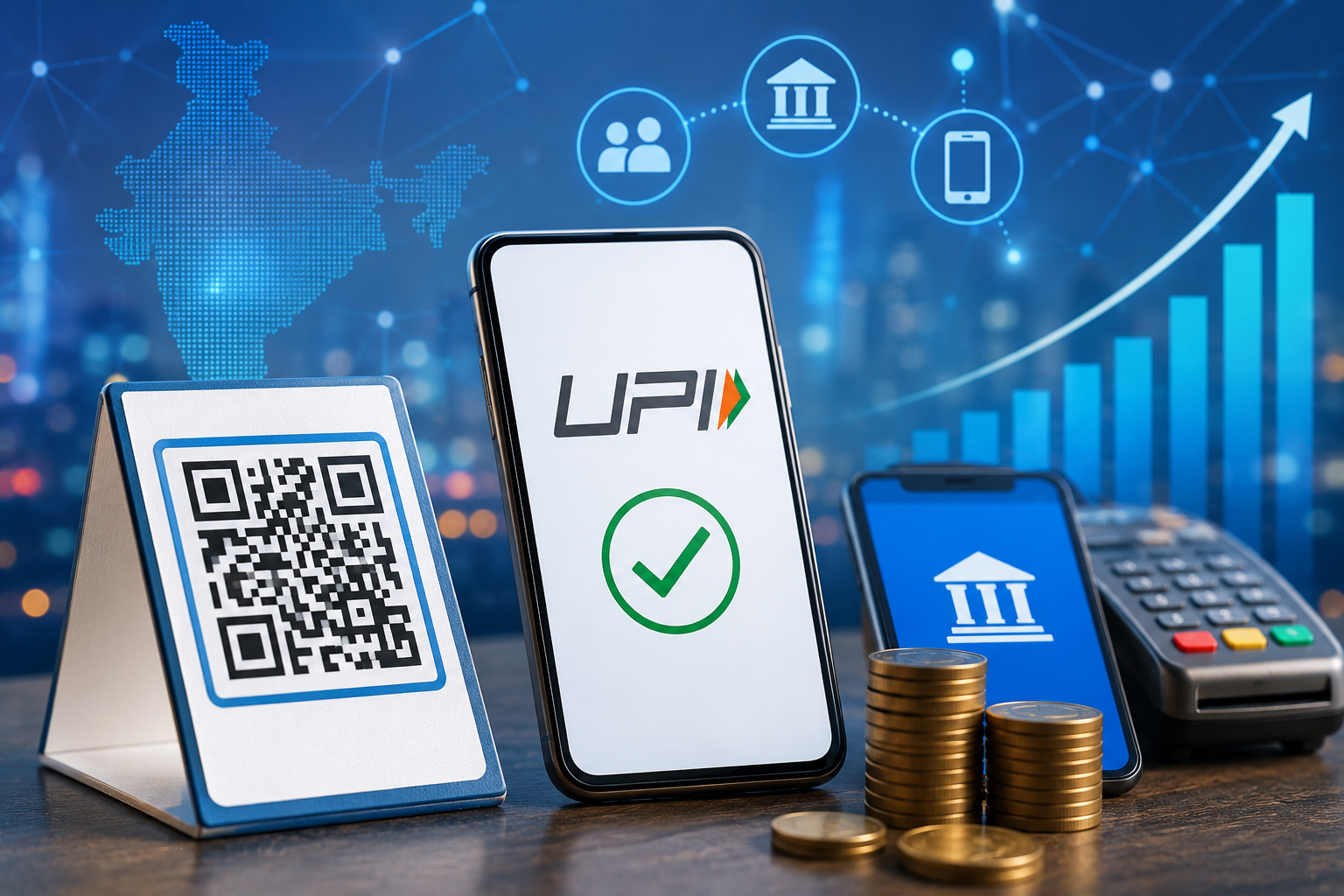
Record-Breaking Volumes Highlight India's Rapid Shift Towards a Fully Digital Payments Economy
India's digital payments ecosystem achieved another historic milestone in May as Unified Payments Interface (UPI) transactions reached their highest-ever monthly value and volume since the platform's launch in 2016. The latest figures reaffirm UPI's dominance in the country's financial landscape and underscore the growing preference for instant, cashless transactions among consumers and businesses alike.
Data released by the National Payments Corporation of India (NPCI) showed that UPI transaction value surged to a record ₹29.90 trillion during May, up 3 percent from ₹29.03 trillion in April. Transaction volumes also climbed to an all-time high of 23.20 billion, reflecting a 4 percent increase compared to the previous month.
The performance places UPI within striking distance of the landmark ₹30 trillion monthly transaction value mark, a milestone that would further cement India's position as one of the world's most advanced digital payments markets.
UPI Continues to Power India's Everyday Economy
Over the past few years, UPI has evolved from a convenient payment tool into the primary transaction infrastructure for millions of Indians. Whether paying neighborhood merchants, purchasing groceries, booking transportation, settling utility bills, or making online purchases, consumers are increasingly relying on UPI for daily financial transactions.
The platform's simplicity, real-time settlement, interoperability across banks, and widespread merchant acceptance have made it the preferred payment method across both urban and rural India.
Experts believe that UPI's continued expansion reflects a fundamental shift in consumer behavior, where digital payments are becoming the default mode of transaction rather than an alternative to cash.
Record Volumes Reflect Deepening Digital Adoption
The latest numbers highlight the scale at which India's digital economy now operates. UPI processed an average of 748 million transactions every day during May, compared to 745 million daily transactions in April.
The increase demonstrates that digital payments are becoming more deeply integrated into everyday commerce, supported by widespread smartphone penetration, affordable internet access, and increasing digital literacy.
What makes the growth particularly significant is that it follows a temporary slowdown in April, which was largely attributed to fewer transaction days following the financial year-end surge recorded in March.
Smaller Ticket Sizes Indicate Ecosystem Maturity
Industry analysts view the decline in average transaction value as a positive development rather than a concern. The trend suggests that consumers are using UPI more frequently for routine purchases and low-value transactions.
As digital payments penetrate deeper into local markets, street vendors, public transport systems, and small retail businesses, the average transaction size naturally declines while overall transaction frequency rises.
This transformation indicates that UPI is no longer limited to specific use cases but has become an essential component of daily economic activity across income groups.
Credit Cards and UPI Finding Their Own Space
India's payments ecosystem is becoming increasingly diversified, with different payment instruments serving distinct consumer needs. While UPI dominates everyday transactions, credit cards continue to gain traction for larger-value purchases and discretionary spending.
The coexistence of multiple payment channels reflects the growing sophistication of India's financial ecosystem, where consumers choose payment methods based on convenience, rewards, transaction value, and specific use cases.
Industry observers believe this specialization will help drive overall growth across the digital payments sector rather than creating direct competition between platforms.
FASTag Growth Signals Rising Mobility and Commerce
Apart from UPI, FASTag transactions also recorded healthy growth during May. Transaction volumes increased by 5 percent, while transaction values rose by 4 percent compared to April.
The growth reflects increasing highway traffic, expanding logistics activity, and continued adoption of electronic toll collection systems across the country.
With infrastructure development and road connectivity improving, digital toll payments are expected to continue their upward trajectory.
IMPS and AePS Show Mixed Trends
While UPI and FASTag registered growth, some other payment systems witnessed moderation. Immediate Payment Service (IMPS) transactions recorded a marginal decline in both volume and value during May.
Similarly, Aadhaar Enabled Payment System (AePS) transactions also fell compared to April. However, industry experts note that these fluctuations are common and do not alter the broader trend of accelerating digital payment adoption.
The overall payments ecosystem remains robust, with UPI continuing to drive the majority of transaction growth.
Fintech Innovation Accelerating Financial Inclusion
The success of UPI has become a catalyst for innovation across India's fintech sector. Banks, payment companies, digital wallets, and technology firms are continuously developing new products and services around the UPI ecosystem.
Features such as credit on UPI, recurring payments, international payment linkages, and merchant financing solutions are expanding the platform's utility and strengthening financial inclusion across the country.
The government's push for digitization, combined with private-sector innovation, continues to create a powerful foundation for sustained growth in digital financial services.
Outlook: ₹30 Trillion Milestone Appears Imminent
With monthly transaction value now approaching ₹30 trillion, industry participants expect UPI to continue breaking records in the coming months. Rising digital commerce, increasing merchant acceptance, growing fintech innovation, and deeper penetration into rural markets are expected to support further expansion.
As India's digital economy continues to evolve, UPI is likely to remain the centerpiece of the country's payments infrastructure, driving convenience, transparency, efficiency, and financial inclusion on an unprecedented scale.
The latest record-breaking performance serves as another reminder of how rapidly India is transforming into a digital-first economy, with UPI leading the way.