As Mohan Charan Majhi Government Nears Its Second Anniversary, Economic Progress Faces the Test of Job Creation and Public Service Delivery
As the Bharatiya Janata Party (BJP) government in Odisha approaches its second anniversary on June 12, attention is increasingly turning to its performance across key governance and economic indicators. The 2024 Assembly election marked a historic political shift in the state, ending the 24-year dominance of the Biju Janata Dal (BJD) and bringing the BJP to power on its own for the first time.
Led by Chief Minister Mohan Charan Majhi, the government inherited a relatively stable administrative structure but also significant expectations from voters seeking faster economic development, improved infrastructure, and greater employment opportunities.
Industrial Investment Sees Strong Momentum
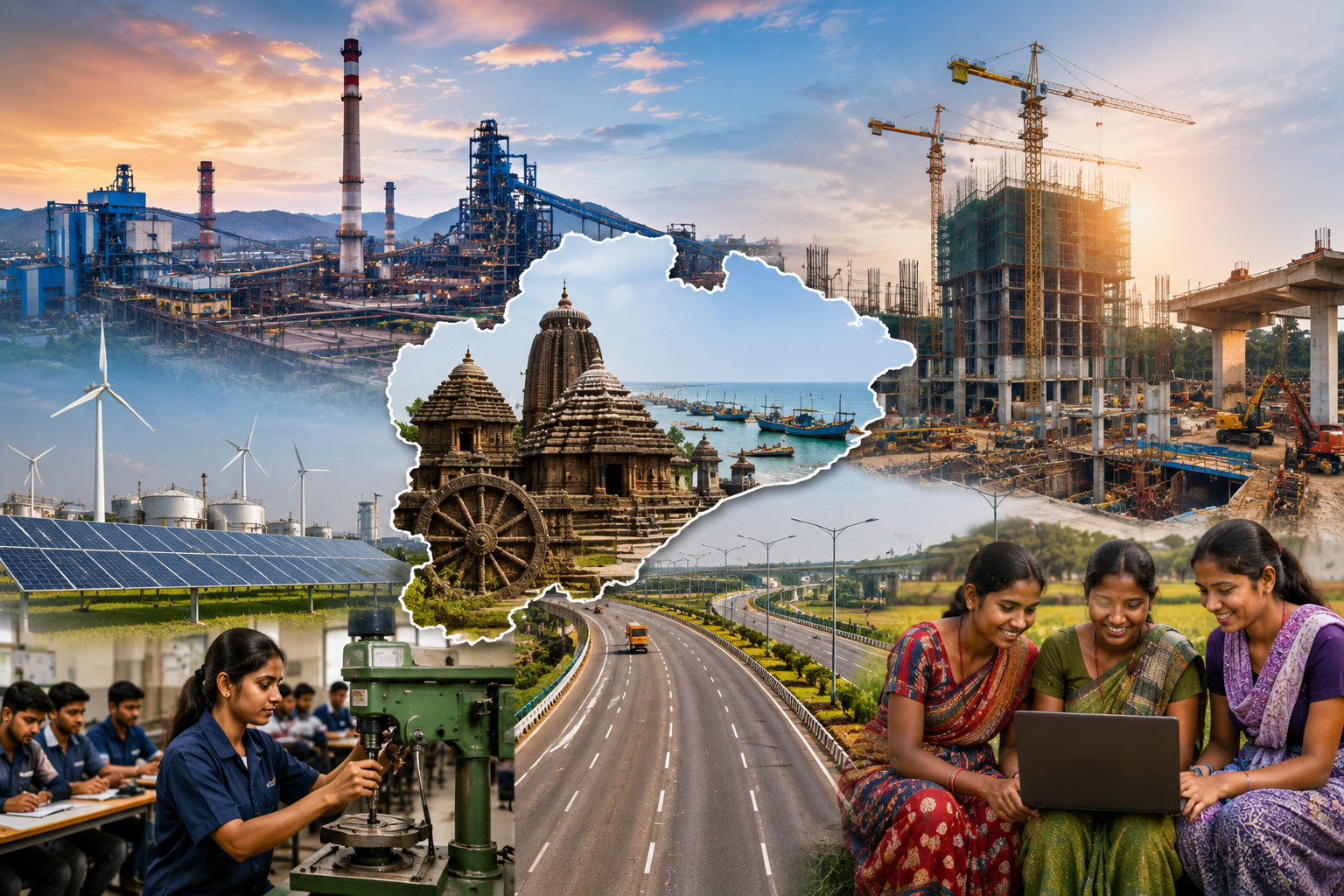
One of the government's most notable achievements over the past two years has been attracting fresh industrial investment. Odisha continues to strengthen its position as one of India's leading destinations for mining, metals, renewable energy, petrochemicals, and manufacturing projects.
The state's abundant natural resources, strategic coastal location, and improving ease-of-doing-business environment have helped draw investment proposals from both domestic and international companies. Several large-scale projects in steel, aluminum, green energy, logistics, and downstream manufacturing have either been announced or entered implementation stages.
Government officials argue that these investments are laying the foundation for long-term economic growth and industrial diversification beyond the state's traditional mining sector.
Employment Generation Remains a Key Concern
Despite the influx of investment commitments, employment creation has not kept pace with public expectations. While industrial projects promise future job opportunities, many are still in the construction or approval phases, limiting their immediate impact on the labor market.
Youth unemployment and underemployment remain significant concerns, particularly in rural areas where migration to other states continues. Opposition parties have repeatedly questioned whether industrial growth is translating into sufficient local employment opportunities.
Economic experts note that Odisha's challenge is not only attracting investment but also ensuring that industries create sustainable jobs through skill development, local hiring policies, and support for small and medium enterprises.
Infrastructure Development Faces Execution Hurdles
Infrastructure remains another area where progress has been mixed. The government has announced ambitious plans involving roads, urban development, industrial corridors, ports, and logistics facilities aimed at supporting future economic growth.
However, implementation delays, land acquisition issues, and project execution challenges have slowed progress in several sectors. Citizens in both urban and rural areas continue to raise concerns regarding road quality, drinking water access, healthcare facilities, and public transport connectivity.
Improving infrastructure delivery is expected to become a major priority as the government enters the second half of its term.
Law and Order Under Continued Scrutiny
Public safety and law-and-order management have also emerged as important issues during the BJP government's tenure. While authorities highlight efforts to strengthen policing, combat organized crime, and improve administrative responsiveness, critics argue that several incidents have exposed gaps in enforcement and governance.
The government maintains that reforms in policing, digital monitoring systems, and district-level administration are helping improve overall security conditions across the state.
Welfare Programs Continue Alongside New Initiatives
The Majhi administration has largely continued several welfare-focused programs that were popular during the previous government while introducing new schemes aligned with the BJP's policy priorities. The focus has remained on housing, healthcare, women empowerment, agricultural support, and tribal welfare.
Given Odisha's large rural and tribal population, effective implementation of welfare schemes remains crucial for maintaining political support and ensuring inclusive development.
Economic Outlook Remains Positive
Despite the challenges, Odisha's economic outlook remains encouraging. Strong industrial interest, rising infrastructure investments, growing renewable energy projects, and the state's strategic role in India's manufacturing ambitions provide a favorable backdrop for growth.
Analysts believe the next three years will be critical in determining whether the government can convert investment announcements into operational industries, generate meaningful employment, and deliver visible improvements in public infrastructure and services.
The Road Ahead
As the BJP government completes two years in office, the administration finds itself at an important juncture. The political transition that reshaped Odisha's governance landscape has now entered a phase where voters are increasingly focused on measurable outcomes rather than electoral promises.
While industrial development has emerged as a bright spot, sustained success will depend on the government's ability to address employment concerns, accelerate infrastructure projects, and strengthen public service delivery. The coming years are likely to determine whether Odisha's new political chapter can translate economic potential into broad-based prosperity for its citizens.