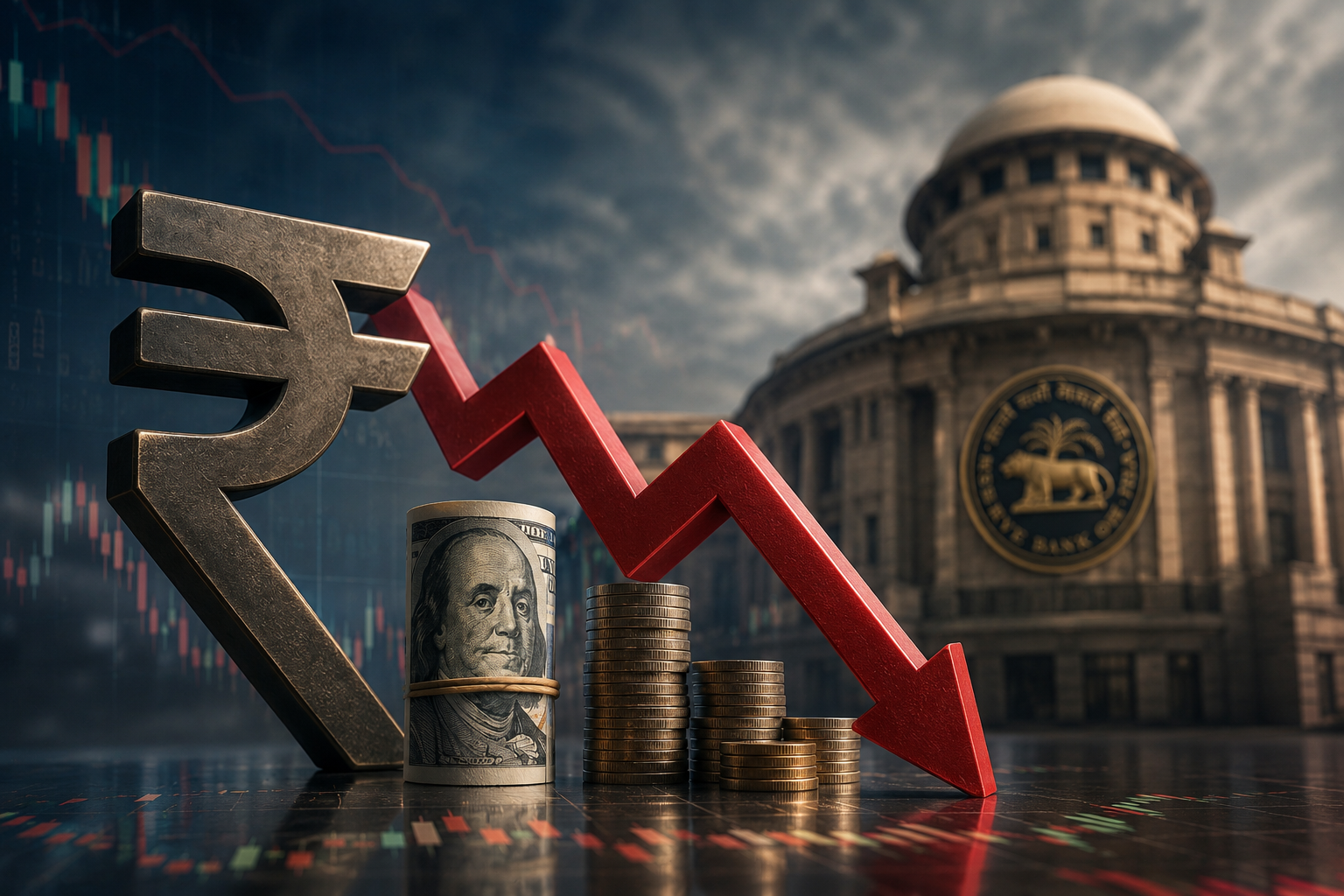
Weakening Rupee, Rising Crude Prices and Global Uncertainty Increase Pressure on Indian Economy
The Indian rupee has fallen to a historic low against the US dollar, raising fresh concerns about inflation, foreign capital outflows and India’s widening current account deficit. The domestic currency recently touched nearly 96 against the dollar, making it the weakest-performing Asian currency so far in 2026.
Analysts believe the sharp depreciation is largely linked to soaring global crude oil prices, persistent geopolitical tensions in West Asia and strong dollar demand from oil importers. Financial experts now expect the government and the Reserve Bank of India to adopt a combination of monetary tightening, currency intervention and import-control measures if oil prices remain elevated in the coming months.
The fall in the rupee has also increased volatility across financial markets, with investors closely watching how policymakers respond to mounting macroeconomic risks.
Crude Oil Rally Intensifies Pressure on Rupee
India’s heavy dependence on imported crude oil has once again emerged as a major economic vulnerability. Brent crude prices have surged sharply in recent months amid escalating tensions in West Asia, increasing India’s import bill and weakening the country’s external balances.
As oil marketing companies purchase more dollars to meet import obligations, demand for the US currency has surged, putting additional pressure on the rupee. Analysts warn that if crude prices remain above $100–110 per barrel for an extended period, the pressure on India’s currency and inflation could intensify further.
The sharp increase in oil prices has also affected investor sentiment, with markets fearing slower economic growth and higher inflation in the second half of the year.
Government Tightens Import Policies to Reduce Dollar Outflow
To defend the rupee and manage the current account deficit, the central government has already initiated several measures aimed at reducing non-essential imports and improving external balances.
One of the key steps includes raising import duties on gold and silver from 6 per cent to 15 per cent. The move is expected to discourage precious metal imports, which contribute significantly to India’s trade deficit during periods of currency weakness.
Analysts estimate that reduced gold imports could provide meaningful support to the current account balance over the next few quarters. The decision mirrors a similar policy introduced during earlier currency pressure episodes.
The government has also approved a ₹3 per litre increase in petrol and diesel prices after state-run oil marketing companies faced mounting losses due to rising crude oil costs.
Oil Marketing Companies Face Profitability Pressure
State-owned fuel retailers including Indian Oil Corporation, Bharat Petroleum Corporation and Hindustan Petroleum Corporation have been under severe financial stress as rising crude prices increased under-recoveries on fuel sales.
Analysts estimate that current fuel prices are still below economically sustainable levels, leading to substantial quarterly losses for oil marketing companies. As a result, further fuel price hikes may become necessary if global crude prices remain elevated.
Experts believe the government may opt for gradual price increases rather than a sharp one-time hike in order to minimise inflationary shock and protect consumer demand.
However, continued fuel price revisions could increase transportation costs, affect household spending and put pressure on sectors dependent on fuel consumption.
RBI May Consider Interest Rate Hike
Market participants now expect the Reserve Bank of India to adopt a more aggressive stance to defend the rupee and contain imported inflation.
Analysts believe an interest rate hike during the upcoming monetary policy review has become increasingly likely. In extreme scenarios, the RBI could even consider emergency policy action if oil prices rise further and currency volatility intensifies.
Higher interest rates generally support the currency by attracting foreign investment into debt markets. However, economists caution that aggressive tightening may also slow credit growth, reduce consumption and impact corporate investment activity.
The challenge for policymakers lies in balancing inflation control with economic growth, especially when global uncertainty remains high.
RBI May Increase Direct Currency Intervention
Apart from interest rate action, the RBI is also expected to increase direct intervention in the foreign exchange market to stabilise the rupee.
The central bank may sell dollars from its foreign exchange reserves to reduce volatility and ensure orderly market movement. Analysts also believe the RBI could revive special dollar liquidity arrangements for oil marketing companies, similar to measures introduced during previous currency crises.
Such mechanisms would help reduce direct dollar demand in the open market and provide temporary support to the rupee.
However, sustained intervention over a longer period may put pressure on India’s forex reserves if crude oil prices continue to rise sharply.
Restrictions on Overseas Remittances Could Be Considered
Another possible policy response could involve tighter monitoring of outward remittances under the Liberalised Remittance Scheme (LRS).
Overseas remittances by Indian residents have increased significantly in recent years, adding to dollar outflows. While the government already imposes tax collection at source on larger foreign remittances, additional restrictions may be considered if external pressures intensify further.
Analysts say such measures could temporarily reduce dollar demand, although they may also face criticism for limiting financial flexibility for individuals and businesses.
Foreign Investors Watching Tax and Currency Risks
The weakening rupee has also impacted foreign investor sentiment toward Indian equity markets. Overseas investors are increasingly concerned about the combined effect of currency depreciation and capital gains taxation on investment returns.
Analysts suggest that simplifying tax structures or easing capital gains norms for foreign portfolio investors could help improve capital inflows and stabilise market sentiment.
At the same time, policymakers may also explore overseas bond issuances or special deposit schemes to attract foreign currency inflows, although the current global interest rate environment could limit the effectiveness of such measures.
Equity Markets Face Rising Volatility
The broader Indian equity market is witnessing heightened volatility as investors assess the economic impact of rising crude prices and rupee weakness.
Brokerages warn that markets may not yet be fully pricing in the risks associated with a prolonged energy crisis. Sectors dependent on imports, fuel consumption and discretionary spending could face earnings pressure if inflation rises sharply.
At the same time, export-oriented sectors such as information technology and pharmaceuticals may benefit from rupee depreciation due to higher foreign currency earnings.
Analysts expect markets to remain highly sensitive to developments in crude oil prices, RBI policy decisions and geopolitical events over the coming weeks.
Outlook Remains Dependent on Global Developments
Despite growing concerns, market experts believe the situation could stabilise if geopolitical tensions ease and crude oil prices decline in the coming months.
A possible diplomatic breakthrough in West Asia could help cool energy prices, reduce pressure on India’s trade balance and improve investor sentiment.
Until then, policymakers are expected to maintain a cautious and proactive approach to protect the rupee, control inflation and preserve macroeconomic stability amid a challenging global environment.