UAE and Europe Visit to Focus on Energy Security, Technology Partnerships and Trade Stability Amid Global Turbulence
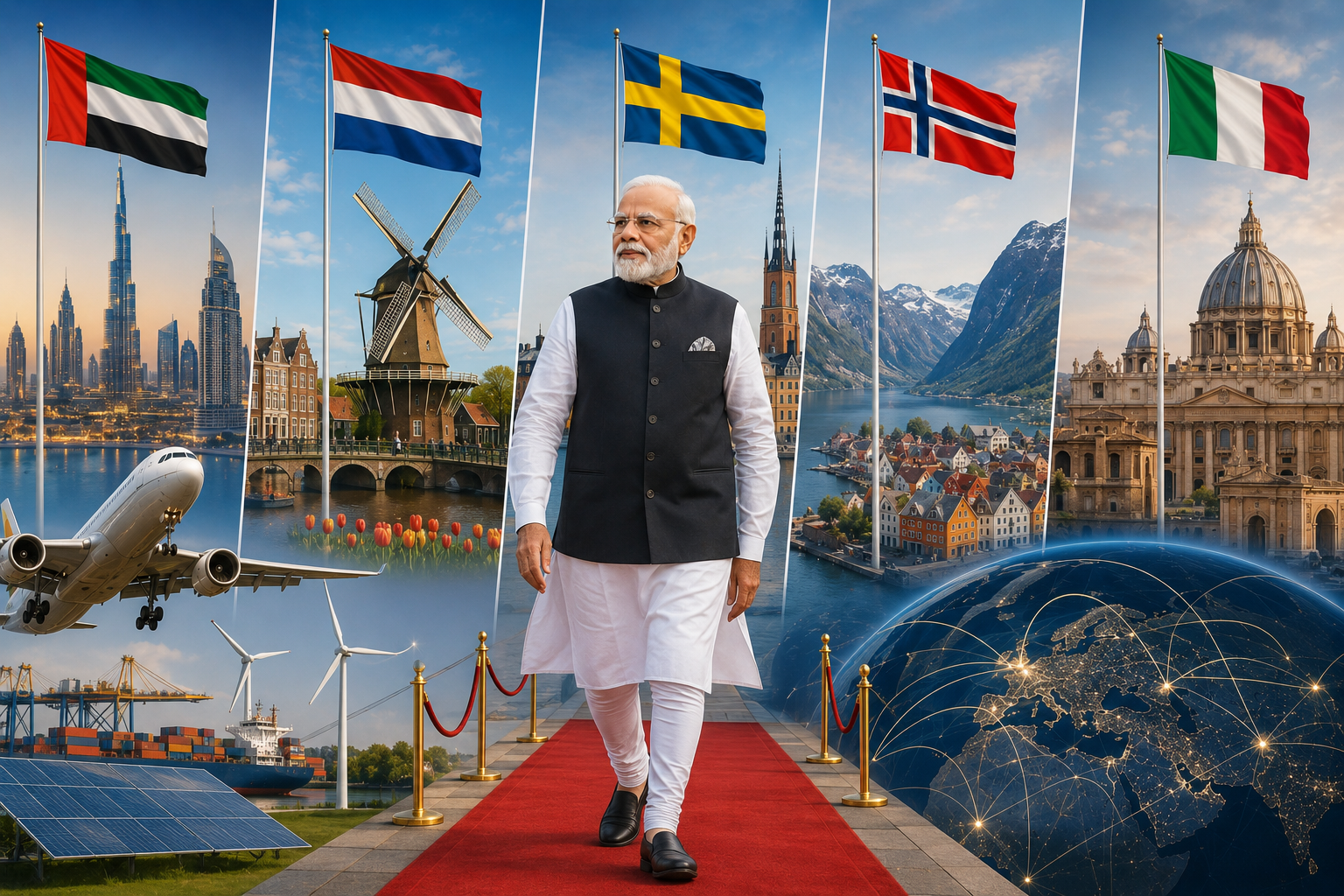
Narendra Modi has embarked on an important six-day diplomatic tour spanning the United Arab Emirates, Netherlands, Sweden, Norway and Italy as India intensifies global engagement amid rising geopolitical tensions, volatile energy markets and shifting international economic dynamics.
The visit comes at a critical time for the global economy as countries grapple with supply-chain disruptions, elevated crude oil prices, inflation concerns and growing strategic competition across regions.
India’s diplomatic outreach during the tour is expected to focus on safeguarding energy supplies, strengthening trade and investment ties, deepening cooperation in advanced technologies and reinforcing strategic partnerships with key economies.
Global Geopolitical Tensions Increase Importance of Visit
The timing of the tour is being seen as strategically significant given the ongoing instability in West Asia and its impact on global trade and energy flows.
The continuing tensions involving Iran, Israel and the United States have disrupted shipping activity and increased uncertainty around critical maritime trade routes such as the Strait of Hormuz.
For India, which relies heavily on imported energy, maintaining stable relations with Gulf nations remains essential for economic stability and inflation management.
At the same time, European economies are increasingly becoming important partners for India in areas such as technology, green energy, defence manufacturing and industrial investment.
Analysts believe the visit reflects India’s broader strategy of diversifying partnerships and strengthening global economic resilience amid uncertain international conditions.
UAE Visit Expected to Prioritise Energy Security
The first leg of the visit to the UAE is expected to focus heavily on energy cooperation and trade continuity.
The UAE remains one of India’s most important strategic and economic partners in the Gulf region. Bilateral cooperation between the two countries has expanded significantly in recent years across sectors including:
- Energy and petrochemicals
- Infrastructure and logistics
- Renewable energy
- Financial services
- Technology and digital payments
Discussions are expected to include long-term crude oil supply arrangements, strategic reserve partnerships and mechanisms to ensure uninterrupted energy trade despite regional tensions.
India is also likely to explore further investment collaboration with sovereign wealth funds and infrastructure projects linked to logistics and industrial growth.
Europe Tour to Deepen Technology and Investment Partnerships
Prime Minister Modi’s meetings in Europe are expected to focus strongly on technology cooperation, innovation partnerships and industrial investment opportunities.
Countries such as Sweden, the Netherlands, Norway and Italy are globally recognised for expertise in:
- Green technologies
- Sustainable infrastructure
- Advanced manufacturing
- Artificial intelligence
- Semiconductor ecosystems
- Clean energy innovation
India is expected to seek stronger collaboration in emerging sectors critical to future economic growth and technological competitiveness.
Analysts believe India is positioning itself as a major global manufacturing and technology hub while reducing dependence on concentrated supply chains.
Supply Chain Resilience Becomes Key Strategic Objective
One of the major themes of the visit is expected to be supply-chain resilience and diversification.
Global supply chains have experienced repeated disruptions over recent years due to geopolitical conflicts, pandemic aftereffects, energy market instability and trade realignments.
India is increasingly working to strengthen international partnerships that support:
- Manufacturing expansion
- Trade corridor development
- Industrial logistics
- Semiconductor supply chains
- Critical mineral access
- Digital infrastructure
European and Gulf partnerships are expected to play a crucial role in India’s long-term economic and industrial strategy.
Experts believe India’s growing manufacturing capacity and large domestic market make it an attractive strategic partner for countries looking to diversify supply chains.
Green Energy and Climate Cooperation on Agenda
Renewable energy and sustainability initiatives are also expected to feature prominently during discussions with European leaders.
India has been aggressively expanding its clean energy ambitions through investments in:
- Solar energy
- Green hydrogen
- Electric mobility
- Battery manufacturing
- Wind energy projects
European nations are among the world leaders in climate technology and sustainability financing, making them important partners for India’s long-term energy transition goals.
Potential areas of cooperation may include:
- Green hydrogen ecosystems
- Carbon reduction technologies
- Climate finance
- Sustainable urban infrastructure
- Clean transportation systems
The discussions are likely to align with India’s broader push toward energy diversification and carbon reduction.
Defence and Strategic Cooperation Likely to Expand
Defence collaboration is also expected to remain an important part of the diplomatic agenda.
India has been expanding strategic partnerships with several European countries through defence manufacturing, technology transfer and maritime cooperation initiatives.
Possible discussion areas include:
- Defence production partnerships
- Cybersecurity cooperation
- Naval and maritime security
- Indo-Pacific strategic coordination
- Aerospace and advanced technology collaboration
The UAE leg of the tour may additionally include discussions on regional security and geopolitical stability in West Asia.
Analysts believe India is increasingly strengthening multi-dimensional strategic partnerships that combine economic, security and technological cooperation.
Trade and Investment Discussions in Focus
The visit is also expected to strengthen trade and investment engagement between India and partner nations.
India continues to attract strong international interest as one of the fastest-growing major economies globally, with significant opportunities across:
- Manufacturing
- Digital economy
- Infrastructure
- Renewable energy
- Financial technology
- Consumer markets
European investors are increasingly exploring India as a long-term growth destination amid shifting global investment patterns and supply-chain diversification strategies.
The government is expected to promote India’s business environment, infrastructure expansion and industrial policy initiatives during bilateral discussions.
Economic Stability and Inflation Concerns Add Urgency
The visit takes place amid growing concerns about:
- Global inflation
- Rising crude oil prices
- Currency volatility
- Slowing economic growth
- Supply-chain disruptions
India is expected to focus on strengthening external economic relationships that can help mitigate risks arising from global instability.
Stable energy partnerships and diversified trade relationships are particularly important as elevated oil prices continue to pressure inflation and import costs.
Analysts believe the outcomes of the visit could influence investor confidence, trade flows and strategic cooperation over the medium term.
Global Markets Closely Watching Diplomatic Outcomes
Investors and businesses are expected to closely monitor announcements emerging from the multi-country visit.
Potential developments in areas such as:
- Energy supply agreements
- Infrastructure investment
- Technology partnerships
- Trade cooperation
- Renewable energy projects
could positively influence sectors linked to industrial growth, logistics, energy and advanced manufacturing.
Markets are also watching whether India secures stronger strategic and economic partnerships that improve long-term resilience against global shocks.
India Expands Its Role in Global Diplomacy
Prime Minister Modi’s UAE-Europe tour highlights India’s expanding role in global diplomacy and economic engagement during a period of significant geopolitical transition.
The visit reflects India’s broader objective of balancing:
- Energy security
- Economic growth
- Strategic autonomy
- Technological advancement
- Supply-chain resilience
As global economic and geopolitical uncertainty continues to rise, India appears focused on strengthening partnerships that support long-term stability, growth and international influence across multiple regions.