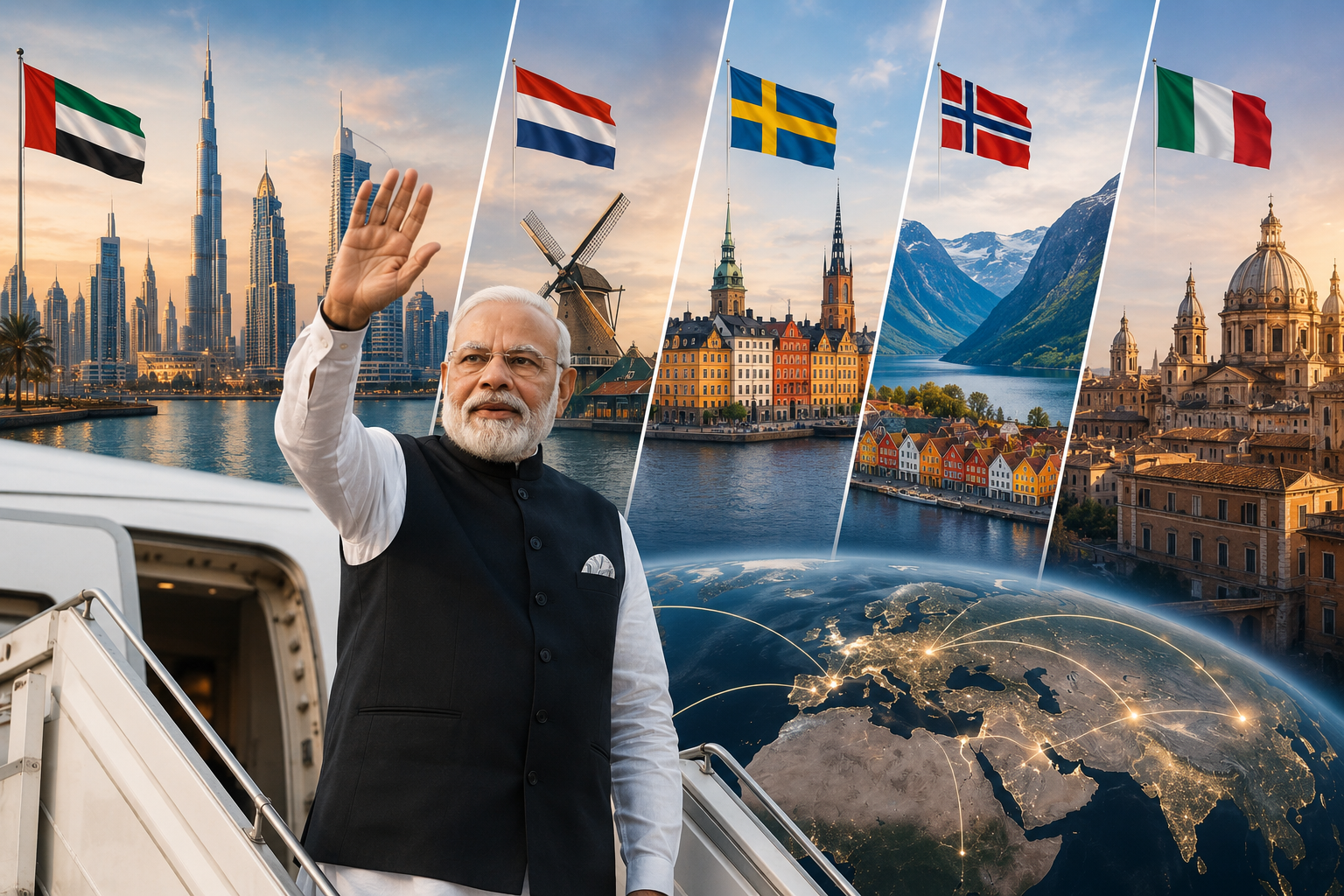
Energy Security, Trade Stability and Technology Partnerships to Dominate Six-Day Diplomatic Visit
Narendra Modi on Friday began a six-day diplomatic tour covering the United Arab Emirates, Netherlands, Sweden, Norway and Italy as India steps up global engagement amid growing geopolitical instability and economic uncertainty.
The visit comes at a crucial time when global markets are facing rising energy prices, supply chain disruptions and heightened tensions in West Asia. Analysts believe the trip reflects India’s strategic effort to strengthen economic partnerships, secure energy supplies and deepen cooperation in emerging technologies and trade.
The multi-nation visit is also expected to reinforce India’s diplomatic positioning across Europe and the Middle East while expanding cooperation in areas including clean energy, defence, digital innovation and infrastructure investment.
UAE Visit Expected to Focus on Energy and Trade Security
The first leg of the tour in the UAE is expected to centre heavily on energy security and trade continuity amid ongoing tensions in West Asia.
The region remains critical for India’s crude oil imports, energy supplies and shipping routes. Rising geopolitical risks around the Strait of Hormuz and broader Middle East instability have increased concerns over global energy availability and transportation costs.
India is likely to discuss:
- Stable crude oil supplies
- Energy investment partnerships
- Strategic reserves cooperation
- Maritime security
- Trade and logistics resilience
The UAE remains one of India’s most important economic and strategic partners in the Gulf region, with strong bilateral cooperation across trade, infrastructure, fintech and renewable energy sectors.
Analysts believe safeguarding uninterrupted energy flows will remain one of the most important objectives of the visit.
Europe Tour to Strengthen Technology and Economic Cooperation
Following the UAE visit, Prime Minister Modi will travel to the Netherlands, Sweden, Norway and Italy for discussions focused on economic cooperation, advanced technology partnerships and strategic investments.
European countries are increasingly becoming key partners for India in areas such as:
- Semiconductor manufacturing
- Artificial intelligence
- Green energy
- Electric mobility
- Defence manufacturing
- Digital infrastructure
- Sustainable urban development
India is expected to push for deeper collaboration in critical technologies as countries worldwide attempt to diversify supply chains and reduce dependence on single-source manufacturing hubs.
The visit is also likely to focus on attracting long-term investment into India’s manufacturing and infrastructure sectors.
Supply Chain Resilience a Major Focus
Global supply chains have faced significant disruption over the past several years due to geopolitical conflicts, energy market volatility and changing trade patterns.
The ongoing West Asia crisis has further intensified concerns regarding shipping routes, energy transport and international logistics.
India is expected to use the tour to strengthen supply-chain resilience partnerships with European economies and Gulf nations. Discussions may include:
- Diversified trade corridors
- Port and logistics cooperation
- Industrial manufacturing partnerships
- Technology transfer agreements
- Critical mineral supply chains
Analysts believe India is increasingly positioning itself as a reliable global manufacturing and supply-chain partner amid broader global realignments.
India Looking to Expand Strategic Global Presence
The tour is also being viewed as part of India’s broader effort to deepen strategic engagement with both Europe and the Middle East at a time of evolving geopolitical alignments.
India’s growing global role in diplomacy, trade and technology cooperation has strengthened its relationships with major economies across regions.
Experts believe the visit reflects India’s focus on balancing:
- Energy security
- Economic growth
- Geopolitical stability
- Technological advancement
- Global trade integration
The meetings are expected to cover bilateral, regional and global issues including economic stability, climate cooperation and security concerns.
Defence and Security Cooperation Expected in Discussions
Defence and strategic cooperation are also likely to remain important themes during the tour.
European countries have increasingly expanded defence cooperation with India through technology sharing, joint production and maritime collaboration.
Discussions may involve:
- Defence manufacturing partnerships
- Cybersecurity cooperation
- Maritime security in strategic waterways
- Counter-terrorism coordination
- Indo-Pacific strategic collaboration
The UAE visit may additionally include conversations around regional security and stability in West Asia.
Analysts say the evolving global geopolitical environment is pushing countries toward deeper strategic and security partnerships.
Green Energy and Climate Cooperation on Agenda
India is expected to strongly push its clean energy and sustainability agenda during meetings with European leaders.
Several European nations remain global leaders in renewable energy technologies, climate financing and sustainable infrastructure development.
Areas likely to be discussed include:
- Green hydrogen cooperation
- Solar and wind energy projects
- Electric mobility solutions
- Carbon reduction technologies
- Climate investment partnerships
India has been actively seeking international partnerships to support its long-term renewable energy expansion and energy transition goals.
Trade and Investment Opportunities in Focus
The visit is expected to create momentum for stronger trade and investment ties between India and partner countries.
India continues to attract growing international interest as one of the world’s fastest-growing major economies and a large consumer market.
Business and investment discussions may focus on:
- Manufacturing expansion
- Infrastructure funding
- Digital economy partnerships
- Start-up collaboration
- Financial technology investments
- Innovation ecosystems
European companies are increasingly exploring opportunities in India across sectors such as mobility, clean energy, electronics and healthcare.
Global Economic Challenges Add Importance to Tour
The timing of the diplomatic tour is particularly significant as the global economy faces multiple uncertainties including:
- High energy prices
- Inflation pressure
- Slowing global growth
- Supply-chain disruptions
- Geopolitical instability
- Currency volatility
Analysts believe India is attempting to strengthen external partnerships to reduce economic vulnerabilities and support long-term growth stability.
The visit may also help reinforce investor confidence in India’s expanding role within the global economy.
Markets and Businesses Watching Outcomes Closely
Indian businesses, investors and global markets are expected to closely monitor the outcomes of the tour, particularly regarding:
- Energy supply agreements
- Investment commitments
- Trade cooperation frameworks
- Technology partnerships
- Infrastructure collaborations
Any major announcements related to energy security or manufacturing investment could positively influence sectors linked to infrastructure, renewables, logistics and industrial production.
India Expands Global Diplomatic Footprint
Prime Minister Modi’s multi-country visit highlights India’s increasingly proactive diplomatic and economic engagement strategy amid a rapidly changing global environment.
As geopolitical risks continue to reshape global trade and energy dynamics, India appears focused on strengthening partnerships that support:
- Economic resilience
- Strategic autonomy
- Technology leadership
- Supply-chain diversification
- Long-term energy security
The next six days are expected to play an important role in shaping India’s evolving international partnerships and economic diplomacy in a period of growing global uncertainty.