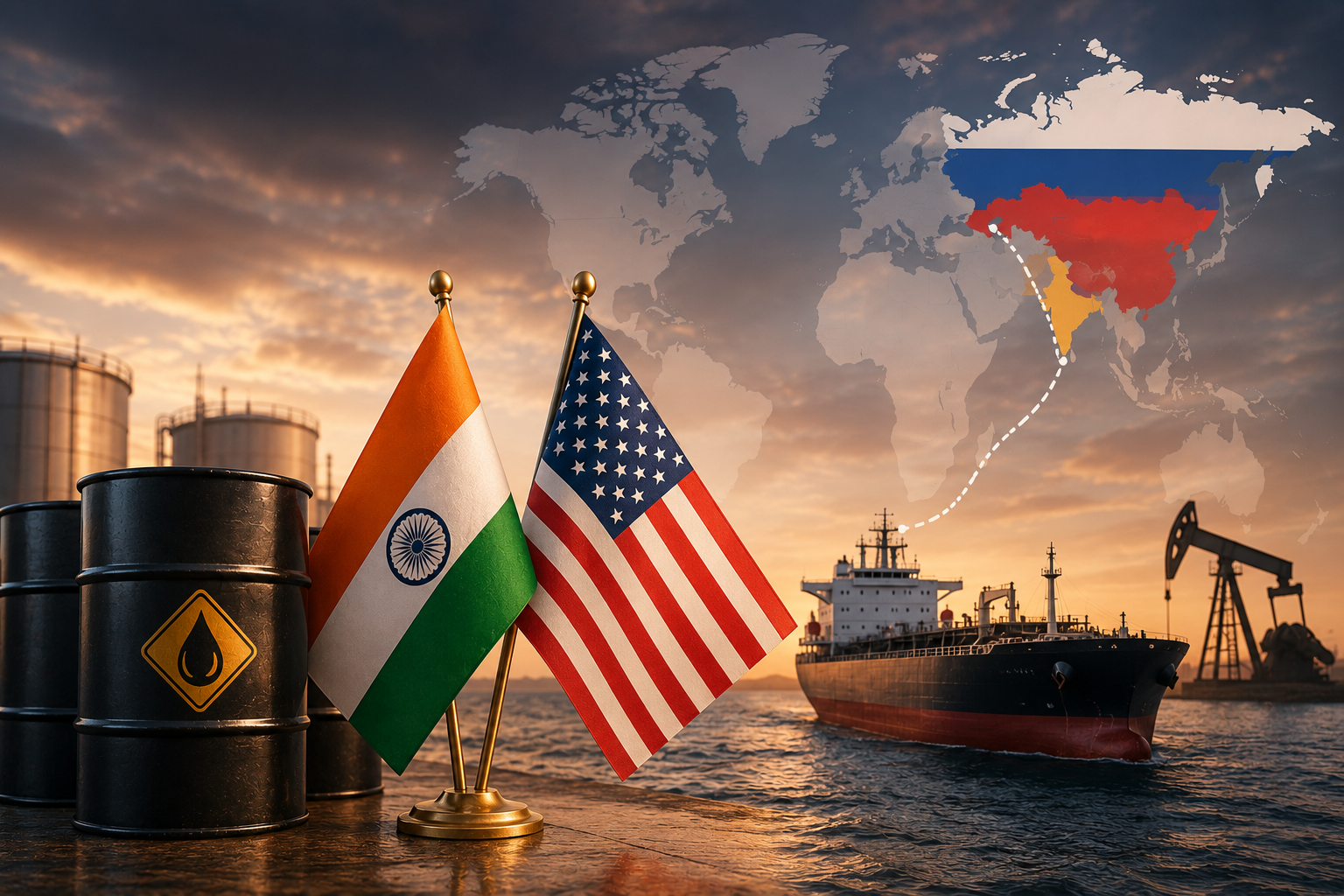
India has reportedly urged the United States to extend its waiver permitting purchases of Russian crude oil, as the prolonged conflict in West Asia continues to disrupt global energy markets and increase concerns over fuel security.
The existing US authorization allowing imports of already-loaded Russian oil cargoes is scheduled to expire on May 16. According to reports, Indian officials have communicated to Washington that stable energy supplies remain essential as geopolitical instability in the Gulf region threatens shipping routes, fuel availability, and global crude markets.
The move highlights India’s balancing act between maintaining affordable energy access for its massive population and navigating complex geopolitical pressures involving the United States, Russia, and ongoing regional conflicts.
US Waiver Helped Stabilise Global Oil Supply
The United States had initially relaxed restrictions on Russian crude imports in March before widening the authorization in an effort to prevent a major spike in global oil prices.
Although Russian oil is not under a blanket international ban, Western nations have previously encouraged India and other buyers to reduce purchases in order to pressure Moscow over the Ukraine conflict.
However, worsening instability in West Asia and fears of supply disruptions have forced policymakers to reconsider energy priorities. Additional Russian barrels have helped global markets avoid severe shortages at a time when energy flows through the Middle East face mounting risks.
Analysts believe the waiver has acted as a temporary stabilising mechanism for oil-importing countries, particularly large emerging economies like India.
West Asia Conflict Intensifies Energy Concerns
The nearly three-month-long conflict in West Asia has significantly increased uncertainty across global energy markets.
Rising geopolitical tensions around critical maritime routes, including the Strait of Hormuz, have:
- Increased shipping risks
- Raised freight and insurance costs
- Triggered volatility in crude oil prices
- Heightened fears of supply disruptions
As one of the world’s largest crude oil importers, India remains especially vulnerable to sudden spikes in global energy prices.
Officials reportedly warned US authorities that continued market instability could have severe domestic consequences, particularly as India already faces pressure from cooking gas shortages and elevated fuel costs.
India’s Dependence on Imported Oil Remains High
India imports more than 80 per cent of its crude oil requirements, making uninterrupted access to affordable energy supplies crucial for economic stability.
Since Western sanctions reshaped global oil trade flows, India has emerged as one of the largest buyers of discounted Russian crude. The lower-cost imports have helped Indian refiners:
- Reduce procurement expenses
- Protect refining margins
- Control domestic fuel inflation
- Maintain steady fuel supplies
Russian oil has become increasingly important for India’s energy strategy, especially during periods of elevated global prices.
Industry data indicates that Indian imports of Russian crude have reached record levels in recent months as refiners accelerated purchases ahead of the waiver deadline.
Russian Oil Imports Reach Record Highs
According to shipping and analytics data, India’s Russian oil imports in May have surged to approximately 2.3 million barrels per day, marking the highest-ever recorded inflows.
Full-month imports are expected to remain near 1.9 million barrels per day, reflecting strong demand from Indian refiners seeking cost-effective supply alternatives.
The surge demonstrates how critical discounted Russian crude has become for India’s energy security and inflation management.
Higher imports have also helped refiners offset the impact of:
- Rising Middle East crude prices
- Shipping disruptions
- Supply uncertainty from Gulf producers
Impact on Inflation and Domestic Economy
Affordable crude oil imports play a major role in controlling inflation in India.
A sharp increase in global oil prices can directly affect:
- Petrol and diesel prices
- LPG and cooking gas costs
- Transportation expenses
- Manufacturing costs
- Retail inflation
At a time when India is already experiencing rising wholesale inflation driven by fuel prices, policymakers are likely prioritising energy affordability to protect economic growth and household consumption.
Economists warn that any major disruption in crude imports could widen India’s:
- Trade deficit
- Current account deficit (CAD)
- Fiscal burden through subsidies
Geopolitical Balancing Act for India
India’s request for an extension also highlights its increasingly delicate geopolitical position.
New Delhi continues to maintain strategic relationships with:
- The United States
- Russia
- Gulf energy producers
While India has strengthened economic and defense ties with Washington, it has simultaneously preserved energy and trade relations with Moscow to secure affordable crude supplies.
Analysts believe India is likely to continue pursuing a pragmatic foreign policy focused on national energy and economic interests rather than aligning fully with any geopolitical bloc.
Global Oil Markets Watching US Decision Closely
Energy traders and global markets are now closely monitoring whether Washington will extend the waiver period.
An extension could:
- Stabilise crude prices temporarily
- Support Asian energy importers
- Ease supply concerns
- Reduce pressure on refining markets
However, if restrictions tighten again, markets could witness:
- Higher oil price volatility
- Increased freight costs
- Supply-chain disruptions
- Stronger inflationary pressure globally
The decision may also influence future trade flows between Russia, Asia, and Western economies.
Outlook
India’s push for an extension of the US waiver on Russian oil reflects the growing importance of energy security amid escalating geopolitical uncertainty in West Asia.
As global oil markets remain volatile and supply risks continue rising, discounted Russian crude has become a critical component of India’s strategy to manage inflation, maintain fuel availability, and support economic stability.
The coming weeks will be crucial in determining whether policymakers can balance geopolitical diplomacy with the urgent need for reliable and affordable energy supplies in an increasingly unstable global environment.