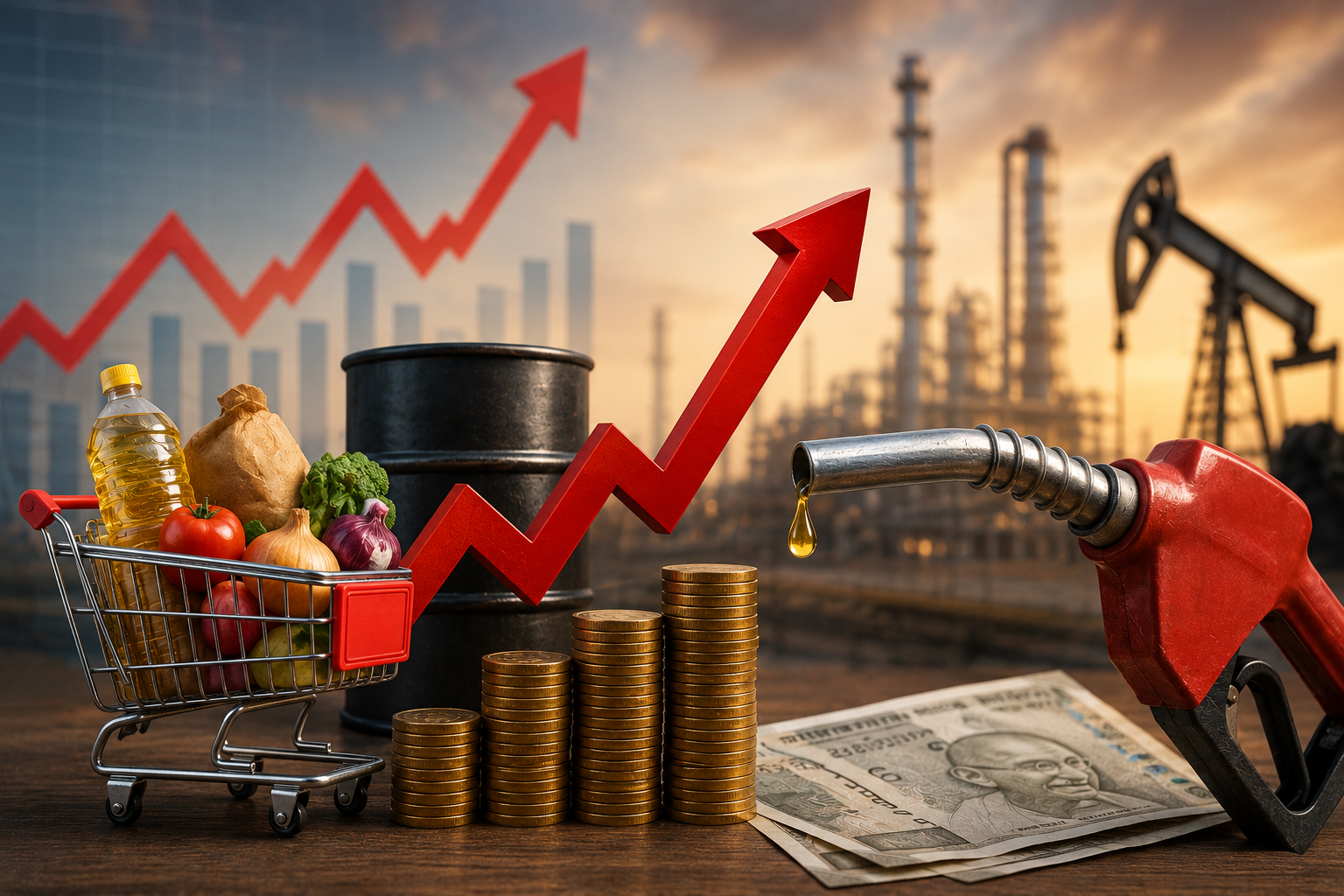
WPI Inflation Hits 42-Month High Amid Energy Market Turbulence
India’s wholesale inflation accelerated sharply in April 2026, rising to 8.3 per cent from 3.88 per cnt in March, marking the highest Wholesale Price Index (WPI)-based inflation reading in 42 months.
The sharp spike was largely driven by an extraordinary increase in fuel and energy prices, particularly crude oil, petrol, diesel, and natural gas. The latest data released by the Ministry of Commerce and Industry signals growing inflationary pressure across the economy as geopolitical tensions and volatile global energy markets continue to disrupt supply chains.
The surge in wholesale inflation comes at a time when policymakers are already balancing concerns around economic growth, interest rates, currency stability, and rising import costs.
Fuel and Power Inflation Emerges as Biggest Driver
The fuel and power category recorded the steepest increase among all major WPI segments, with inflation surging to 24.71 per cent in April from just 1.05 per cent in March.
On a month-on-month basis, the fuel and power index jumped 18.22 per cent, reflecting the sudden escalation in global energy prices.
The overall fuel and power index climbed sharply from 153.7 in March to 181.7 in April.
Economists say rising fuel costs are particularly concerning because they have a cascading impact across multiple sectors including:
-
Transportation
-
Logistics
-
Manufacturing
-
Agriculture
-
Consumer goods
-
Power generation
Higher fuel prices also increase operational costs for businesses, eventually feeding into retail inflation and consumer spending pressure.
Crude Oil Inflation Nears 90%
Within the fuel basket, crude petroleum and natural gas recorded one of the steepest increases.
Key inflation readings included:
-
Crude petroleum inflation: 88.06%
-
Crude petroleum and natural gas combined: 67.18%
-
Petrol inflation: 32.40%
-
High-speed diesel inflation: 25.19%
-
LPG inflation: 10.92%
The surge reflects ongoing volatility in international oil markets amid supply disruptions, geopolitical tensions in the Middle East, and concerns surrounding shipping routes such as the Strait of Hormuz.
India, being heavily dependent on imported crude oil, remains vulnerable to sudden spikes in global energy prices. A sustained rise in oil prices could widen the country’s trade deficit and put additional pressure on the rupee.
Manufacturing Inflation Broadens Across Sectors
Inflation in manufactured products — the largest component of the WPI basket — also increased noticeably, rising to 4.62 per cent in April from 3.39 per cent in March.
The government stated that 21 out of 22 manufacturing categories recorded month-on-month price increases.
Major sectors witnessing price pressure included:
-
Basic metals
-
Chemicals and chemical products
-
Textiles
-
Food products
-
Machinery and equipment
Among key manufacturing segments:
-
Textiles inflation rose to 7.30%
-
Chemicals inflation climbed to 5.09%
-
Basic metals inflation stood at 7%
The broad-based rise suggests inflationary pressure is no longer limited to energy alone and is gradually spreading across industrial supply chains.
Food Inflation Remains Comparatively Stable
Despite the sharp rise in fuel and manufacturing costs, food inflation remained relatively moderate in April.
The WPI food index inflation edged up slightly to 2.31 per cent from 1.85 per cent in March.
Food articles inflation stood at 1.98 per cent, with higher prices recorded for:
-
Fruits
-
Vegetables
-
Eggs
-
Meat and fish
-
Milk products
However, several key staples continued to show negative inflation:
-
Onion inflation: -26.45%
-
Potato inflation: -30.04%
-
Pulses inflation: -4.03%
The continued softness in some agricultural commodities helped prevent a sharper spike in overall food inflation.
Inflation Spike Could Complicate RBI’s Policy Outlook
The sudden rise in wholesale inflation may complicate the Reserve Bank of India’s monetary policy strategy in the coming months.
While retail inflation remains a key policy benchmark, sustained wholesale inflation often signals future cost pressures for consumers and businesses.
Higher wholesale prices could eventually:
-
Increase retail inflation
-
Raise manufacturing costs
-
Reduce corporate profit margins
-
Impact household spending
-
Delay interest rate cuts
Economists believe the RBI may closely monitor energy prices and imported inflation before making further policy adjustments.
Global Factors Driving Inflationary Pressure
Several global developments are contributing to the inflation surge:
-
Rising crude oil prices
-
Geopolitical tensions in the Middle East
-
Supply-chain disruptions
-
Elevated shipping and freight costs
-
Currency volatility
Concerns around energy security and maritime disruptions in critical trade routes have further intensified uncertainty in global commodity markets.
As India imports a large portion of its energy requirements, global price shocks continue to have a direct impact on domestic inflation trends.
Impact on Businesses and Consumers
If wholesale inflation remains elevated for an extended period, both businesses and consumers could face increasing pressure.
Potential effects include:
-
Higher transportation and logistics costs
-
Rising input costs for industries
-
Expensive consumer goods
-
Increased fuel expenses for households
-
Pressure on small businesses and manufacturers
Sectors heavily dependent on fuel and raw materials may witness margin compression unless companies pass on higher costs to consumers.
Outlook
India’s sharp rise in wholesale inflation highlights the growing impact of global energy volatility on the domestic economy. While food inflation remains relatively contained, the extraordinary increase in fuel and manufacturing costs signals broadening inflationary risks.
Much will depend on the direction of crude oil prices, geopolitical developments, and the government’s ability to manage imported inflation pressures in the months ahead.
Economists expect policymakers to remain cautious as balancing inflation control with economic growth becomes increasingly challenging in an uncertain global environment.