Industry Seeks Timelines, Safeguards and Accountability Amid Rising Concerns Over Settlement Restrictions
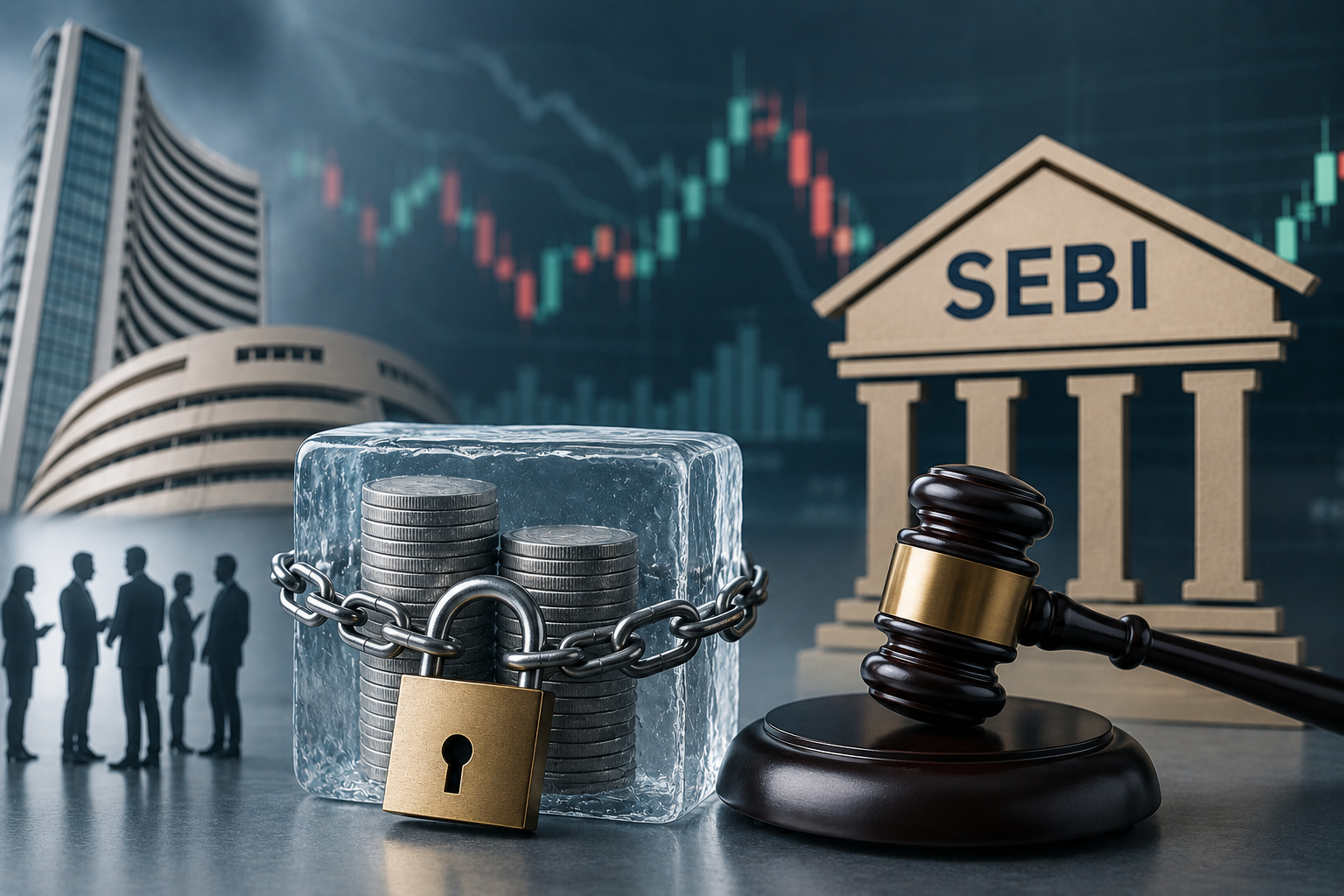
Brokerage firms and market participants have approached Securities and Exchange Board of India seeking greater clarity on the process of freezing payouts in cases linked to alleged fraudulent transactions and unauthorized trading activities.
The demand follows growing concerns within the securities market over prolonged settlement restrictions that brokers say could disrupt liquidity, operational efficiency, and investor confidence if not governed by clearly defined rules and timelines.
Industry stakeholders are now urging regulators to introduce structured due-process safeguards under the proposed Securities Market Code (SMC) Bill to ensure that market participants are not unfairly affected during ongoing investigations.
NSE Freeze Triggers Industry-Wide Concerns
The issue came into focus after market infrastructure institutions (MIIs), including the National Stock Exchange, withheld payouts worth nearly ₹78 crore following a police complaint involving alleged breaches of risk management systems and unauthorized trading in a client account.
According to sources, the complaint was filed on May 5, prompting authorities to direct an immediate halt to the settlement of trades executed on the same day.
The freeze reportedly impacted more than 160 brokerage firms and over 3,000 clients connected to the disputed transactions in the equity derivatives segment.
In a notice issued on May 6, NSE confirmed that payouts to certain counterparties had been withheld in line with existing standard operating procedures while the matter remained under investigation by enforcement agencies.
Brokers Seek Defined Timelines for Fund Release
Market participants argue that while temporary restrictions may be necessary in suspected fraud cases, there must be clear timelines governing how long funds can remain frozen.
Brokerages have reportedly recommended that regulators prescribe a maximum duration within which authorities must either justify continuation of the freeze or release the funds after assessing the merits of the case.
Industry executives believe prolonged restrictions without timely resolution can create uncertainty for brokers and investors, especially when innocent counterparties are involved in anonymous exchange-based trades.
Sources familiar with the discussions indicated that brokers are also requesting enhanced powers for MIIs to independently assess disputed cases using market data and transaction records instead of relying solely on external investigative agencies.
Concerns Over Market Liquidity and Investor Confidence
Legal experts and brokerage executives warned that broad payout freezes triggered merely by complaints could adversely affect market functioning if not implemented carefully.
According to industry participants, freezing settlements on a large scale can create liquidity disruptions for brokers while also affecting client confidence in the fairness and efficiency of India’s capital markets.
Experts noted that anonymous centralized order-matching systems make it difficult for counterparties to identify potentially disputed trades beforehand. As a result, blanket restrictions may unintentionally impact genuine investors who participated in trades through standard market mechanisms.
Market participants also fear that prolonged uncertainty surrounding frozen funds could discourage trading activity and weaken overall market sentiment.
Legal Experts Call for Due-Process Safeguards
Legal professionals have stressed the importance of incorporating safeguards into the proposed Securities Market Code Bill to ensure proportionality and transparency in such cases.
Experts have recommended provisions including:
- Written explanations for freezing actions
- Prior notice to affected parties
- Clearly defined maximum freeze periods
- Mechanisms for partial release of undisputed funds
- Protection for bona fide actions taken by market infrastructure institutions
- Compensation mechanisms in cases where freezes are later deemed unjustified
Legal observers also highlighted that courts have previously criticized arbitrary demat account freezes, stating that excessive restrictions without proper justification can undermine investor trust in financial markets.
Accountability for False or Exaggerated Complaints
Brokerages and legal experts additionally emphasized the need for accountability in cases involving misleading or exaggerated complaints that unnecessarily disrupt trading operations.
Industry participants believe the regulatory framework should discourage misuse of complaint mechanisms that can trigger large-scale settlement freezes and operational disruptions without sufficient preliminary verification.
They argue that maintaining a balance between investor protection and smooth market functioning will be critical as India’s capital markets continue to expand rapidly.
Securities Market Code Bill Under Review
The discussions around payout freeze mechanisms are expected to form part of the broader review of the Securities Market Code (SMC) Bill, which aims to modernize and streamline India’s securities regulations.
The bill is currently under examination after previously being referred to Parliament’s Standing Committee on Finance.
Market participants are hopeful that the revised framework will provide greater regulatory clarity, improve dispute resolution mechanisms, and strengthen confidence among brokers, investors, and other market intermediaries.
Regulatory Balance Key for Market Stability
As Indian financial markets become increasingly sophisticated and technology-driven, experts believe regulators will need to strike a careful balance between preventive enforcement and operational flexibility.
While stronger surveillance and fraud prevention remain essential for protecting investors, industry participants argue that excessive discretion without statutory clarity could invite legal challenges and create uncertainty within the financial ecosystem.
The outcome of Sebi’s discussions with brokers and legal experts may therefore play an important role in shaping the future framework for handling disputed trades and payout freezes in India’s securities markets.