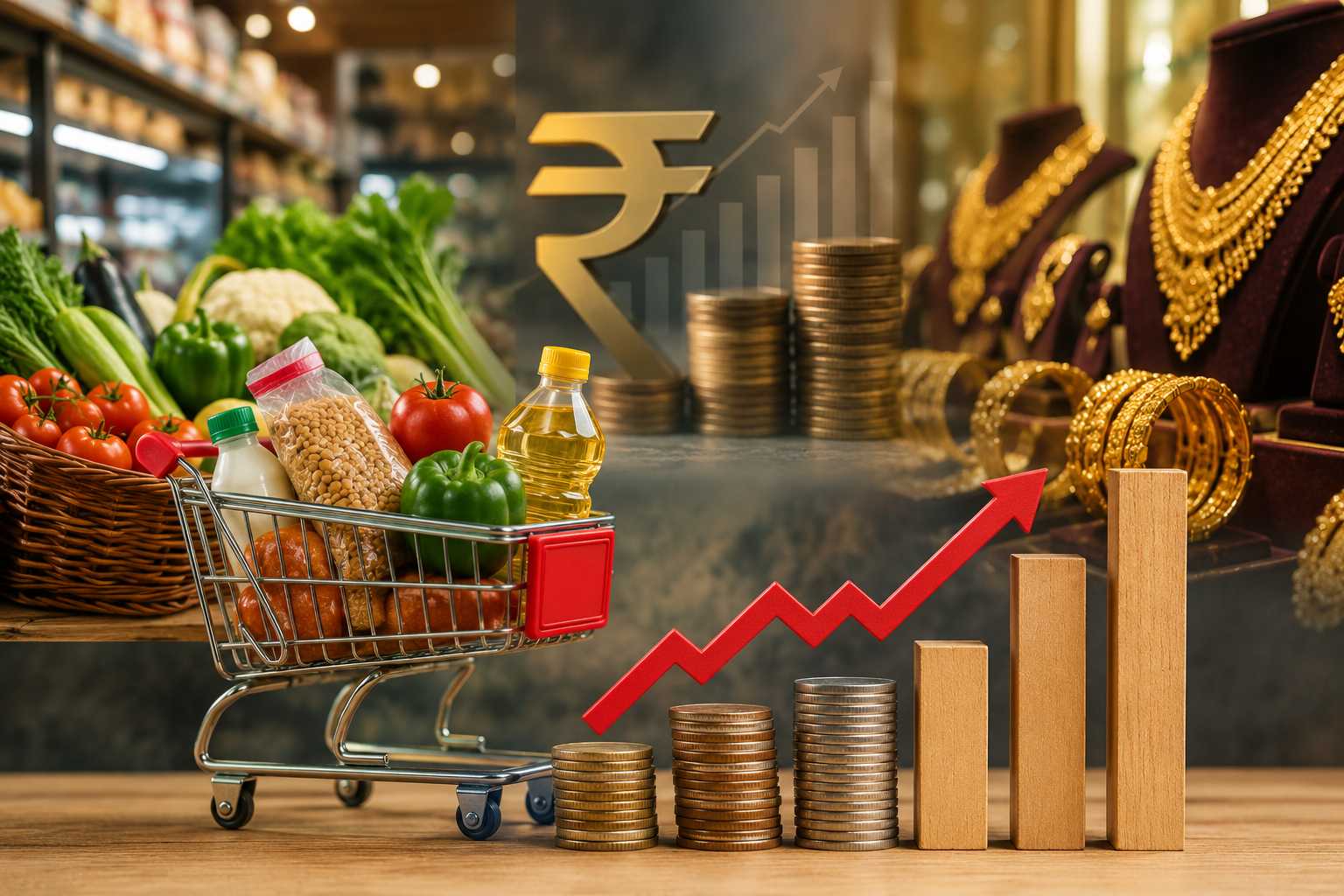
Jewellery, Kitchen Staples and Food Costs Push Consumer Inflation Higher
India’s retail inflation rose slightly to 3.48% in April, reflecting an increase in prices of gold and silver jewellery as well as several essential household food items. According to data released by the National Statistical Office, inflation based on the Consumer Price Index (CPI) stood at 3.40% in March, 3.21% in February, and 2.74% in January.
The latest figures indicate that inflationary pressures, although moderate, are gradually building in segments linked to consumer essentials and precious metals.
Food Inflation Continues to Climb
Food inflation emerged as one of the key contributors to the rise in overall retail inflation during April. Inflation in the food basket increased to 4.20% compared to 3.87% in March.
Several kitchen staples, including vegetables, edible items, spices, and other daily-use products, witnessed price increases during the month. Rising transportation costs, weather-related supply disruptions, and seasonal demand are believed to have contributed to the upward movement in food prices.
Economists note that food inflation remains one of the most closely watched indicators because it directly affects household spending patterns, especially in middle- and lower-income segments.
Gold and Silver Prices Add Pressure
A sharp increase in gold and silver prices also contributed significantly to the higher inflation reading. Strong global demand, central bank purchases, and geopolitical uncertainties have kept precious metal prices elevated in recent months.
The rise in jewellery prices has increased the cost burden on consumers ahead of the wedding and festive season, when demand for gold traditionally rises across India.
Market experts believe continued volatility in global commodity markets could keep precious metal prices elevated in the near term.
Inflation Still Within RBI Comfort Zone
Despite the increase, retail inflation remains below the Reserve Bank of India’s medium-term target threshold of 4%, offering some relief to policymakers. Analysts believe the current inflation trend may not immediately trigger concerns over aggressive monetary tightening.
However, economists caution that sustained increases in food and commodity prices could influence future policy decisions if inflation continues to move upward over the coming months.
Impact on Consumers and Markets
Higher inflation affects household purchasing power by increasing the cost of daily essentials, fuel, and discretionary spending. Rising prices of food and jewellery may also influence consumer demand patterns and savings behavior.
For financial markets, inflation data remains a critical indicator as it impacts interest rate expectations, bond yields, and overall investor sentiment. Sectors linked to consumption, retail, and banking often react closely to inflation trends.
Outlook
Experts expect inflation to remain relatively stable in the near term, though risks from volatile commodity prices, weather conditions, and global economic uncertainties continue to persist. Food prices during the monsoon season and international gold prices will remain key factors influencing inflation trends in the coming quarters.
Investors and policymakers will closely monitor upcoming economic data for signals on consumer demand, interest rate direction, and overall economic momentum.