New Delhi:
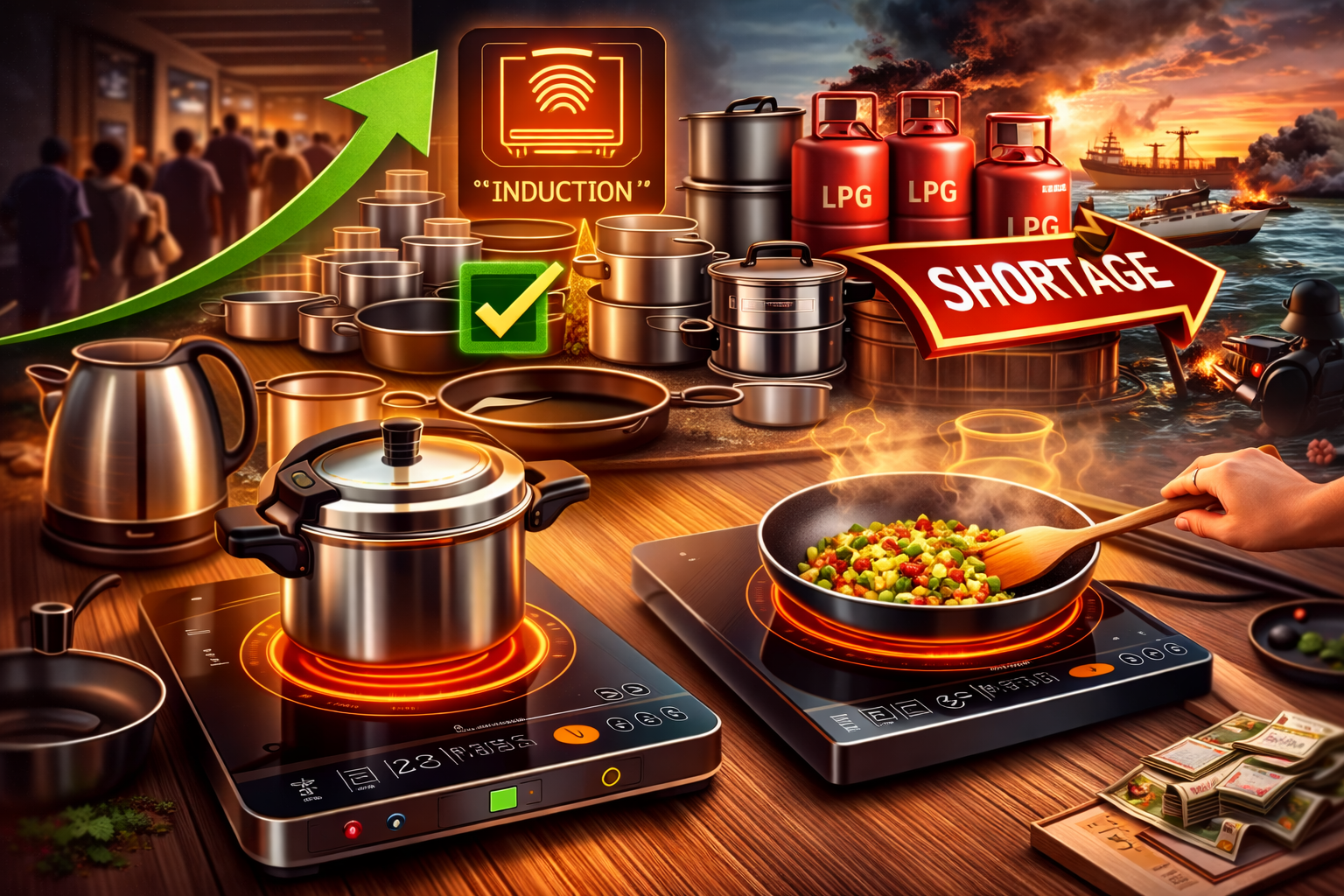
Amid growing concerns over LPG availability due to escalating tensions in West Asia, the Indian government is actively exploring measures to boost the production of induction cooktops and compatible utensils. The move comes as disruptions in global energy supply chains, particularly through the Strait of Hormuz, have raised fears of cooking gas shortages across the country.
Demand for Induction Appliances Surges
Industry players report a sharp increase in sales of induction cooktops, electric kettles, and compatible cookware. With uncertainty around LPG supplies, households and small businesses are rapidly shifting toward electric cooking solutions as a reliable alternative. Officials noted that these products are “selling like hot cakes,” indicating a strong and immediate demand spike.
Government Holds High-Level Meeting
A high-level meeting chaired by Commerce and Industry Minister Piyush Goyal brought together key stakeholders, including officials from the Power Ministry, DGFT, and DPIIT. Discussions focused on strategies to accelerate manufacturing capacity for induction-based appliances and utensils, ensuring supply meets the rising demand.
The government is also exploring ways to support domestic manufacturers, streamline supply chains, and reduce dependence on imports for critical components.
Impact of West Asia Conflict on Energy Supply
The ongoing conflict in West Asia has significantly disrupted maritime routes, particularly affecting oil and gas shipments. This has led to a surge in global crude prices, which have risen nearly 50% since late February. As India relies heavily on imports for LPG and crude oil, these disruptions pose a serious risk to energy security.
Temporary Relief Measures Introduced
To stabilize supply chains across industries, the government has already announced a temporary exemption on customs duty for key petrochemical imports until June 30. This move is expected to benefit sectors such as pharmaceuticals, textiles, chemicals, and automotive manufacturing, while also ensuring the availability of essential raw materials.
Broader Economic Implications
The LPG crisis highlights India’s vulnerability to global energy shocks and underscores the need for diversification. Increased adoption of electric cooking appliances not only reduces dependence on imported fuels but also aligns with the country’s push toward electrification and sustainable energy solutions.
However, the shift may also increase electricity demand, requiring careful planning to ensure grid stability and affordability.
Way Forward: Transition Towards Energy Alternatives
The government’s focus on induction cooking solutions signals a broader transition toward alternative energy usage in households. By promoting electric appliances and strengthening domestic manufacturing, India aims to build resilience against global supply disruptions.
If the current crisis persists, induction-based cooking could become a long-term trend, reshaping consumer behavior and the kitchen appliance market in India.