Award strengthens Juniper’s renewable-energy pipeline as India shifts from intermittent generation towards firm, dispatchable and round-the-clock clean power
Juniper Green Energy Ltd has secured a Letter of Award (LoA) from the Solar Energy Corporation of India (SECI) for a 230 MW Firm and Dispatchable Renewable Energy (FDRE) Round-the-Clock (RTC) power project.
The project was awarded at a tariff of ₹5.26 per unit, marking another important addition to Juniper Green Energy’s renewable-energy portfolio and strengthening its presence in India’s emerging renewable-plus-storage market.
The company emerged as the successful bidder in the e-reverse auction conducted by SECI for its 1,000 MW FDRE Round-the-Clock Renewable Energy tender.
Juniper Green Energy Secures 230 MW Capacity
The 230 MW project will be developed under SECI’s FDRE-RTC procurement framework, which seeks to combine renewable generation with the flexibility required to provide power in a more predictable manner.
The award is strategically significant because conventional solar and wind projects are dependent on weather conditions and cannot independently provide electricity continuously throughout the day.
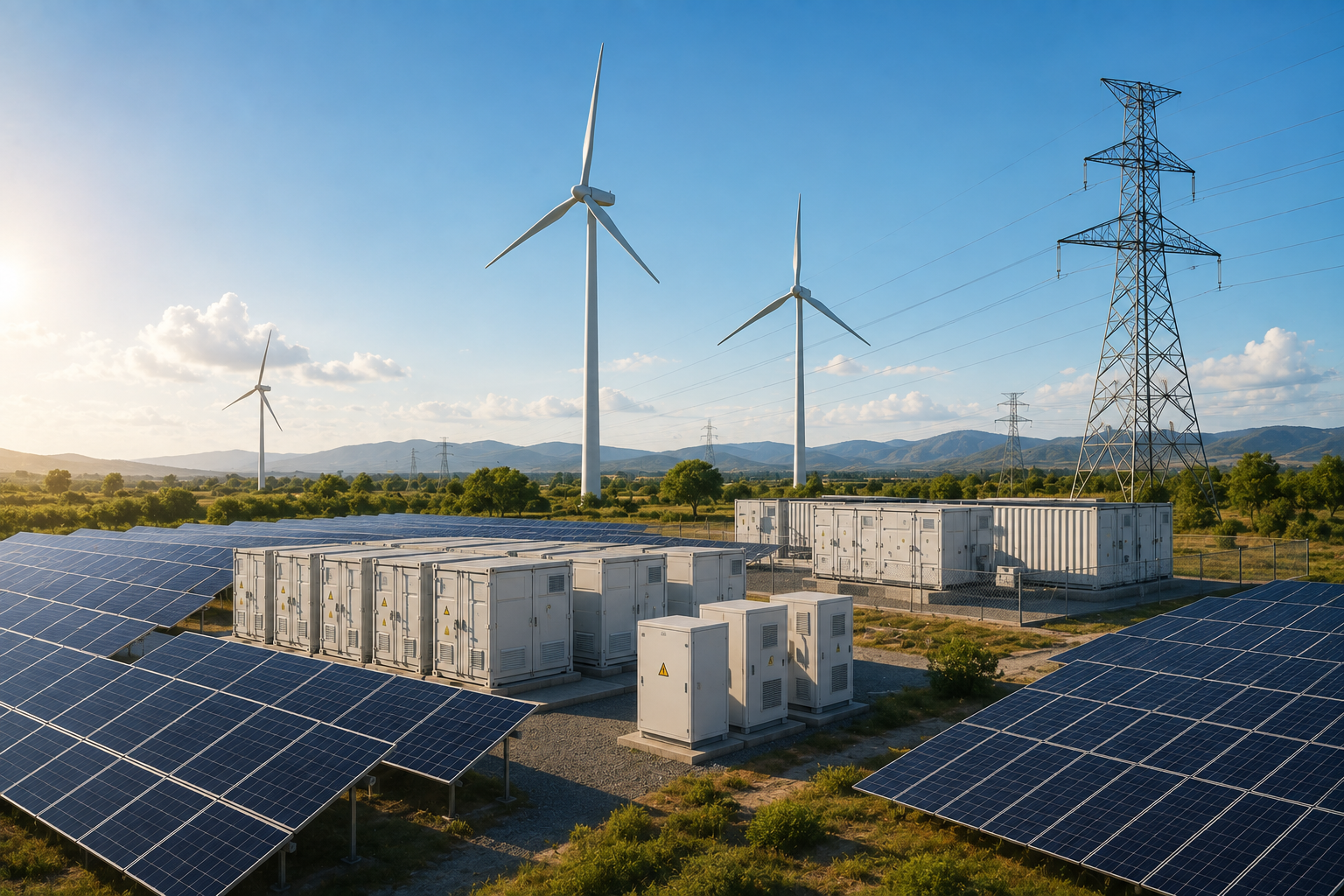
FDRE projects are designed to address this limitation by combining renewable generation with appropriate technologies, including energy storage.
What Is FDRE-RTC Power?
Firm and Dispatchable Renewable Energy refers to renewable power that can be supplied according to a defined schedule rather than being available only when renewable resources are naturally generating electricity.
The RTC component takes the concept further by targeting power availability across the day.
A project can achieve this through a combination of:
- Solar generation
- Wind generation
- Battery energy storage
- Other suitable storage technologies
- Advanced power-management systems
The objective is to make renewable electricity more dependable for utilities and large consumers.
SECI's 1,000 MW Tender Marks a Shift in Renewable Procurement
SECI's 1,000 MW tender reflects the changing requirements of India's electricity system.
The country's renewable-energy capacity has expanded rapidly, but increasing dependence on solar and wind also creates challenges related to intermittency and grid balancing.
FDRE-RTC procurement attempts to address this challenge by placing greater emphasis on reliability and dispatchability, rather than simply the lowest generation cost.
For developers, this creates a new opportunity to earn long-term contracts by combining generation capacity with storage and sophisticated energy-management systems.
₹5.26 Per Unit Tariff Reflects Higher Project Complexity
Juniper Green Energy has won the project at a tariff of ₹5.26 per unit.
The tariff needs to account for the additional infrastructure required to make renewable electricity firm and dispatchable.
Unlike a standalone solar project, an FDRE-RTC project may require significantly greater generation capacity and storage infrastructure.
The final project economics will therefore depend on equipment costs, financing rates, renewable-resource availability, storage efficiency and the company's ability to execute the project within the contracted tariff.
Storage Is Central to the Business Model
Energy storage is expected to play a crucial role in delivering the project's round-the-clock power profile.
Solar power generation generally peaks during daylight hours, while electricity demand can remain high after sunset.
Battery storage can bridge this mismatch by storing surplus electricity and releasing it when renewable generation declines.
For FDRE projects, the efficiency, cost and operating life of the storage system can have a direct impact on project returns.
Hybrid Renewable Generation Can Improve Reliability
FDRE projects can also benefit from combining different renewable-energy sources.
Solar and wind generation often have different production patterns.
A combination of the two can potentially create a more balanced generation profile, while storage can manage the remaining gap between generation and demand.
This hybrid approach can improve the utilisation of renewable assets and transmission infrastructure.
Renewable Energy Moves Towards Firm Power
India's renewable-energy sector is entering a new phase.
The initial expansion was largely focused on adding solar and wind capacity at competitive tariffs.
The next stage is increasingly about ensuring that renewable electricity is available when consumers and the grid need it.
This is particularly important as renewable generation becomes a larger part of India's overall power mix.
Data Centres Could Become Major Customers
The growth of data centres and artificial intelligence infrastructure is creating demand for reliable electricity around the clock.
Large data centres cannot depend entirely on intermittent power sources because their operations require continuous electricity.
FDRE-RTC projects could therefore become an attractive solution for technology companies seeking to combine reliable power supply with renewable-energy commitments.
Industrial Demand Could Support FDRE Growth
Large industrial consumers are also increasingly looking for renewable electricity as companies seek to reduce emissions and improve energy sustainability.
However, conventional solar projects may not always match industrial consumption patterns.
Firm renewable power can potentially provide a more suitable solution for industries that require electricity throughout the day.
This could expand the addressable market for FDRE developers.
Juniper Gains Exposure to an Emerging Segment
The SECI award gives Juniper Green Energy an opportunity to participate in one of the more technologically advanced segments of India's renewable-energy industry.
FDRE projects require capabilities beyond traditional renewable development.
Developers need to manage:
- Renewable generation
- Storage
- Power scheduling
- Grid integration
- Forecasting
- Energy management
- Long-term asset optimisation
Successfully executing such projects could strengthen Juniper's credentials for future renewable-energy tenders.
Long-Term Contract Visibility Could Support Project Planning
Projects awarded through government-backed renewable procurement frameworks can provide developers with greater visibility over future revenue streams.
A long-term power-sale arrangement can also support project financing by giving lenders greater clarity over expected cash flows.
For a capital-intensive FDRE project, such visibility can be particularly important.
Financing Will Remain a Critical Factor
The project requires substantial capital because renewable generation and storage infrastructure need to be developed together.
Interest rates and financing terms can therefore have a meaningful impact on project returns.
The ability to secure competitive financing will be important for Juniper as it moves from the award stage towards construction and commissioning.
Battery Costs Could Influence Returns
Battery storage represents one of the biggest cost components of many renewable-plus-storage projects.
Falling battery prices could improve project economics over time, while higher-than-expected equipment costs could put pressure on margins.
Battery degradation is another consideration because storage capacity declines over the operating life of a battery system.
The project's long-term financial performance will therefore depend partly on how effectively storage costs and performance are managed.
Grid Connectivity Is Equally Important
An FDRE project can only deliver value if the generated electricity can be transmitted to the required consumers.
Grid connectivity, transmission availability and scheduling will therefore be important during project development.
The inter-state transmission framework can enable renewable power generated in resource-rich regions to reach demand centres elsewhere.
India Needs More Flexible Power Resources
As renewable penetration rises, India's electricity system requires greater flexibility.
Traditional thermal plants have historically provided dispatchable electricity and helped balance fluctuations in demand and supply.
FDRE projects offer an alternative by combining renewable generation with storage and advanced scheduling.
This could reduce the need for fossil-fuel-based balancing over the longer term.
FDRE Could Create a New Renewable Investment Cycle
The emergence of FDRE procurement could generate opportunities across the broader clean-energy ecosystem.
The beneficiaries could include companies involved in:
Battery Storage
Large-scale battery systems will be needed to store renewable electricity.
Power Electronics
Converters, inverters and grid-management equipment are essential to integrating storage and renewable generation.
Transmission
Additional renewable capacity will require stronger transmission networks.
Renewable Generation
Solar and wind developers will remain at the centre of the ecosystem.
Energy Management
Advanced software and forecasting systems will become increasingly important for scheduling renewable power.
Competitive Bidding Creates Margin Pressure
The renewable-energy sector remains highly competitive, particularly in government auctions.
Developers compete aggressively to secure long-term contracts.
While winning a project can provide strong revenue visibility, aggressive bidding can reduce the margin of safety if equipment or financing costs subsequently rise.
Juniper will therefore need to maintain cost discipline throughout the project's development.
Execution Will Determine the Ultimate Value
The Letter of Award is an important milestone, but the project's financial success will depend on execution.
Key milestones will include:
- Project design
- Land and site development
- Renewable-generation equipment procurement
- Storage-system selection
- Financing
- Grid connectivity
- Construction
- Testing
- Commercial operations
Any significant delay could increase costs and affect expected project returns.
Renewable Power Procurement Is Becoming More Sophisticated
The SECI tender demonstrates how renewable-energy procurement is evolving.
Instead of purchasing only low-cost solar or wind electricity, power buyers are increasingly seeking electricity that can provide a more predictable supply profile.
This shift could create a premium market for renewable projects capable of delivering power according to demand.
Juniper's Opportunity Extends Beyond the 230 MW Project
The experience gained from the project could position Juniper for future FDRE and RTC tenders.
As India's renewable-energy penetration rises, more procurement programmes could focus on firm power.
Developers that have successfully delivered early projects may have an advantage when competing for subsequent contracts.
Key Factors to Watch
Investors and industry participants should monitor several factors as Juniper progresses with the project.
Project execution: Timely development and commissioning will be critical.
Storage economics: Battery costs and performance will influence profitability.
Financing: The cost and availability of long-term project debt will remain important.
Power scheduling: Efficient management of renewable generation and storage will determine delivery performance.
Grid connectivity: Transmission availability is essential for project operations.
Future auctions: Additional FDRE tenders could create further opportunities for experienced developers.
India's Renewable-Energy Transition Enters the Next Phase
The growth of FDRE projects reflects a fundamental change in India's energy transition.
The country is no longer focused solely on installing more renewable-generation capacity. Increasingly, the focus is shifting towards ensuring that renewable electricity can be stored, scheduled and delivered reliably.
This is likely to become increasingly important as electricity demand grows and renewable generation accounts for a larger share of the power system.
Market Outlook
Juniper Green Energy's 230 MW FDRE-RTC project at a tariff of ₹5.26 per unit strengthens its position in India's evolving renewable-energy landscape.
The project is strategically important because it addresses one of the biggest challenges facing renewable power: intermittency. By combining renewable generation with storage and dispatchability, FDRE projects can potentially provide cleaner electricity with a reliability profile closer to conventional power generation.
The opportunity is supported by rising electricity demand, increasing renewable penetration and the growing requirement for reliable green power from industries, data centres and other energy-intensive consumers.
However, the project's success will ultimately depend on execution. Battery costs, financing, grid connectivity, construction timelines, storage performance and disciplined bidding will determine whether the ₹5.26-per-unit tariff delivers attractive returns.
For Juniper Green Energy, the award provides both a new contracted growth opportunity and valuable experience in the emerging renewable-plus-storage segment. If the company executes successfully, the project could strengthen its credentials for future FDRE and RTC tenders as India's power market increasingly moves from simply adding renewable capacity to delivering reliable round-the-clock clean electricity.