Agricultural cooperative plans modern retail outlets and dark stores to strengthen its direct-to-consumer business, improve online delivery and expand its urban footprint
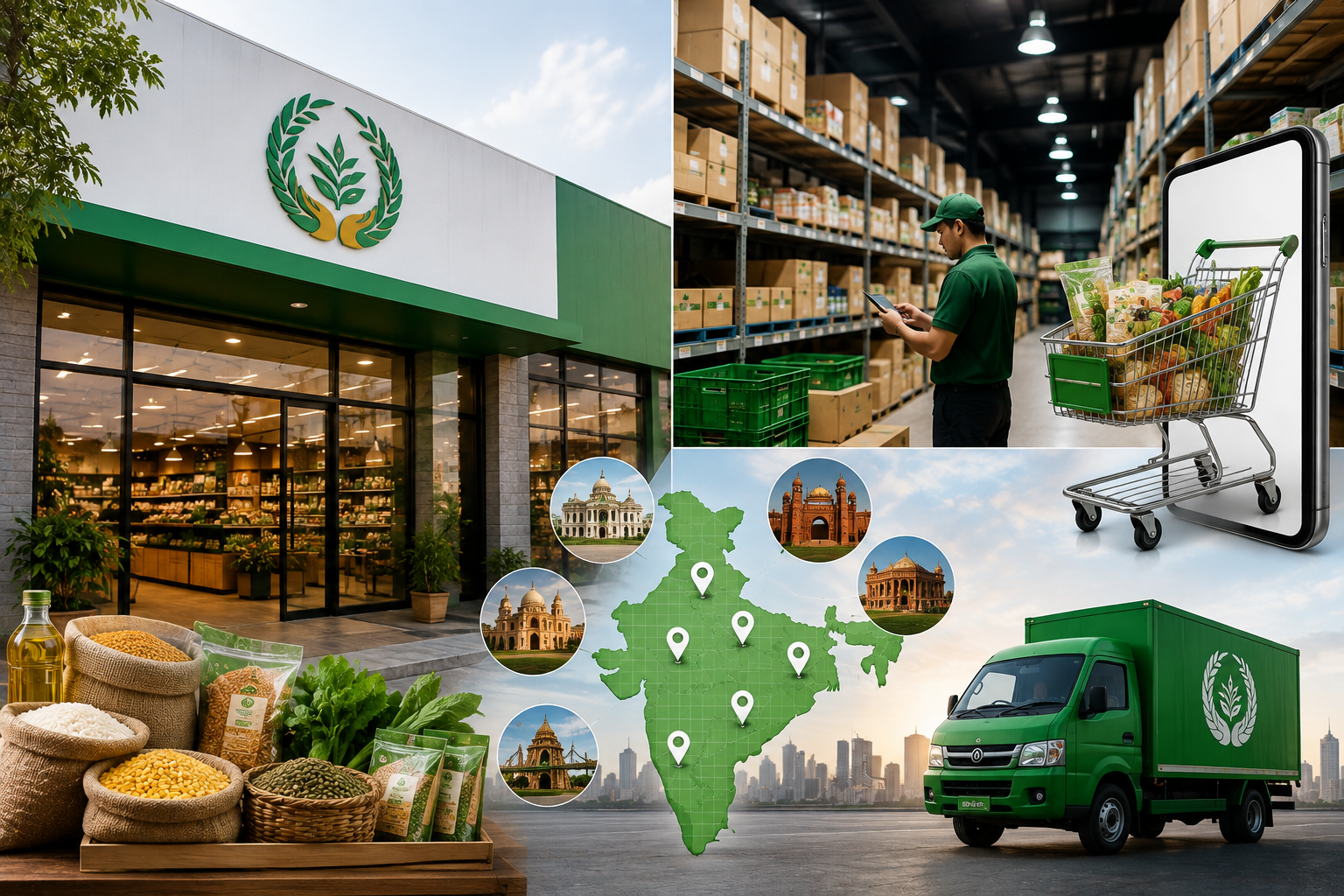
The National Agricultural Cooperative Marketing Federation of India (Nafed) is stepping up its retail expansion strategy, with plans to establish modern stores across six major cities and develop a network of dark stores to support faster online deliveries.
The move comes as Nafed looks to strengthen its direct-to-consumer business and take its agricultural and food products closer to urban consumers. The organisation has also set an ambitious retail sales target of ₹100 crore for the current financial year, supported by strong growth in sales during the first five months of FY27.
Retail Sales Already Surpass FY26 Full-Year Figure
Nafed's retail business has recorded a sharp increase in sales during FY27.
The organisation generated around ₹42 crore in retail sales during the first five months of the financial year. Importantly, this figure has already surpassed the ₹32 crore recorded during the entire FY26.
The strong growth provides a foundation for Nafed's target of crossing ₹100 crore in retail sales by the end of FY27.
Achieving the target would require the organisation to maintain its current growth momentum through the remaining months, while the planned expansion of its physical and digital distribution network could provide an additional boost.
Six Cities Identified for First-Phase Expansion
Nafed plans to open new retail stores in six cities as part of the first phase of its expansion.
The cities are:
-
Bengaluru
-
Lucknow
-
Indore
-
Jaipur
-
Kolkata
-
Guwahati
The selection includes major state capitals and important urban consumption centres, giving Nafed access to large customer bases.
The organisation plans to subsequently expand its presence into Tier-II cities and major industrial centres, indicating that the six-city rollout could serve as a testing ground for a larger national retail strategy.
Dark Stores to Improve Online Delivery Speed
One of the most important aspects of Nafed's strategy is its plan to introduce dark stores.
Dark stores are facilities designed primarily for online order fulfilment. Instead of functioning as conventional retail outlets, these locations maintain inventory and allow orders to be picked, packed and dispatched to nearby customers.
At present, orders placed through Nafed's e-Bazaar platform generally take around three to four days to reach customers.
By converting some new and existing outlets into dark stores, Nafed intends to shorten this delivery cycle and make its online offering more competitive.
The strategy reflects the changing expectations of Indian consumers, who are increasingly accustomed to shorter delivery timelines for grocery and household products.
Nafed Looks to Strengthen Online Presence
Nafed's products are already sold through its own online platform as well as leading e-commerce marketplaces.
The expansion of its physical network and development of dark-store infrastructure could allow the organisation to build an integrated online-offline retail model.
Physical stores can help increase brand visibility and customer trust, while strategically located fulfilment centres can support online demand.
This combination could be particularly useful in urban markets where consumers increasingly switch between offline shopping and digital ordering depending on convenience, price and availability.
Focus on Purity, Pricing and Packaging
Nafed's retail expansion is also being driven by changing consumer preferences.
According to comments attributed to Nafed Chairman and Managing Director Deepak Kumar, consumers are increasingly looking for products that offer purity, competitive pricing and better packaging.
These factors are becoming particularly important in the packaged food and grocery segments, where consumers have a wide range of brands to choose from.
For Nafed, improving packaging and retail presentation could help it transition from being primarily recognised as an agricultural cooperative to a more visible consumer-facing brand.
Building a Direct Link Between Farmers and Consumers
The retail expansion has a broader strategic significance for Nafed.
The organisation has traditionally played an important role in agricultural marketing and procurement. A larger retail operation could help create a stronger connection between farm-linked products and end consumers.
By strengthening its own retail and online channels, Nafed could potentially gain greater control over distribution and product positioning.
The strategy also provides an opportunity to increase the visibility of products marketed under the Nafed brand across multiple consumption categories.
Competition in India's Retail Market
Nafed's expansion comes against the backdrop of rapidly evolving Indian retail and grocery markets.
Traditional supermarkets are facing increasing competition from e-commerce and quick-commerce platforms, while consumers are becoming more sensitive to convenience, pricing and delivery speed.
For Nafed, competing in this environment will require more than simply opening new stores. Efficient inventory management, competitive pricing, reliable product availability and fast fulfilment will be critical to sustaining customer demand.
The planned dark-store model could help address the delivery challenge, but it will also require careful management of logistics and operating costs.
₹100 Crore Target Could Mark a New Retail Phase
With ₹42 crore already generated in the first five months of FY27, Nafed has made considerable progress towards its ₹100 crore retail sales objective.
The proposed expansion across six cities provides the organisation with additional physical touchpoints, while dark stores could strengthen the digital side of the business.
If the strategy succeeds, Nafed could move towards a more integrated retail model combining stores, online platforms, e-commerce partnerships and local fulfilment infrastructure.
However, scaling rapidly across multiple cities will also test the organisation's ability to maintain consistent product quality, pricing and customer service.
Market Outlook
Nafed's retail push highlights the organisation's growing focus on the consumer end of the agricultural supply chain. The jump in retail sales from ₹32 crore in FY26 to ₹42 crore in just five months of FY27 indicates strong initial momentum.
The planned six-city expansion and introduction of dark stores could further accelerate growth if Nafed is able to execute efficiently.
The key factors to watch will be the pace of store launches, online order growth, delivery-time improvements and progress towards the ₹100 crore sales target. Successful execution could establish a stronger consumer-facing retail platform for Nafed, while continued expansion into Tier-II cities could provide the next leg of growth.