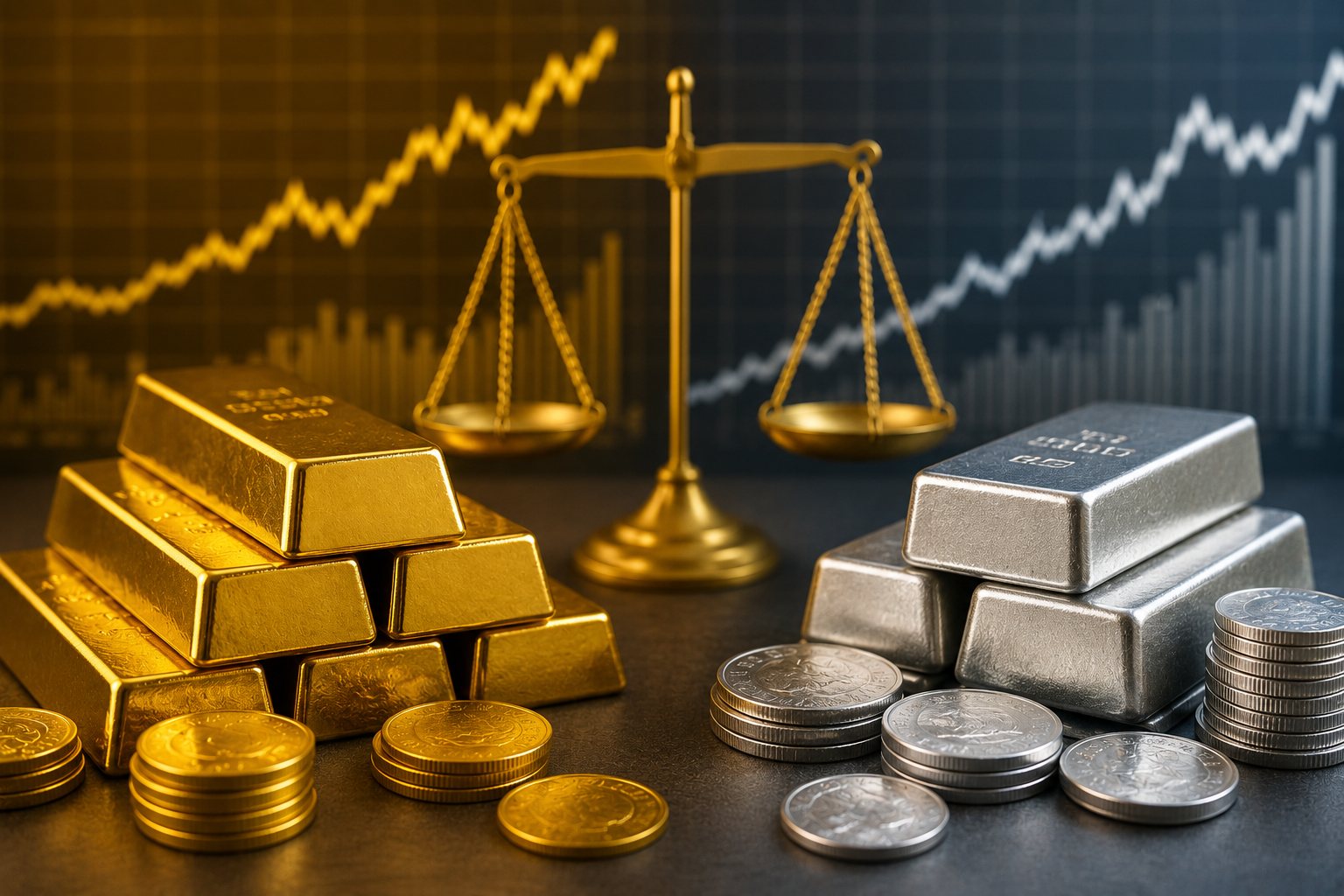
Gold remains the preferred defensive asset, while silver offers higher industrial-growth potential but comes with greater volatility and cyclical risks
Gold and silver continue to attract investors as precious metals remain an important component of diversified portfolios. While both metals have a constructive medium- to long-term outlook, Tata Mutual Fund prefers gold as the core allocation, recommending a strategic 70:30 split between gold and silver within a precious-metals portfolio.
The fund house's view is based on the fundamentally different roles played by the two metals. Gold is primarily considered a defensive and diversification asset, supported by central-bank purchases, investment demand and its potential to protect portfolios during periods of macroeconomic uncertainty.
Silver, on the other hand, offers greater exposure to industrial growth. Its use in electronics, solar technology, renewable energy and other advanced applications could support demand over the longer term. However, this industrial exposure also makes silver more sensitive to economic cycles and potentially more volatile.
The fund house has therefore advised investors to avoid chasing sharp rallies and instead build exposure gradually through a staggered investment approach.
Tata MF's 70:30 Precious-Metal Strategy
The broad framework suggested by Tata Mutual Fund is:
| Asset | Suggested Allocation | Primary Role |
|---|---|---|
| Gold | 70% | Stability, diversification and defence |
| Silver | 30% | Industrial growth and higher upside potential |
The allocation is intended to combine gold's defensive characteristics with silver's higher-growth potential.
It does not necessarily mean that every investor should follow the allocation mechanically. The appropriate exposure will depend on an individual's risk appetite, investment horizon and existing investments.
Why Gold Remains the Preferred Choice
Gold continues to occupy the central position in Tata Mutual Fund's precious-metals strategy.
The metal has several characteristics that make it attractive as a portfolio diversifier. It is not directly dependent on industrial production and can perform differently from traditional risk assets during periods of economic or geopolitical stress.
Gold can also benefit when investors become concerned about currencies, inflation, monetary policy or financial-market instability.
These characteristics make it particularly suitable as a strategic allocation rather than simply a short-term trading instrument.
Central-Bank Buying Provides Structural Support
Central-bank demand has become one of the most important pillars of the global gold market.
According to data cited in the Tata Mutual Fund report, official-sector gold purchases reached 289 tonnes in the second quarter, described as the strongest second-quarter buying on record. Purchases during the first half of the year stood at 345 tonnes.
Continued purchases by central banks can provide an important source of underlying demand.
This structural demand also means gold's price dynamics are increasingly influenced by official-sector buying alongside traditional jewellery and investment demand.
Gold Continues to Offer Portfolio Diversification
Gold's ability to diversify traditional portfolios remains another important reason for the fund house's preference.
Equities, bonds and commodities can respond differently to changes in economic growth, interest rates and market sentiment.
Gold can provide an additional source of diversification, particularly during periods when investors become more risk-averse.
For long-term investors, this makes gold useful even when its short-term return potential is uncertain.
Gold Could Remain Volatile in the Near Term
The positive long-term outlook does not eliminate short-term risks.
Gold prices can respond quickly to changes in:
- US interest-rate expectations
- Bond yields
- Dollar movements
- Inflation expectations
- Geopolitical developments
- Investment flows
A stronger dollar or increase in bond yields could put pressure on gold prices.
Conversely, falling yields, monetary easing and increased uncertainty could support demand.
US Monetary Policy Remains Important
The direction of US monetary policy remains a major factor for precious metals.
When interest rates and bond yields rise, investors may prefer interest-bearing assets over gold, which does not generate regular income.
If monetary policy becomes more accommodative and yields decline, the relative attractiveness of gold can improve.
This means investors should expect periods of volatility even within a longer-term bullish gold cycle.
Gold ETF Flows Also Matter
Investment demand through gold exchange-traded funds is another important indicator.
The Tata Mutual Fund report notes that global gold ETF flows came under pressure following the escalation of the US-Iran conflict, although signs of stabilisation emerged later.
A sustained recovery in ETF inflows could provide another source of demand for gold.
Silver Offers a Different Investment Proposition
Silver is fundamentally different from gold because of its extensive industrial use.
While it retains its status as a precious metal, silver is also an important industrial commodity.
This gives investors exposure to economic and technological growth.
When manufacturing activity, electronics production and renewable-energy investment increase, silver consumption can rise.
However, this same characteristic makes silver more vulnerable during economic slowdowns.
Electronics Demand Could Support Silver
Silver's excellent electrical conductivity makes it important for several electronic applications.
As global demand for electronic devices and advanced technology infrastructure increases, silver consumption could benefit.
The expansion of data infrastructure and technology-related equipment could therefore become a longer-term demand driver.
AI Infrastructure Adds Another Potential Demand Driver
The rapid expansion of artificial intelligence infrastructure is creating additional demand for electronics and electrical equipment.
Silver's industrial applications could allow the metal to benefit indirectly from this investment cycle.
However, the impact on total silver demand will depend on the intensity of silver use across individual technologies and the pace at which new infrastructure is deployed.
Solar Remains a Key Silver Demand Theme
Renewable energy, particularly solar power, has become one of the most important structural themes for silver.
Silver is used in photovoltaic applications, creating a direct link between solar deployment and industrial silver consumption.
The long-term expansion of renewable energy could therefore support silver demand.
However, the pace of solar installations can fluctuate, and improvements in technology or material efficiency can influence the quantity of silver required per unit of production.
Silver's Industrial Exposure Is Both Its Strength and Weakness
Silver's industrial exposure creates an important trade-off.
During strong economic cycles, rising manufacturing and infrastructure investment can boost demand.
But during an economic slowdown, industrial consumption could weaken.
This can result in larger price swings compared with gold.
Therefore, investors seeking lower volatility may prefer gold, while investors willing to accept greater fluctuations may use silver as a growth-oriented allocation.
Gold-Silver Ratio Moves to 70
The gold-silver ratio has risen from around 51 to 70, indicating that gold has substantially outperformed silver.
The ratio measures how many units of silver are required to buy one unit of gold.
A rising ratio generally indicates stronger relative performance from gold.
The latest move suggests investors have been favouring gold's defensive qualities amid concerns surrounding economic growth, interest rates and broader uncertainty.
High Gold-Silver Ratio Is Not Automatically a Silver Buy Signal
A common investment argument is that a high gold-silver ratio means silver has become cheap relative to gold.
However, the relationship is more complicated.
Silver's value depends heavily on industrial demand and supply conditions.
If economic growth remains weak, silver can continue to lag gold even when the ratio is elevated.
Investors should therefore avoid using the gold-silver ratio as a standalone indicator for buying silver.
Silver Market Could Remain in Deficit
Despite the near-term challenges, the long-term supply-demand outlook for silver remains interesting.
Tata Mutual Fund expects 2026 to mark the sixth consecutive year of a silver market deficit, meaning demand is expected to exceed available supply.
Persistent deficits can eventually put pressure on inventories and potentially support prices.
However, the effect of a deficit on prices can be delayed because above-ground inventories and investment flows can influence the market.
China Is Critical to the Global Silver Supply Chain
China plays an important role in global silver production and refining.
The Tata Mutual Fund report estimates that China holds around 11% of global silver reserves and controls approximately 60–70% of global refining capacity.
This makes developments in China's domestic demand, refining activity and trade policies important for international silver markets.
Any tightening of supply availability could potentially increase pressure on global inventories.
Supply Constraints Could Support Silver Prices
Silver's long-term investment case is therefore based on two broad themes:
Growing demand from industrial applications and potential supply constraints.
The combination could provide support to prices over the long term.
However, supply deficits alone do not guarantee uninterrupted price appreciation.
Silver can still experience sharp corrections if investment demand weakens or global industrial activity slows.
Gold and Silver Play Different Roles
The distinction between the two metals can be summarised simply:
Gold = defence and diversification
Silver = industrial growth and higher volatility
Gold is less dependent on economic activity and is therefore better positioned as a stabilising component.
Silver has greater exposure to manufacturing and technological investment, potentially providing greater upside during strong economic and industrial cycles.
Why Tata MF Prefers 70% Gold
The 70% allocation to gold reflects the fund house's preference for maintaining a strong defensive anchor.
Gold's advantages include:
- Central-bank demand
- Lower relative volatility
- Portfolio diversification
- Safe-haven characteristics
- Macroeconomic hedge
- Currency-debasement protection
- Broad investment demand
These characteristics make gold the preferred core holding.
Why Silver Gets 30%
The smaller silver allocation reflects its greater risk but also its growth potential.
Silver could benefit from:
- Solar expansion
- Electronics demand
- Renewable energy
- AI-related infrastructure
- Industrial production
- Supply deficits
- Potential refining constraints
However, investors must be prepared for greater volatility.
Staggered Investing Could Reduce Timing Risk
Tata Mutual Fund's recommendation to invest gradually is particularly relevant after strong movements in precious metals.
Investing the entire amount at once exposes investors to the risk of entering immediately before a correction.
A staggered approach spreads purchases across different price levels.
This can reduce the impact of short-term volatility and help investors build a long-term allocation without relying on perfect market timing.
Don't Chase the Rally
The fund house's long-term bullish stance does not mean investors should aggressively buy after every sharp price increase.
Precious metals can experience rapid rallies followed by periods of consolidation.
Investors who chase prices during a strong momentum phase may face significant short-term drawdowns.
Building exposure gradually can provide greater flexibility.
Investors With Existing Gold Exposure Need to Look at the Full Portfolio
The 70:30 framework should be considered in the context of an investor's overall portfolio.
An investor holding significant physical gold through jewellery may already have substantial exposure to the metal.
Similarly, someone with a large commodity allocation may not require an additional aggressive precious-metal position.
The allocation decision should therefore be based on total portfolio exposure rather than only new investments.
Gold Jewellery Is Not the Same as Investment Gold
Gold held as jewellery and gold held as an investment serve different purposes.
Jewellery involves making charges and other costs and may be purchased primarily for personal use.
Investment-oriented gold products are generally designed to provide more direct exposure to gold prices.
Investors seeking portfolio diversification should therefore distinguish between consumption-related gold holdings and financial investments linked to the metal.
Silver Requires a Higher Risk Appetite
Silver's volatility means investors need to be comfortable with larger price fluctuations.
The metal can outperform sharply during periods of strong industrial demand but can also decline more aggressively when economic expectations weaken.
This makes silver more suitable as a complementary allocation rather than the core precious-metal holding for conservative investors.
What Could Drive Gold Higher?
Gold could continue to receive support from:
- Continued central-bank purchases
- Lower global bond yields
- Easing monetary policy
- Geopolitical uncertainty
- Currency concerns
- Strong ETF and investment demand
- Portfolio diversification requirements
A combination of these factors could keep gold strategically relevant for long-term investors.
What Could Drive Silver Higher?
Silver could benefit from:
- Faster solar deployment
- Growth in electronics
- Expansion of renewable-energy infrastructure
- AI-related investment
- Strong manufacturing activity
- Persistent supply deficits
- Tight global inventories
- Supply-chain disruptions
The strongest upside scenario for silver would likely involve simultaneously strong industrial demand and constrained supply.
Risks to the Gold Outlook
Gold is not without risks.
A stronger US dollar, higher bond yields or a more hawkish Federal Reserve could weigh on the metal.
A significant reduction in geopolitical risk could also reduce safe-haven demand.
Similarly, a prolonged period of strong economic growth accompanied by high real yields could make gold relatively less attractive.
Risks to the Silver Outlook
Silver carries all the traditional precious-metal risks along with additional industrial risks.
Potential challenges include:
- Global economic slowdown
- Weak manufacturing activity
- Lower solar installations
- Reduced electronics demand
- Rising inventories
- Easing supply constraints
- Stronger dollar
- Higher interest rates
These factors could result in sharper corrections than those experienced by gold.
Gold Versus Silver: Which Is Better?
There is no universal answer because the two metals fulfil different investment objectives.
Investors prioritising capital preservation and diversification may prefer gold.
Investors seeking higher industrial-growth exposure and willing to tolerate greater volatility may find silver more attractive.
For a diversified precious-metals allocation, the two can complement each other.
A Balanced Precious-Metals Strategy
Tata Mutual Fund's 70:30 framework effectively combines both investment characteristics.
The larger gold allocation provides portfolio stability.
The silver allocation provides exposure to industrial growth and potential supply shortages.
This approach avoids making the portfolio entirely dependent on either defensive demand or industrial demand.
Market Outlook
The medium- to long-term outlook for precious metals remains constructive, but gold and silver are likely to continue following different investment cycles.
Gold remains the stronger defensive asset, supported by central-bank purchases, investment demand, diversification needs and its role as a hedge against macroeconomic and currency uncertainty. These factors support Tata Mutual Fund's preference for keeping 70% of a precious-metals allocation in gold.
Silver offers the higher-growth component. Its exposure to solar technology, electronics, renewable energy, AI-related hardware and industrial applications provides a structural demand story. The possibility of another year of market deficit and China's dominant position in global refining could further tighten supply conditions.
At the same time, silver's industrial dependence means it is more vulnerable to a global economic slowdown. The increase in the gold-silver ratio to around 70 underlines the market's current preference for gold's defensive characteristics.
For investors, the key takeaway is not to chase the rally. A staggered approach can help manage entry-point risk, particularly in silver, where price volatility can be substantially higher.
Overall, the Tata MF framework positions gold as the portfolio anchor and silver as the growth-oriented satellite allocation. Investors should adapt the 70:30 approach to their own risk profile, investment horizon and existing exposure rather than treating it as a one-size-fits-all formula.