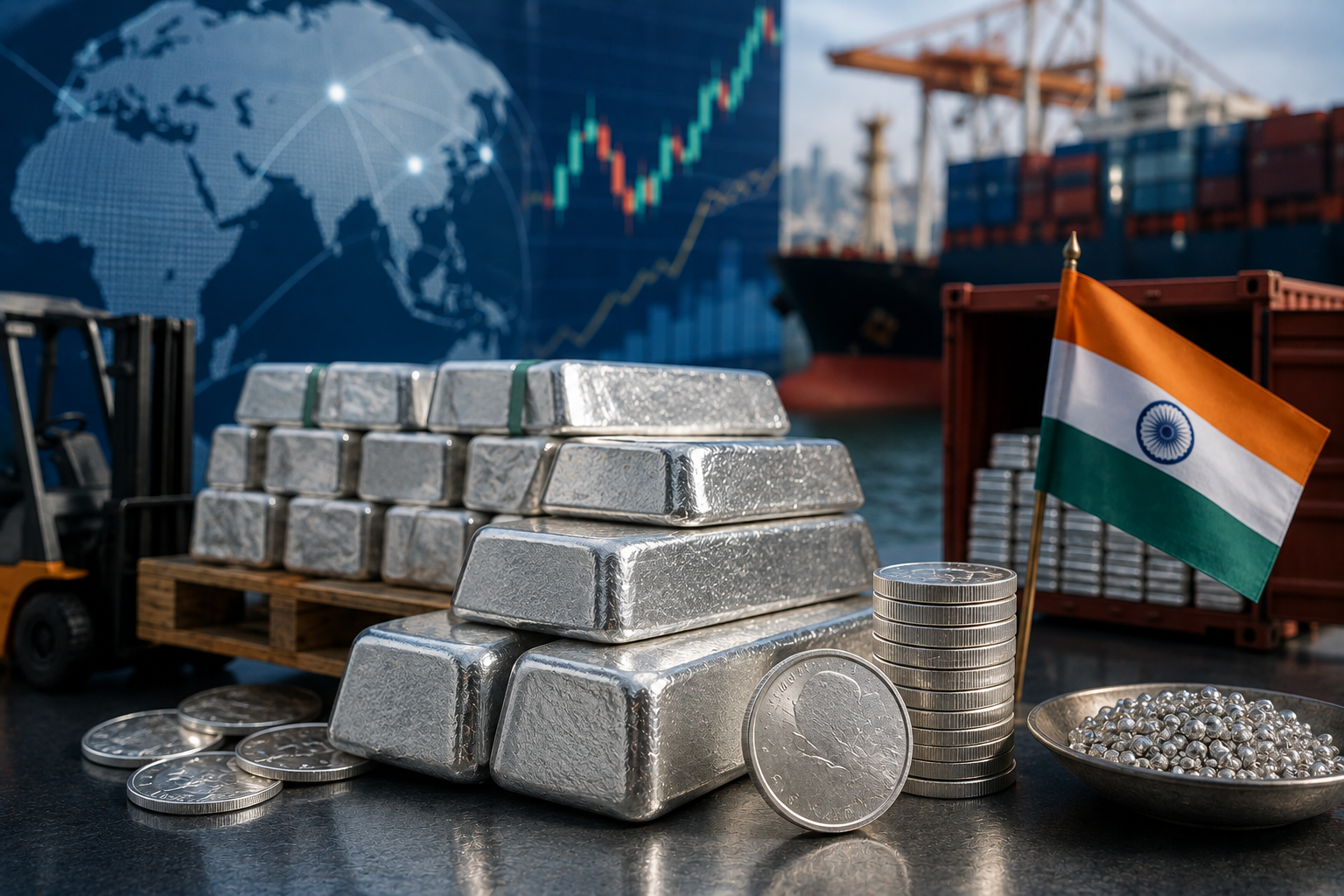
Import flows begin to recover after a six-month disruption, but documentation delays and rising festive demand could keep India’s silver market tight
India's silver import market is showing early signs of recovery after a prolonged disruption caused by new licensing requirements, with traders and banks gradually securing approvals to bring the precious metal into the country.
Around 89.81 tonnes of silver were imported through the India International Bullion Exchange (IIBX) in August, marking the return of shipments after six months without imports through the exchange, according to market data.
The improvement in supplies has begun narrowing the premium that Indian buyers pay over international silver prices. However, the market has not yet returned to normal, with importers continuing to face additional documentation requirements, customs delays and logistical bottlenecks.
Silver Supply Starts Returning to India
The latest shipments indicate that the supply disruption is beginning to ease.
Several traders and banks have obtained licences allowing them to resume silver imports, while market participants estimate that around 400 tonnes of import licences have been approved.
The additional supply has already improved availability compared with the previous month.
However, the recovery remains gradual because obtaining a licence is only the first step in the import process. Traders must also complete documentation, shipping, customs clearance and, where required, refining arrangements before the metal reaches domestic consumers.
Six-Month Import Disruption Comes to an End
India introduced licensing requirements for silver imports in May, significantly disrupting the flow of the precious metal into the country.
The restrictions were introduced as part of measures aimed at managing foreign-exchange outflows.
The impact was immediate, with silver shipments falling to only a fraction of normal domestic requirements.
The disruption created tighter physical availability and pushed local silver prices to a premium over international benchmarks.
The latest resumption of imports therefore represents an important change for the domestic bullion market.
Why India Depends on Imported Silver
India is one of the world's largest consumers of silver and relies heavily on overseas supplies.
Domestic mine production is not sufficient to meet the country's demand, making imports a critical component of the supply chain.
Silver is consumed across multiple sectors, including:
- Jewellery
- Silverware
- Investment
- Industrial manufacturing
- Electronics
- Solar photovoltaic applications
Because of this dependence on overseas supplies, changes in India's import regulations can have a significant effect on domestic prices and availability.
Import Licences Are Gradually Improving Availability
The increase in licence approvals is providing traders with greater access to international silver supplies.
Market participants estimate that approximately 400 tonnes of licences have been approved, potentially allowing a significant quantity of additional silver to enter India.
However, the timing of actual physical arrivals remains uncertain.
Licences must be followed by shipments, customs processing and other operational steps before the silver reaches the domestic market.
This means that the impact of the new approvals will become visible gradually rather than immediately.
Domestic Premiums Begin to Narrow
The increase in silver availability has already reduced the premium on Indian silver relative to global prices.
However, the premium remains elevated.
According to market estimates, the 30-day average domestic premium was around $4 per ounce, indicating that Indian buyers were still paying more than international market prices.
The persistence of the premium reflects the fact that supply has improved but has not yet returned to normal levels.
Why the Premium Matters
A higher domestic premium creates an economic incentive for traders to import silver.
If silver is available more cheaply in international markets than in India, importers can potentially capture the price difference after accounting for duties, freight, financing, insurance and regulatory costs.
This price differential can encourage additional imports.
However, the new licensing regime means that the ability to exploit this arbitrage also depends on obtaining the necessary approvals and completing the required documentation.
New Country-of-Origin Certificate Creates Hurdle
One of the biggest challenges under the new system is the requirement for a certificate establishing the country of production of the silver.
Market participants say the country of origin is normally included in shipping documents, but the requirement for a formal certificate issued by a government authority adds another layer to the import process.
This can slow down customs clearance and increase the administrative burden for traders.
The requirement could also influence where importers choose to source their silver.
Traders Prefer Countries With Faster Documentation
Importers are increasingly looking towards suppliers and countries that can provide the required documentation quickly.
Suppliers that can meet the new paperwork requirements efficiently may gain an advantage because delays can result in additional financing, storage and logistics costs.
This could gradually change India's silver-sourcing patterns.
Traditional supply relationships may increasingly be evaluated not only on price and quality but also on the ability to meet regulatory documentation requirements.
Customs Clearance Can Add Further Delays
The import process does not end after a shipment reaches India.
Customs authorities must verify the necessary documentation before the metal can be released.
Any discrepancy or missing certificate can delay clearance.
These delays are particularly important in the current market because physical silver availability remains tight.
Even with import licences in place, traders may therefore struggle to quickly increase supplies in the domestic market.
Logistics and Refining Add More Time
After customs clearance, imported silver may still need to undergo refining, processing or other logistics before reaching jewellers, industrial users and investors.
Market participants estimate that shipping, customs clearance and refining logistics can add several weeks to the process.
As a result, the latest licence approvals should not be interpreted as an immediate return to normal supply conditions.
The market will need to see sustained physical arrivals before inventories can rebuild meaningfully.
Existing Inventory Still Supports the Market
For now, India's silver market continues to depend substantially on inventories already held by traders, refiners and other market participants.
New imports are supplementing those inventories, but the flow remains gradual.
This makes the market more vulnerable to a sudden increase in demand.
If existing inventories decline faster than new shipments arrive, domestic premiums could rise again.
Festival and Wedding Season Could Lift Demand
The timing of the import recovery is particularly important because India's festival and wedding season is approaching.
Jewellery demand traditionally strengthens during major festive and wedding periods.
Silver also plays an important role in gifting, household purchases and investment demand.
Jewellers may therefore begin replenishing inventories ahead of the expected increase in consumer demand.
Jewellers Could Become Active Buyers
Jewellers that reduced their inventory during the import disruption could return to the market as availability improves.
The scale and timing of these purchases will be closely watched.
If jewellers aggressively rebuild stocks while imports remain limited, domestic premiums could stay elevated.
On the other hand, if imports accelerate sufficiently, increased supply could meet seasonal demand without a major increase in premiums.
Industrial Demand Adds Structural Support
Silver demand in India extends beyond jewellery.
The metal is widely used in industrial applications because of its electrical conductivity and other physical properties.
Electronics, electrical equipment and solar photovoltaic systems are among the sectors that contribute to industrial silver demand.
This industrial component gives silver a different demand profile from gold, where jewellery and investment account for a much larger share of consumption.
Solar Industry Could Remain Important
The global expansion of solar power has increased attention on silver consumption in photovoltaic manufacturing.
Silver is used in solar-cell technologies because of its electrical conductivity.
As India continues expanding renewable-energy capacity and global solar manufacturing grows, industrial demand for silver could remain structurally important.
This creates an additional source of demand at a time when investment and jewellery demand can also fluctuate.
Silver Market Faces Global and Domestic Influences
Indian silver prices are influenced by both domestic and international factors.
Global silver prices respond to:
- US interest-rate expectations
- Dollar movements
- Industrial demand
- Investment flows
- Gold prices
- Solar-sector demand
- Global economic growth
- Mine production
- Recycling
Domestic prices are additionally affected by import duties, licensing rules, freight costs, exchange rates and local premiums.
This makes India's silver market particularly sensitive to both global commodity trends and domestic policy decisions.
Rupee Movement Could Affect Import Costs
The rupee is another important factor for Indian silver buyers.
Since silver is purchased internationally in US dollars, a weaker rupee increases the cost of importing the metal into India.
If the rupee remains under pressure while international silver prices remain elevated, domestic prices could rise even if the local supply situation improves.
Conversely, a stronger rupee could reduce the landed cost of imported silver.
Bullion Exchange Gains Importance
The return of silver imports through the India International Bullion Exchange is also significant for the country's bullion ecosystem.
The exchange provides an organised platform for international bullion transactions and can improve transparency around physical flows.
Higher participation by banks and authorised traders could gradually strengthen India's position as a major bullion trading centre.
The latest silver shipments through the platform therefore provide an important signal about the gradual reopening of the domestic import channel.
Impact on Silver Traders
For bullion traders, the new environment requires a more careful approach to inventory management.
Previously, price arbitrage could be the primary consideration when deciding whether to import.
Under the new system, traders must also consider:
- Availability of import licences
- Country-of-origin certification
- Customs clearance time
- Shipping costs
- Refining timelines
- Financing costs
- Domestic premiums
These additional factors can significantly affect the profitability of an import transaction.
Larger Traders and Banks Could Have an Advantage
The new regulatory environment may favour larger traders and banks with stronger compliance systems and established international supplier relationships.
Such participants may be better equipped to obtain licences, arrange documentation and manage customs procedures.
Smaller traders could face relatively higher administrative and financing costs.
This could gradually increase the importance of scale and regulatory capabilities in India's bullion-import market.
Policy Clarity Will Be Important
The silver market will be closely watching whether the current licensing system becomes easier to operate over time.
If authorities streamline documentation and customs procedures, imports could accelerate.
However, if paperwork remains cumbersome, the market could continue to experience delays despite sufficient licence approvals.
Greater regulatory clarity would help traders plan inventory and procurement more efficiently.
Import Recovery Could Reduce Domestic Price Distortions
A sustained recovery in imports could gradually reduce the gap between Indian and international silver prices.
Lower premiums would indicate that physical supply is becoming more balanced relative to demand.
This could benefit jewellers and industrial users by reducing procurement costs.
However, the effect on the headline silver price will depend on international market movements.
A fall in India's domestic premium does not necessarily mean that silver itself will become cheaper if global prices continue to rise.
Investors Should Watch Physical Supply Closely
For silver investors, physical-market indicators are becoming increasingly important.
The key indicators to monitor include:
- Import licence approvals
- Actual shipment volumes
- Domestic silver premiums
- Customs clearance times
- Jewellery demand
- Industrial consumption
- Solar-sector demand
- International silver prices
- Rupee-dollar movements
A sustained increase in physical imports combined with falling premiums would indicate that India's supply situation is normalising.
What Could Change the Market Balance
The market could move towards a more balanced supply-demand situation if import licences continue to be issued and shipments arrive without significant administrative delays.
However, several developments could reverse the improvement.
A renewed tightening of import rules, continued documentation problems, a sharp rise in jewellery demand or higher global silver prices could all keep domestic premiums elevated.
The pace of actual physical imports will therefore matter more than the number of licences approved.
Silver Market Could Remain Volatile
Silver tends to experience greater price volatility than gold because of its combination of investment and industrial demand.
A change in economic expectations can influence both sides of the market simultaneously.
For example, stronger economic growth can boost industrial consumption but also lead to higher interest rates, which can affect precious-metals investment demand.
This makes the silver market particularly sensitive to changes in global macroeconomic conditions.
Market Outlook
India's silver market is moving towards a gradual recovery in imports, with nearly 90 tonnes entering through the India International Bullion Exchange after a six-month disruption. The approval of additional import licences is a positive development for domestic supply, but it is too early to conclude that the shortage has been completely resolved.
The biggest challenge remains execution. Country-of-origin certificates, customs clearance, shipping and refining logistics can add several weeks between licence approval and actual availability in the domestic market.
At the same time, the upcoming festival and wedding season could increase jewellery demand just as import flows are beginning to recover. Industrial demand from electronics and solar applications adds another structural layer of consumption.
For investors and bullion-market participants, the most important signals will be the actual volume of silver arriving in India, the domestic premium over international prices, the speed of customs clearance and the pace of seasonal demand.
If imports accelerate and documentation hurdles ease, India's silver premium could continue to narrow. But if physical supply remains constrained while festive, jewellery and industrial demand strengthens, domestic silver could continue to trade at a premium, keeping the Indian market closely linked to both global silver prices and the country's evolving import policy.