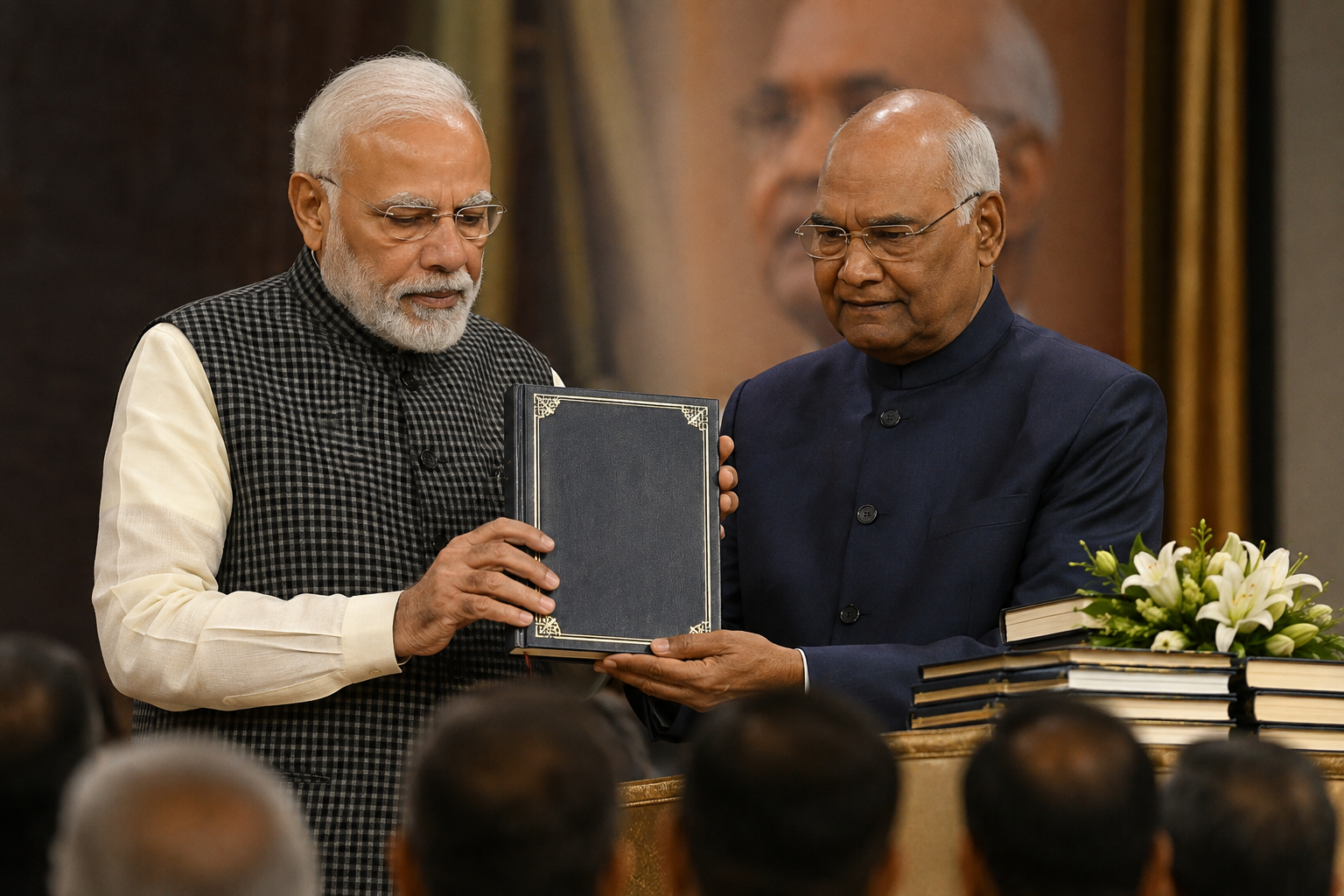
Prime Minister Says Real-Life Stories Can Help Young People Navigate the ‘Era of Reels’
Prime Minister Narendra Modi on Wednesday urged India's youth to read autobiographies of people they admire, saying that real-life journeys can offer valuable lessons that cannot always be found in the fast-paced world of social media.
Speaking at the launch of former President Ram Nath Kovind's autobiography, “Triumph of the Indian Republic: My Life, My Struggles,” Modi highlighted Kovind's journey from humble circumstances to the country's highest constitutional office.
The Prime Minister also cautioned young people against becoming overly influenced by short-form social media content, saying that while influencers can take people in different directions, “a shortcut will cut you short.”
Modi Highlights Importance of Autobiographies
Modi encouraged young people to develop the habit of reading biographies and autobiographies of individuals they admire.
According to the Prime Minister, such books provide an opportunity to understand the struggles, setbacks, decisions and determination behind a person's success.
He contrasted this deeper form of learning with the increasingly popular short-form content consumed through social media platforms.
The message was particularly directed at young people, for whom reels and other short videos have become a major source of information, entertainment and inspiration.
‘Shortcut Will Cut You Short’
The Prime Minister's “shortcut will cut you short” remark underlined his emphasis on sustained effort rather than seeking quick routes to success.
Modi suggested that social media influencers can sometimes influence young people and lead them towards different choices. While digital platforms can provide opportunities to learn and connect, he stressed the importance of developing independent judgment and learning from people whose achievements have been built over many years.
The broader message was that meaningful success generally requires patience, discipline and perseverance.
Kovind’s Journey Highlighted as an Example
Modi described Ram Nath Kovind's life as an example of determination and the ability to overcome adversity.
Kovind's journey in public life took him from a modest background to becoming the 14th President of India. Before occupying the country's highest constitutional office, he served in various public and constitutional roles.
His journey, Modi said, demonstrates how determination and commitment can help an individual overcome difficult circumstances and reach positions of significant responsibility.
‘Triumph of the Indian Republic: My Life, My Struggles’
Kovind's autobiography, “Triumph of the Indian Republic: My Life, My Struggles,” focuses on his personal journey and experiences in public life.
The book provides an opportunity to look at the events and circumstances that shaped his career and his understanding of India's democratic and constitutional institutions.
The launch also brought attention to the role of personal narratives in helping younger generations understand India's political and institutional evolution.
Why Autobiographies Matter in the Digital Era
The Prime Minister's appeal for young people to read autobiographies comes at a time when consumption of short-form digital content is growing rapidly.
Reels and short videos can communicate information quickly, but they generally provide limited context. Autobiographies, by contrast, can offer a longer account of an individual's decisions, failures, setbacks and achievements.
Reading such accounts can help young people understand that success is often the result of years of preparation and persistence rather than a single breakthrough moment.
Kovind’s Continued Public Engagement
Modi also highlighted Kovind's continued engagement in public affairs after completing his presidential tenure.
The Prime Minister said Kovind had not simply withdrawn from public life after demitting office and continued contributing to issues concerning India's democratic system.
One of the key areas highlighted was the One Nation, One Election initiative.
One Nation, One Election Remains a Major Democratic Debate
The One Nation, One Election proposal seeks to hold elections to the Lok Sabha and state legislative assemblies simultaneously.
Supporters of the proposal argue that synchronised elections could potentially reduce the frequency of election-related expenditure, administrative deployment and disruptions associated with repeated election cycles.
At the same time, the proposal has generated considerable political and constitutional debate, particularly around federalism, the tenure of state governments and the practical and constitutional requirements for synchronising elections.
Kovind's involvement in examining the issue has been part of his continued engagement with questions concerning India's electoral and democratic framework.
Message Extends Beyond Politics
Modi's remarks at the book launch were not limited to Kovind's political journey. They also carried a broader message about how young Indians approach education, careers and personal development.
The emphasis on biographies reflects the idea that young people can learn from the experiences of others, including the obstacles they encountered and the methods they used to overcome them.
The warning against shortcuts similarly reinforces the importance of building skills and knowledge over time.
Lessons From Kovind’s Public Life
Kovind's journey offers several themes that were highlighted during the event — perseverance, public service, constitutional responsibility and continued engagement after holding high office.
His progression to the presidency demonstrates the possibilities of social and professional mobility within India's democratic system.
For younger readers, autobiographies of public figures can also provide a more nuanced understanding of the institutions and individuals that have shaped the country's modern history.
Growing Influence of Social Media on Youth
The Prime Minister's comments also come amid a broader debate about the influence of social media on young people.
Short-form platforms have transformed how information is consumed, with users increasingly exposed to condensed versions of news, education, career advice and personal success stories.
While such platforms can provide accessibility and rapid information, the absence of context can sometimes make complex subjects difficult to understand fully.
The emphasis on reading longer-form accounts therefore represents a call for young people to complement digital consumption with deeper learning.
A Message on Long-Term Success
At the heart of Modi's address was the idea that success should be viewed as a long-term journey rather than an immediate outcome.
Kovind's life story was presented as an example of how persistence can help individuals overcome obstacles and assume positions of significant responsibility.
The message also resonates beyond public life, applying to education, entrepreneurship, professional careers and other areas where sustained effort can be more important than quick results.
Market Outlook
The launch of Ram Nath Kovind's autobiography brought together themes of personal perseverance, India's democratic institutions and the changing way young people consume information.
Prime Minister Narendra Modi's appeal to youth to read autobiographies reflects a broader push towards deeper learning in an era dominated by short-form digital content. His “shortcut will cut you short” message emphasised patience, discipline and sustained effort as foundations for long-term success.
Kovind's continued engagement with the One Nation, One Election initiative also keeps the former President involved in an important national discussion. The autobiography, meanwhile, offers readers an opportunity to examine the personal experiences and challenges behind his journey to the country's highest constitutional office.