Beauty giant explores specialised skincare solutions for consumers experiencing facial volume loss and skin sagging after rapid weight loss, while reporting strong third-quarter sales growth.
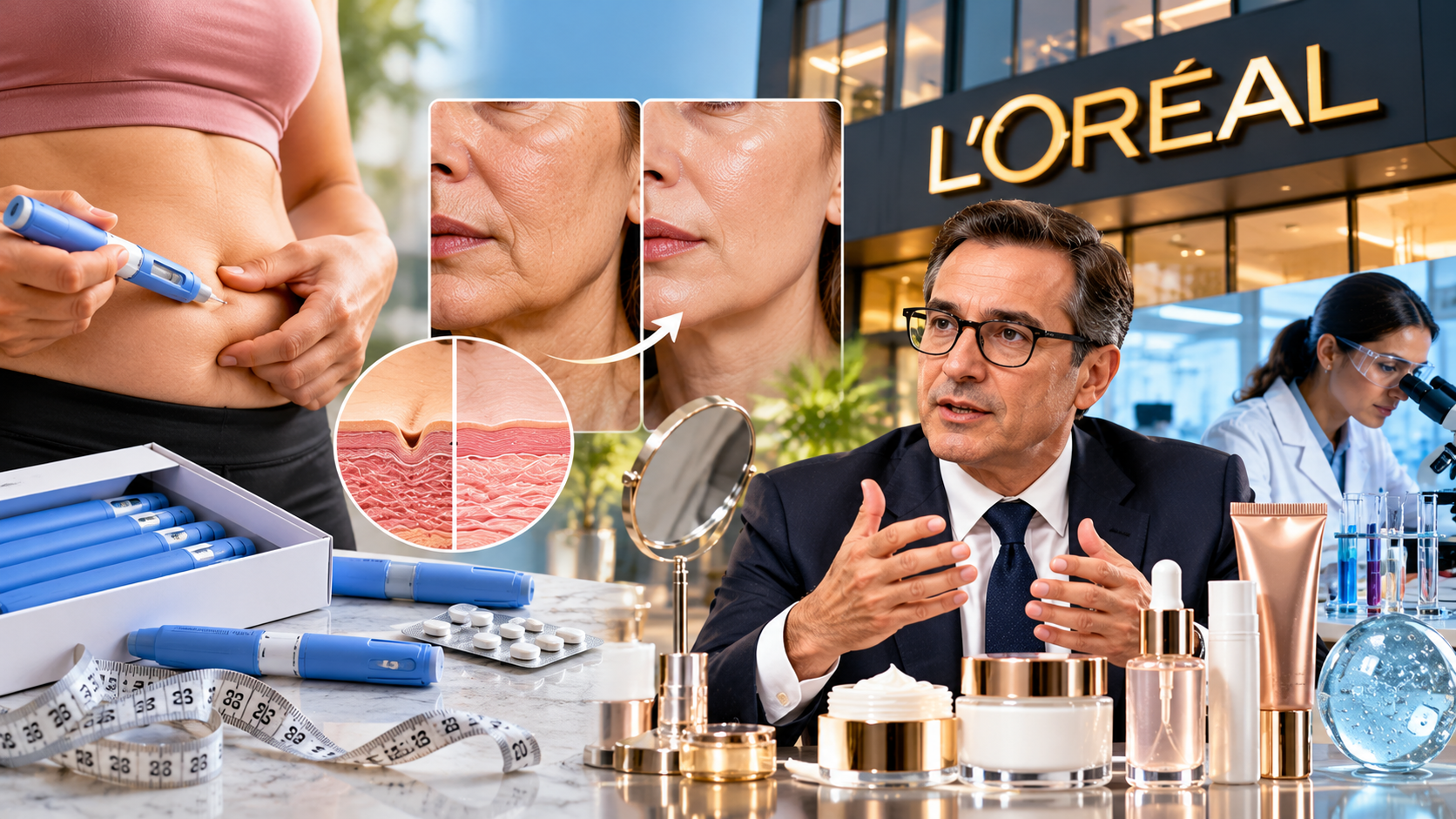
The growing popularity of GLP-1 weight-loss medicines is beginning to influence consumer behaviour in the global beauty and skincare industry, according to L’Oréal Chief Executive Officer Nicolas Hieronimus. The company is examining how these treatments are changing skincare needs and is testing products designed for consumers who experience visible skin changes after losing weight.
Speaking during an investor call following the company’s third-quarter results, Hieronimus said the increasing use of GLP-1 medicines was having an impact on beauty consumption, particularly skincare. He described the trend as an important development for the company as it evaluates emerging consumer needs and opportunities for product innovation.
L’Oréal’s focus reflects a broader shift in the beauty industry, where companies are exploring specialised products for consumers experiencing changes in facial appearance following significant weight loss.
GLP-1 Weight-Loss Drugs Create New Skincare Opportunities
GLP-1 medicines have gained popularity for their role in appetite regulation and weight management. These drugs mimic the action of a naturally occurring hormone involved in controlling appetite and blood sugar, helping eligible patients reduce food intake and lose weight.
As their use expands, beauty companies are examining whether consumers undergoing substantial weight loss may require different skincare products and treatments.
L’Oréal has indicated that some products within its SkinCeuticals brand are designed to complement the needs of consumers using GLP-1 medicines, including those concerned about skin sagging and other visible changes.
The company is also conducting separate studies involving GLP-1 users to better understand their needs and evaluate potential product solutions. Delphine Viguier-Hovasse, L’Oréal’s chief innovation and prospective officer, said the group of consumers was becoming increasingly important and represented a significant population worldwide.
The research could help the company develop products tailored to changing skincare requirements, although the effectiveness of individual products will depend on their formulation and the specific concerns they are designed to address.
‘Ozempic Face’ Brings Facial Changes Into Focus
One of the most widely discussed beauty concerns associated with substantial weight loss is commonly known as “Ozempic face”. The term refers to a thinner facial appearance, reduced facial volume and more noticeable sagging that some people experience after losing weight.
The expression is associated with medicines such as Ozempic and Wegovy, produced by Novo Nordisk, and Zepbound, manufactured by Eli Lilly. However, the term is not a formal medical diagnosis, and facial changes can occur with weight loss regardless of the method used.
When a person loses a substantial amount of weight, fat beneath the skin can decrease. Because facial fat contributes to volume and contour, this reduction may make certain features appear more prominent and can contribute to a looser appearance.
Experts have emphasised that these changes are generally associated with rapid or substantial weight loss rather than being an established direct effect of GLP-1 medicines on the skin itself.
This distinction is important as consumers evaluate products marketed for skin firmness, hydration or facial appearance. Skincare may help address certain surface-level concerns, but it cannot necessarily restore lost facial volume or reverse significant skin laxity.
Beauty Companies Compete for an Emerging Consumer Market
L’Oréal is not the only beauty company exploring this opportunity. Swiss skincare company Galderma and Brazilian cosmetics group Natura are also examining products aimed at consumers concerned about facial changes following weight loss, according to reports cited in the original coverage.
The interest highlights how developments in healthcare can influence adjacent consumer industries. As weight-management treatments become more widely used, demand may increase for products addressing related concerns such as skin hydration, texture, elasticity and facial appearance.
For beauty companies, the opportunity extends beyond launching individual products. It also involves understanding how consumers’ routines, spending priorities and expectations change during significant weight loss.
Companies that develop credible, evidence-based solutions and communicate their benefits responsibly could strengthen customer engagement in this evolving market.
However, the commercial opportunity remains dependent on consumer demand, product effectiveness, pricing and the ability to distinguish scientifically supported benefits from marketing claims.
L’Oréal Reports Strong Third-Quarter Sales Growth
The developments in skincare come as L’Oréal reports continued growth in its global business.
The company recorded third-quarter 2026 sales of €11.56 billion, representing an increase of 7.7% on a reported basis. Like-for-like sales, which adjust for changes in currency and the scope of consolidation, increased by 7.2% during the quarter.
For the first nine months of 2026, sales rose 7.7% to €35.34 billion, while like-for-like growth reached 6.9%.
The company reported growth across all four of its business divisions during the nine-month period, indicating that demand was not limited to a single product category.
Dermatological Beauty recorded like-for-like growth of 11.6%, while Professional Products grew 12.4%. L’Oréal Luxe registered growth of 5.7%, and Consumer Products increased by 4.2%.
The results point to continued demand for skincare, professional beauty products, luxury cosmetics and everyday personal-care products across the company’s portfolio.
Skincare and Dermatological Beauty Remain Key Growth Drivers
L’Oréal said skincare continued to accelerate, while fragrances and haircare contributed to growth.
The performance of Dermatological Beauty is particularly relevant as the company explores products for consumers using weight-loss medicines. This division operates in a segment where consumers often seek specialised products for specific skin concerns.
The rising interest in skin health and science-led beauty solutions could support further innovation across the industry. Consumers increasingly look for products that address identifiable needs, including dryness, sensitivity, uneven texture and visible signs of ageing.
Nevertheless, the contribution of GLP-1-related skincare to L’Oréal’s overall revenue remains unclear. The company has not provided a separate sales figure for products specifically targeting users of weight-loss medicines.
Investors should therefore distinguish between an emerging business opportunity and a demonstrated source of material financial growth.
What the Trend Could Mean for the Beauty Industry
The intersection of weight management and skincare illustrates how changing healthcare trends can create new product categories for consumer companies.
If the use of GLP-1 medicines continues to expand, beauty companies may see opportunities to develop specialised skincare routines, dermatological treatments and products designed for consumers experiencing changes in facial appearance.
Research involving actual users could help companies identify which concerns are most common and determine whether existing formulations adequately address them.
At the same time, companies will need to manage expectations carefully. Products that improve hydration or the appearance of skin texture should not be presented as equivalent to treatments that restore lost facial volume or address substantial excess skin.
Scientific validation, responsible marketing and consumer trust will be important factors in determining whether this market develops into a sustainable growth category.
Key Takeaways for Investors
L’Oréal’s comments highlight an emerging opportunity within the global beauty industry as the growing use of weight-loss medicines influences consumer skincare needs.
The company’s product testing and existing skincare portfolio could provide a platform for innovation, while its latest sales figures indicate continued growth across its major business divisions.
However, investors should monitor several factors before assigning significant financial value to this opportunity:
-
Product development: Whether studies involving GLP-1 users lead to commercially successful launches.
-
Consumer demand: Whether specialised skincare products generate sustained purchases rather than short-term interest.
-
Scientific credibility: Whether products demonstrate clear benefits for the specific concerns they target.
-
Financial contribution: Whether the new category becomes a meaningful contributor to revenue and profitability.
-
Competitive pressure: How L’Oréal responds to rival beauty and skincare companies pursuing similar opportunities.
Outlook
The rise of GLP-1 weight-loss medicines is creating new questions for the beauty industry, particularly around facial volume, skin firmness and specialised skincare routines. L’Oréal’s research indicates that it sees potential in addressing these evolving consumer needs.
Its strong nine-month sales growth provides a positive backdrop for continued product development. Nevertheless, the long-term commercial impact of GLP-1-related skincare will depend on consumer adoption, product performance and the extent to which this emerging category contributes to overall business growth.
For investors, the trend is worth watching as a potential driver of future innovation, but its financial significance will become clearer only as companies disclose more information about product launches, demand and sales performance.